How Bremerton Typewriter Co. Keeps a Century-Old Craft Alive
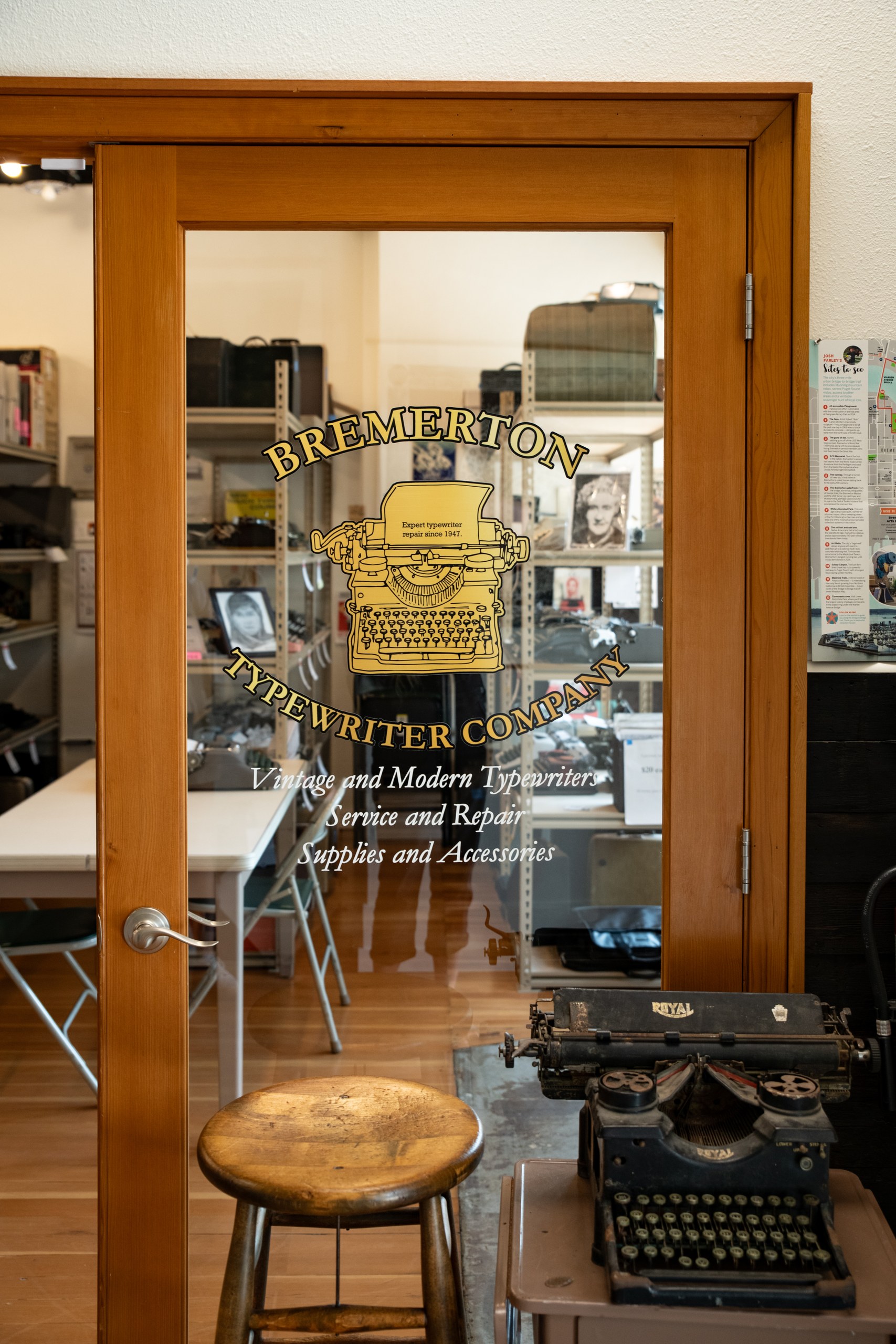
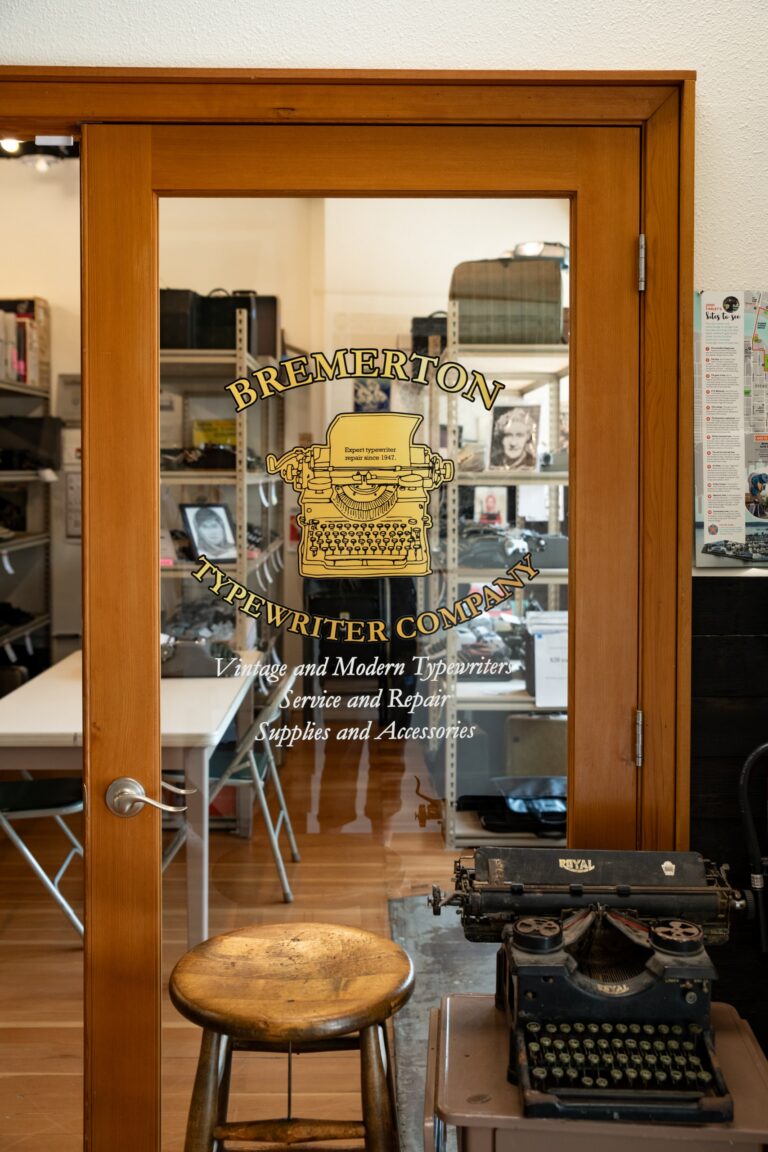
In an era when most words are written on glowing screens, the steady clack of a typewriter still echoes from a modest storefront in downtown Bremerton.
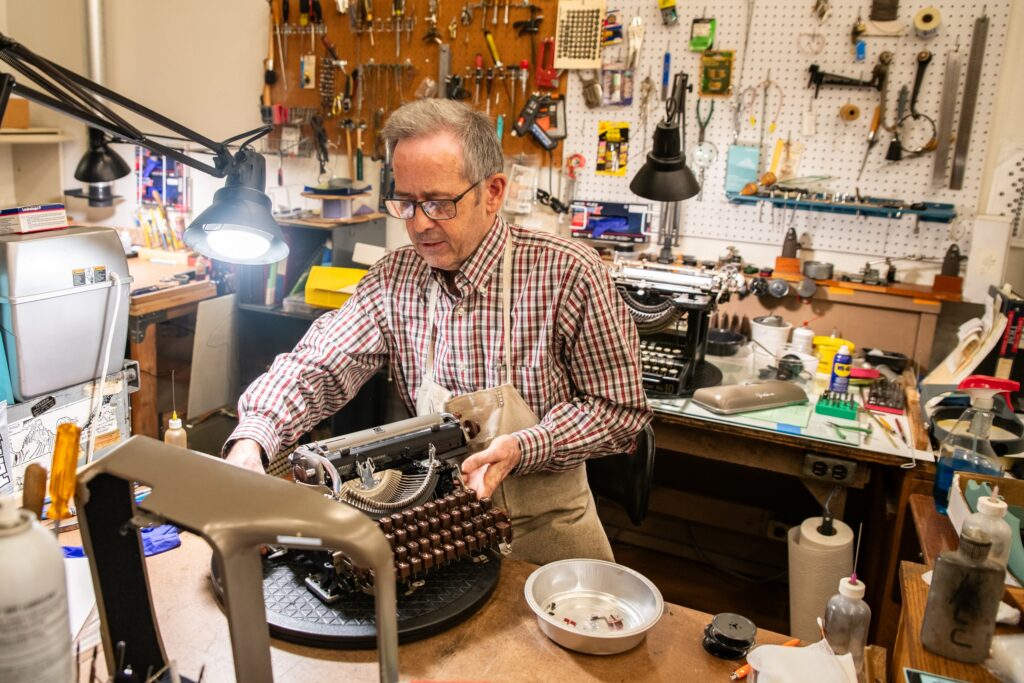
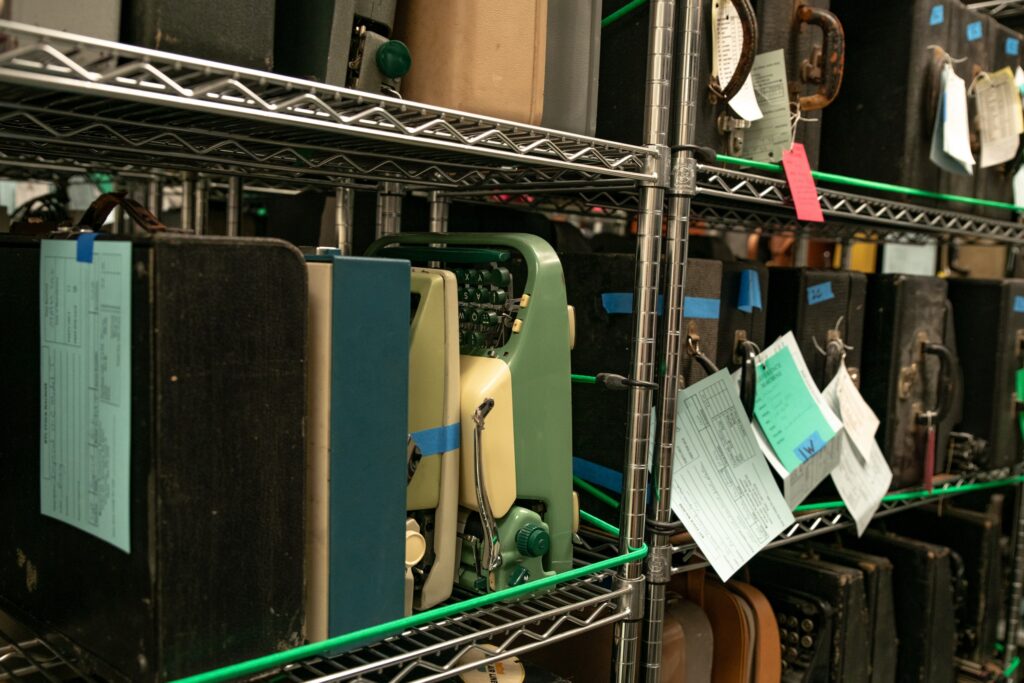
Inside Bremerton Typewriter Co., century-old machines line the shelves waiting for a second life. Some are treasured family heirlooms. Others belong to collectors, writers or businesses that still rely on them every day. One by one, they make their way to the repair benches, where owner Paul Lundy and his team patiently clean, rebuild and restore machines that many assumed disappeared long ago.
It’s an unlikely business in the digital age. Yet more than a decade after Lundy purchased the shop, demand has never been stronger.
An Unexpected Career Change
Lundy never planned to become a typewriter repairman.
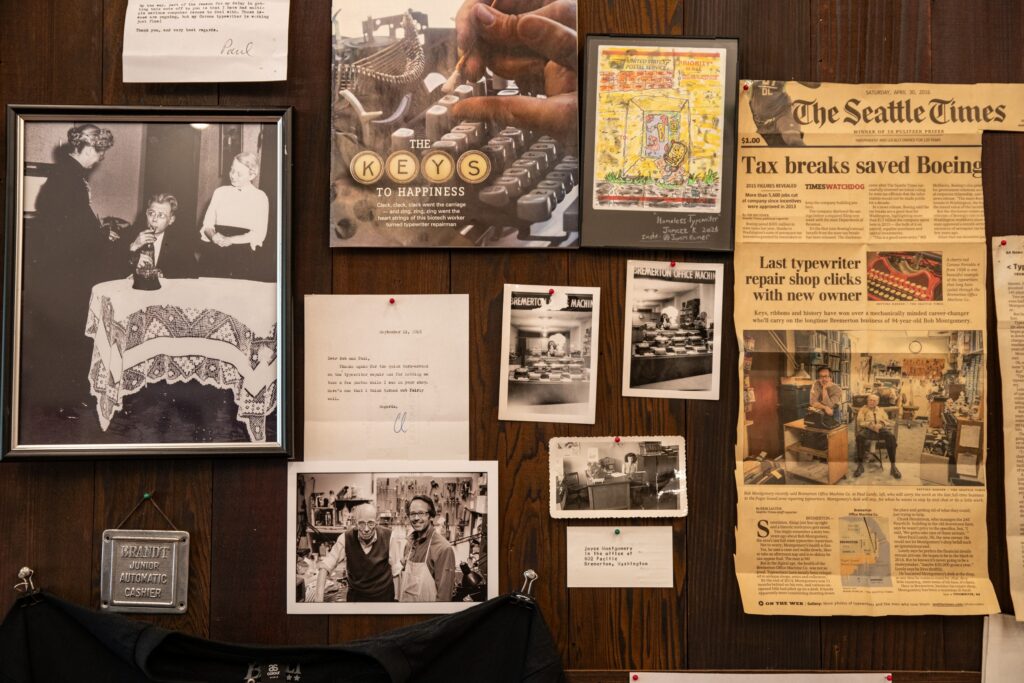
“I worked in facilities for over 30 years taking care of buildings,” he said. “Then I saw a news article in the Seattle Times titled ‘Last Typewriter Repairman.’ I read the article and thought, Wow, that’s really interesting. I told my wife, ‘I think I want to go down and meet this guy.'”
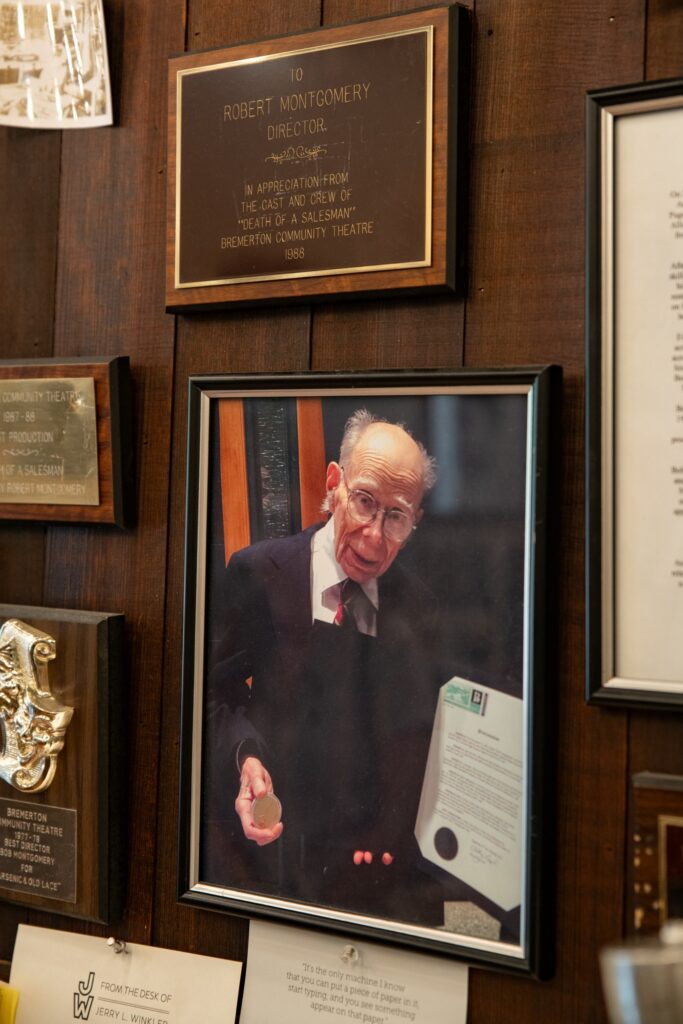
The “last repairman” was Bob Montgomery, a master technician who had spent decades repairing typewriters. Montgomery, who died in 2018 at age 96, began learning the trade as a child in his father’s downtown Seattle shop, changing ribbons and repairing machines for more than 85 years.
Lundy’s visit wasn’t about buying a business.
“The guy was amazing,” Lundy said. “Fascinating individual, and just willing to share everything.”
The two began meeting for lunch, where Lundy listened to Montgomery’s stories. During those visits, he noticed typewriters steadily piling up around the shop.
“I asked him about it and he said, ‘Oh yeah, that news article. I’ve got so much business. It’s too much,'” Lundy said. “So I just asked if I could help. One day a week turned into two, then three. And then it was like, Wow, I’m actually having a lot of fun.”
What began as curiosity gradually became an apprenticeship. Eventually, Lundy asked whether Montgomery would consider selling the business.
“He said, ‘Well, yeah, okay. But you realize this is probably a fad. In 10 years, you need to be prepared to be looking for another job,'” Lundy said. “He was really practical. He’d been through some hard times.”
Lundy purchased the business in 2014.
The shop traces its roots much further back. Founded in 1947 as Bremerton Office Machine Company, it once serviced everything from calculators to adding machines before narrowing its focus exclusively to typewriters. Today, operating as Bremerton Typewriter Co., it is believed to be the only full-time typewriter repair business remaining in the Puget Sound region.
A Growing Demand for Old Technology
From the outside, typewriter repair might seem like a trade destined to disappear. Inside the shop, the reality is quite different.
“We actually have what’s become a standard eight-week backlog of work,” Lundy said. “Even this summer, when we thought it was going to slow down, it just never did.”
When Lundy first entered the business, repairs followed a seasonal cycle.
“It evolved from being quite cyclical and with immense downtime,” he said. “It was busy in the wintertime, and then in summer there would be no business. People were out and about, going to the bicycle shop for repairs in the summer. Then in the winter, when they’re more introspective and looking at that pile of typewriters they bought on the internet, they’d think, Oh my God, I wonder if there’s a typewriter shop.”
Those slow summers have disappeared.
Today, Lisa Knox works full time alongside her husband at the repair bench. Griffin Stoss, a part-time technician, also repairs machines, and the company maintains a rotating apprentice position to help train the next generation.
Even with the expanded staff, the waiting list remains about two months long.
Lundy believes the renewed interest goes beyond nostalgia.
“It’s the one machine where you can sit in front of it and it puts print right in front of you,” he said. “There’s nothing but you and your mushy little brain putting thoughts on the page.”
One customer, a professional author, writes every first draft on a typewriter.
“She’s told me it saves her editing time,” he said. “It’s slower for her to put it in print first and then do all the technology stuff so she can edit it. But she says she doesn’t move paragraphs around as much as she used to. She puts more words on the page that work than she ever used to.”
For many customers, the simplicity is part of the appeal.
“People have found that the first product they put on the page in front of a typewriter is more real and accurate,” he said.
More Than Collectors
The shop’s customers come from every walk of life.
“The family heirlooms are quite a bit of our business,” Lundy said. “The grandkids will be at the grandparents’ house and see this old typewriter sitting on the shelf. They ask to pull it down and start trying to use it, and the kids are totally enamored. Meanwhile the grandparents are going, ‘Oh my God, I did my thesis on that so many years ago.'”
Many of those machines receive complete restorations before returning to the families that have owned them for generations.
“They want them useful again,” he said. “They want them back in the family. It’s fun to see.”
The business is also sustained by collectors.
“The typewriter enthusiasts really have kept us in business,” Lundy said. “Without the volume of work they bring in today, we would not be here. We wouldn’t be able to pay rent, pay for the phone, certainly not our salaries.”
Businesses still make up another portion of the customer base.
“The founder of the company used this typewriter and they want to keep it useful in the shop, or there’s the legacy employee who still works there and still wants to use their typewriter every week.”
Industrial customers sometimes find that a mechanical machine simply works better.
“I’ve seen shipping warehouses where their manifest software doesn’t align well with the printing,” Lundy said. “They get tired of it and decide, ” Let’s just stick a typewriter out in the warehouse and get those manifests done.”
Then there are the writers.
“The smallest group are the actual authors, the actual writers,” he said. “They’re a small group but dedicated, focused. They understand which machines work best for them.”
Artists have also embraced the machines.
“There are people who do beautiful typewriter art,” Lundy said. “And there are artists who will physically take apart typewriters to create art as well.”
He points to local artist and retired teacher Kelye Kneeland, who creates portraits with typewriters, and a Poulsbo artist who incorporates typewriter parts into fused-glass artwork.
“I actually think of typewriters as industrial art,” Lundy said. “With the really old machines, like sewing machines, they did those beautiful decals. They made them pretty. I’ll get in a machine from 1915 and just sit back and look at it and go, Wow, they really put some thought into what it should look like.”
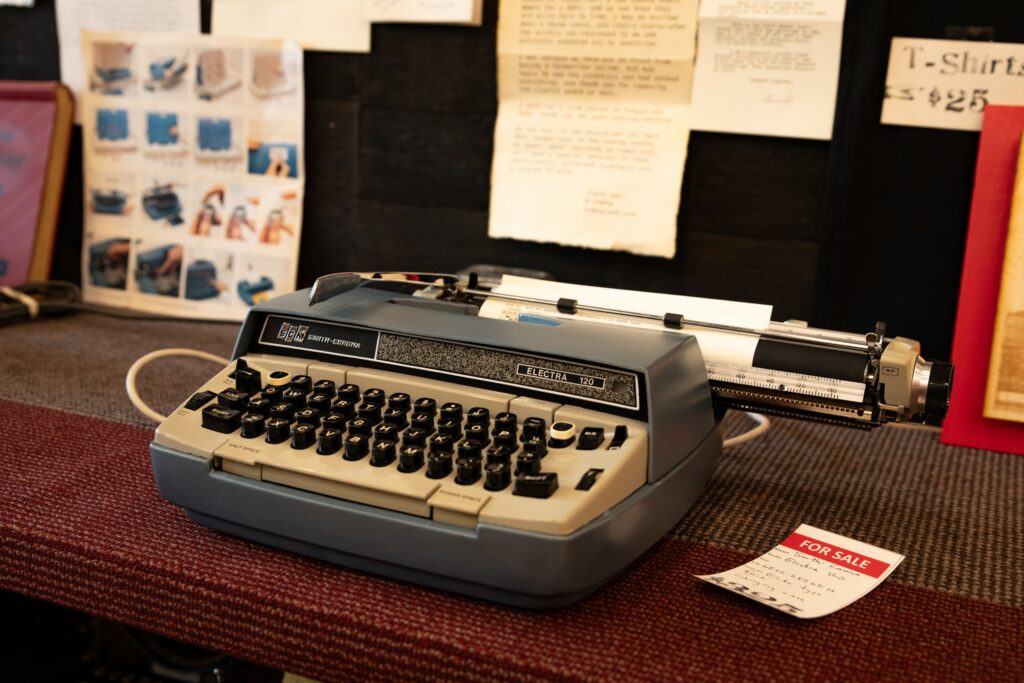
Bringing Machines Back to Life
Behind the showroom is the heart of the business.
“I tell people that 90 percent of what we do is clean things,” Lundy said. “I rarely get a typewriter that is actually clean. Almost always what’s wrong is that it’s gotten sluggish with old oils and dust and grime. If you can get those out of the mechanisms, they usually just need minor adjustments.”
The shop even has a room devoted entirely to cleaning.
From there, repairs become more technical. Rubber platens, paper rollers and feet often need replacement, particularly on machines built before World War II. Some replacement parts no longer exist.
“I’m rebuilding a motor and gear assembly on a 1934 Woodstock,” he said. “This machine has been with us for a couple of months. It’s been very slow because there are no parts. I was making a part for it in the machine shop today.”
When necessary, the shop fabricates components in-house or works with a network of specialty suppliers and fellow enthusiasts around the country.
“Once we get it cleaned and adjusted and replace broken parts, we start putting everything back together,” Lundy said. “We put ribbon in, test all the functions. When you think you’re done, we do what we call a final test. We let the machine sit overnight, and then one of the other technicians does a final test to make sure everything’s working.”
If something isn’t quite right, the machine returns to the original technician for additional work.
Some restorations take months.
“It feels good when it’s done, fixed,” he said.
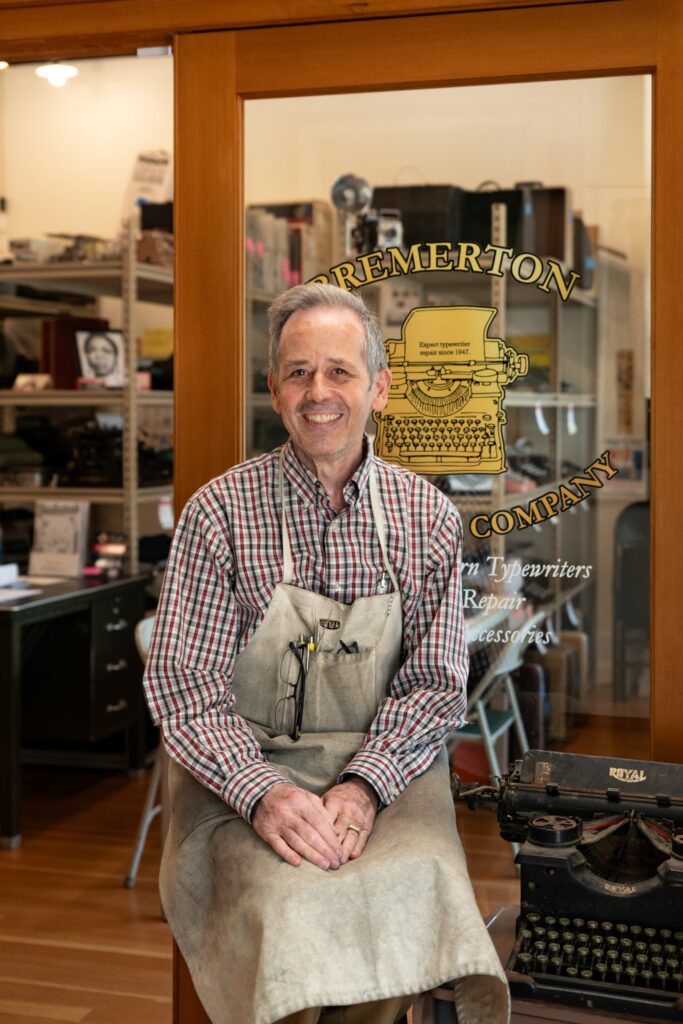
Looking at the Past Differently
The oldest typewriter Lundy remembers restoring dates to 1897.
“My perspective of what’s old has changed,” he said. “You’ll have things from the year 1900 that only need to be cleaned and they work fine.”
Working alongside Montgomery also changed how he views aging.
“My whole perception of old, productive people has changed,” he said. “When I met Mr. Montgomery, he was 92. He worked every day and took the bus down from his apartment. People don’t pay a lot of attention to the elderly. You’re kind of a has-been by the time you get old, and people don’t realize that when they were in their 50s, these people were rocking.”
That perspective extends to the business itself.
Although customers often admire the vintage machines displayed in the showroom, Lundy says the shop survives because of the work taking place behind the scenes.
“When you walk into the shop, the front of the shop is really selling typewriters,” he said. “Many of the machines there are collector machines we sell for a lot of money. But what you don’t see is the less expensive machines because they sell immediately and leave the shop.”
Sales help keep the lights on, but repairs keep the business alive.
“I’d say 90 percent of our income is derived from repairs,” he said. “At $55 an hour, time and again I can look at my monthlies and see that while we sell typewriters—and thank God, it pays rent—mostly our income is from repairs. Repairs win every time.”
For nearly 80 years, the business has adapted as office technology evolved—from calculators and adding machines to a singular focus on typewriters. Today, while most communication happens with keyboards and touchscreens, Bremerton Typewriter Co. continues to prove there is still room for craftsmanship, patience and machines built to last.
One repaired typewriter at a time, the shop is preserving not only a disappearing trade, but the satisfying rhythm of words striking paper.
Keep in touch with our news & offers
Subscribe to Our Newsletter
Thank you for subscribing to the newsletter.
Oops. Something went wrong. Please try again later.