
As Kitsap County continues to grow, the systems that support daily life — water, wastewater treatment, and broadband — play an increasingly critical role in economic stability and opportunity. At the center of that work is Kitsap Public Utilities District General Manager Angela Bennink, a lifelong Kitsap resident whose career has focused on expanding access to essential infrastructure, particularly in underserved and rural communities.
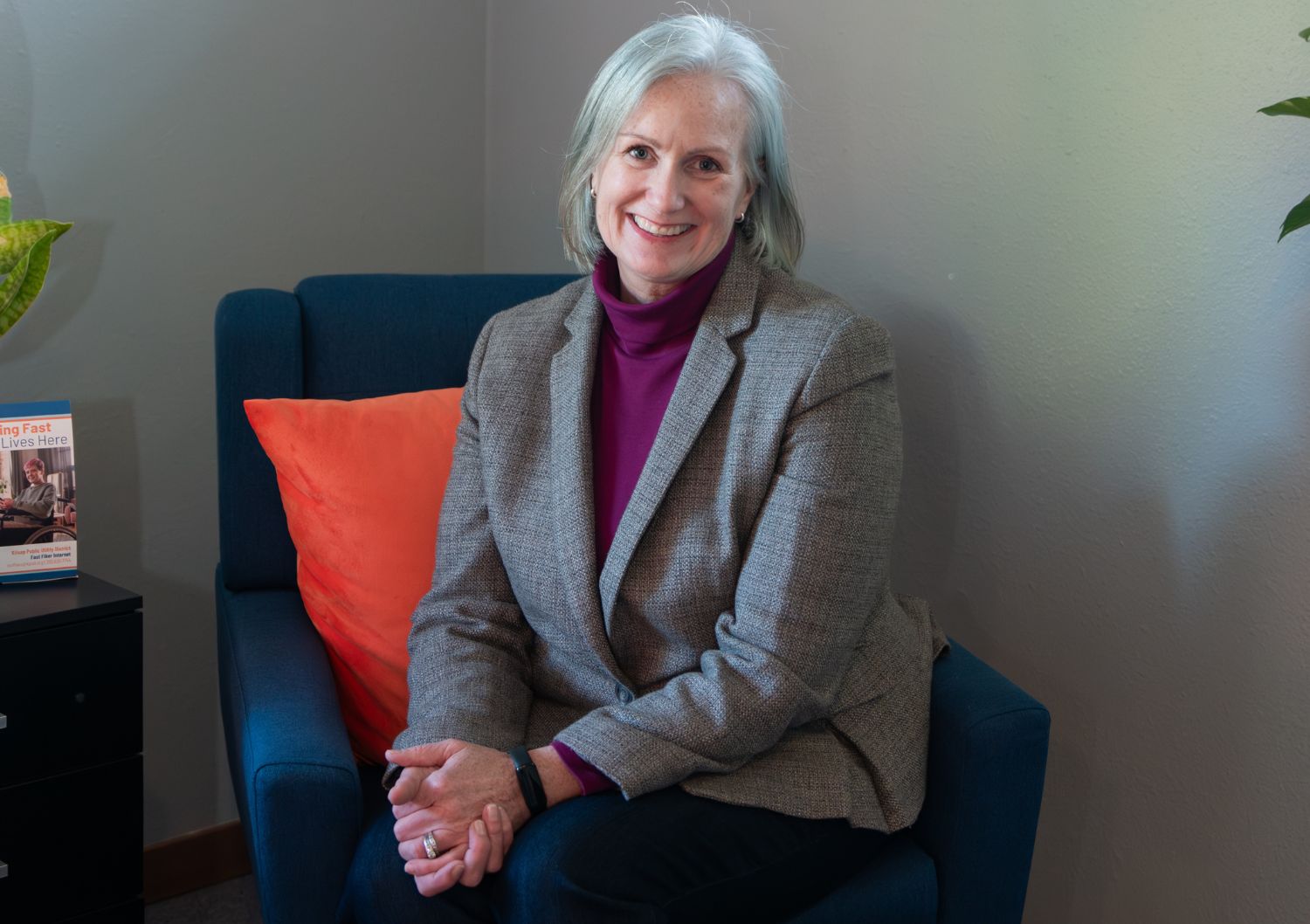
In this Executive Q&A, Bennink shares her path to public service, KPUD’s major investments on the horizon, and how strategic infrastructure planning, technology, and partnerships are helping position Kitsap County for long-term resilience and business growth.

Please tell our readers a little bit about yourself and what led you to your role at Kitsap PUD.
I began working with public utility districts (PUDs) in 2007 when I joined the Northwest Open Access Network (NoaNet), a not-for-profit, quasi-governmental corporation owned by PUDs. At NoaNet, I worked throughout the state supporting rural communities in gaining access to broadband services. Kitsap Public Utility District (KPUD) is one of NoaNet’s owners, and after I moved to Poulsbo, they generously allowed me to set up an office at their facility. The leadership at KPUD had built a team that was great to work with, and it was clear employees were valued and empowered to serve their community. When KPUD offered me a position in 2018, I jumped at the chance. While I enjoyed working with communities across the state, the opportunity to focus my work at home was too appealing.
During my time at KPUD, I have remained engaged in state and national broadband issues by serving on the boards of NoaNet and the American Association for Public Broadband. I have also served on public policy committees for both the Fiber Broadband Association and the Utility Telecom Council.
I was born in Kitsap County at Harrison Memorial Hospital and, aside from time away for college and my first engineering jobs, have lived here most of my life. My husband and I are raising two kids, a North Kitsap Viking and a Poulsbo Panther, and through them I have had the opportunity to serve on the PTSA and the North Kitsap Lacrosse Club Board of Directors. Being involved in and contributing to my community has been incredibly meaningful to me. I am grateful every day for the work I get to do and the way I get to serve.
As general manager of Kitsap PUD, what are your top priorities for the utility right now, and how do they align with the region’s long-term growth?
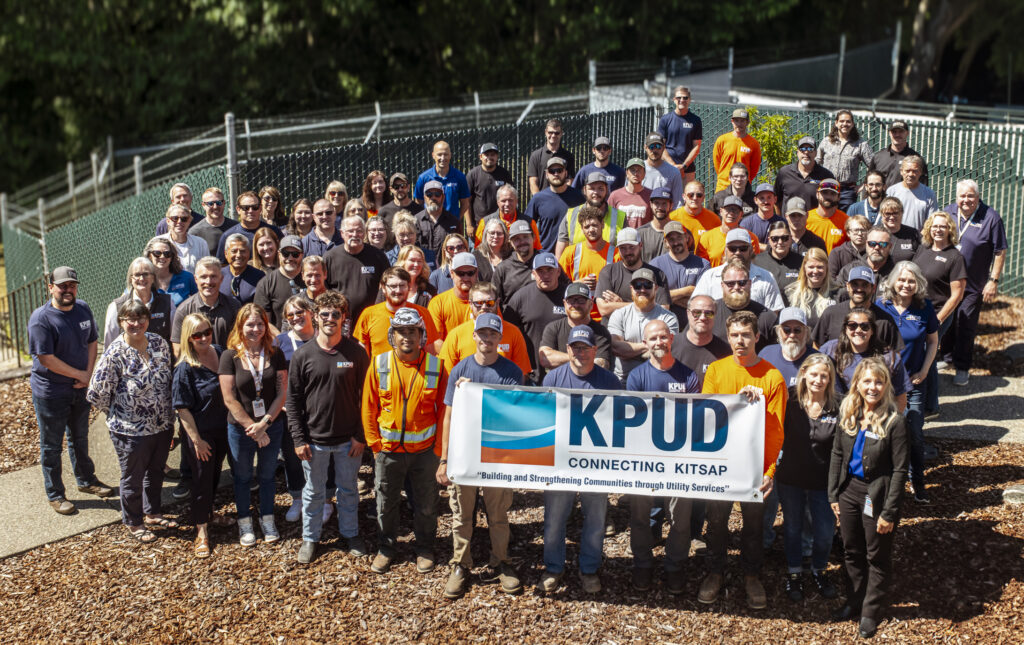
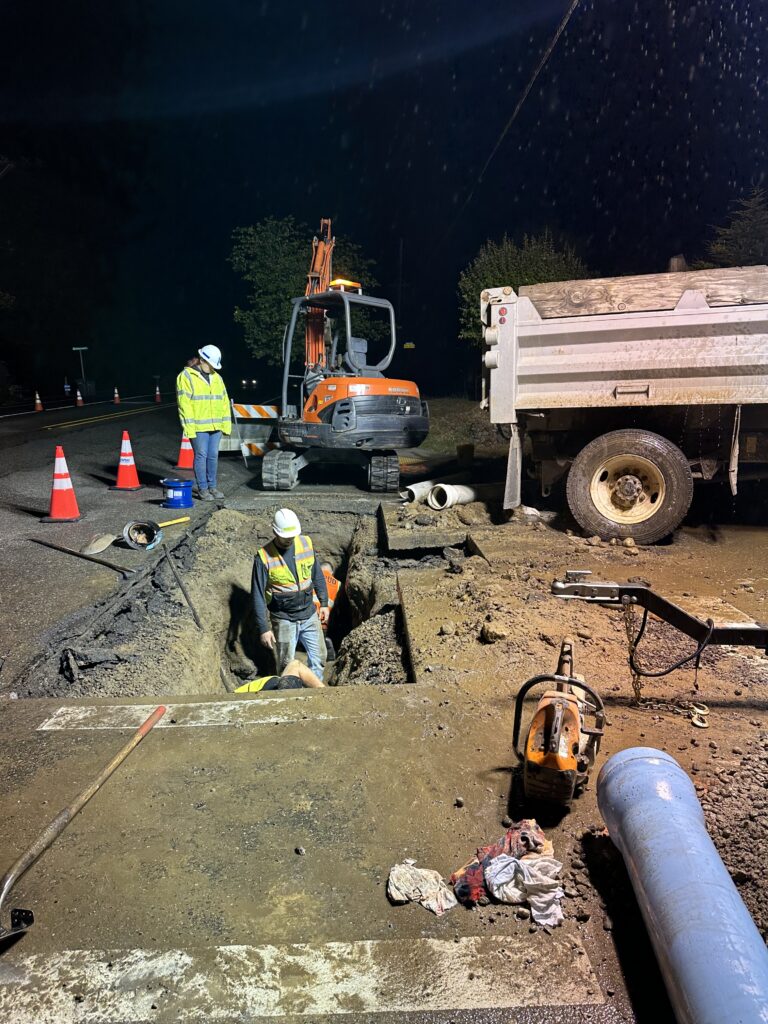
Successfully executing on projects and grants beginning in 2026. Lots of wins happened all at the same time. We received four grants to consolidate water systems and seven grants for broadband expansion. We will replace water main in Eldorado Ridge (Silverdale), install water main in Fort Ward (Bainbridge Island), replace infrastructure in Port Gamble, and we have recently acquired the Fort Ward Sewer District (also known as Kitsap County Sewer District No. 7).
These projects bring a lot of new infrastructure and prepare KPUD to better serve the community.
Kitsap County is experiencing steady population and business growth. How is the PUD planning infrastructure investments to keep pace with demand?
As a public entity, preparing for growth is standard. We build plans to make sure we have resources to provide reliable utility services now and into the future. This means balancing costs, looking for grant funding when possible, managing capital facility charges, and investing in regional infrastructure.
We develop water and sewer plans that look 20 years into the future to ensure the projects we are completing today will be adequate to serve our communities for years to come.
During our first 10 years of residential broadband service, we focused on building infrastructure in unserved areas of the community. Today, grant funding will expand that infrastructure, build almost 200 miles of middle-mile fiber, connect around 4,000 homes, and pass by three times as many (reducing homeowner costs to connect to the network). This is a huge win for Kitsap County, building state-of-the-art fiber optic networks to all areas. With the grant funding, we’re able to focus our existing capital funds on expanding residential broadband to communities that may technically be labeled as “served,” but do not currently have access to reliable home internet and have requested KPUD service.
Broadband has become essential to economic development. How is Kitsap PUD working to expand broadband access, particularly in underserved or rural areas?
KPUD has been strategic in building infrastructure to serve the communities in our more rural underserved areas. During COVID, we spoke with Kitsap County about the use of ARPA funds to expand infrastructure that would make it less expensive to connect homes in the future. KPUD has used those funds to build fiber connecting 21 new nodes (buildings that house network distribution equipment) across the county and increased the speed capacity of the equipment on the network. We now have fiber and distribution nodes in Twin Spits (Hansville), Fort Ward (Bainbridge), Seabeck-Holly, Olalla, and areas in between. We are reaching the extremely rural areas of the county. While there are still costs to connect homes, we have greatly reduced it by reducing the distance from homes to distribution nodes.
Additionally, we have worked with the county and Kitsap Transit to expand free WIFI sites across the county. We stood up 10 sites during COVID, some of those have been retired since then, and we are creating seven (7) new WiFi sites at Kitsap Transit Park and Rides with the support from Kitsap County ARPA funds.
Whenever we build infrastructure, we evaluate the needs of the residences and businesses it passes and design the project with future capacity in mind.
For businesses, we continue to grow and evolve to provide the products that they need. I think we have the staff to work with small and large organizations to provide services that meet their needs, whether it is the famous Sluy’s Bakery or Navy Region Northwest. Our network capacity has grown over this past year to provide 100Gbps services, dark fiber for our public entities, and small business service of 2.5Gbps.
KPUD operates as an open access wholesale network. This creates competition across our services, allowing residents and businesses to choose their service provider and change providers if it’s not the right fit. We have seen competition lead to better services and more competitive pricing for our county. Additionally, we enter into interlocal agreements with other government agencies to exchange high-speed broadband services for services KPUD needs, such as Central Kitsap Fire and Rescue; we provide broadband services, and the fire district provides space and power for distribution nodes where feasible.
From a business perspective, how does improved broadband connectivity impact local entrepreneurship, workforce development, and business retention?
Our high-speed network, expanded to residences, has supported many businesses that started in homes, including video editing, radiology, computer programing, and more. Small businesses that rely on high-speed service have been able to launch from home, and residents have access to remote jobs. During COVID, we saw an influx of people moving to Kitsap County for the quality of life. These residents needed access to broadband to maintain their jobs or build new businesses to support this new lifestyle. By offering services in Kitsap that are available in urban areas, we provide opportunities for businesses and individuals to relocate for quality of life while still maintaining livelihoods.
What role does technology and innovation play in modern utility management, and how is Kitsap PUD leveraging new tools or systems?
Technology is a huge factor in maintaining secure, sustainable utilities. With our water and wastewater utilities, we utilize broadband infrastructure to manage our SCADA (Supervisory Control and Data Acquisition) network. This allows us to control pumps, monitor tank levels, view flow rates, and send alarm signals when there is a risk – all remotely and in real time. We have WiFi infrastructure throughout the county that allows staff to connect to our secure network and transport data.
Automated Meter reading is something we are looking toward in the future to provide our water customers with a real-time view of their usage. By providing customers with real-time usage information, we can encourage more responsible use of our water resources.
In the wastewater utility, we use membrane technology to produce an effluent from the treatment plant that is drinking water quality. This gives us the opportunity to return the water that customers use back to the ground, removing waste and contaminants while recharging the aquifer with clean water. Membrane technology continues to evolve, creating smaller plants that can treat more waste. What does this mean for Kitsap County? Outside of urban growth areas, residents rely on septic tanks. This is an effective method for treating waste and returning water to the ground to recharge aquifers. As infrastructure ages, the use of small treatment plants may become instrumental in reducing emerging contaminants that come from our septics, in our drinking water and keeping our coastal waters free of sewage.
In broadband, we are constantly evolving our network as speed requirements of residential and business customers continue to grow. We have recently modified our residential service to allow new customers the opportunity to purchase a 2.5 Gbps broadband service. Customers on the legacy system can purchase a 1 Gbps service, and we will begin transitioning those customers to new infrastructure as time and funding allow. We have also upgraded our online interface for customers, providing residents with tools to estimate connection costs, sign up for service, and even pay connection fees online. Our online marketplace also allows customers to compare services and pricing from multiple retail service providers.
Public utilities often balance affordability with infrastructure investment. How do you approach that balance while remaining fiscally responsible?
The KPUD Board of Commissioners, who are elected, is very focused on making sure the utility is not only fiscally sound, but also that customers are not overly burdened by capital projects. To do this, we balance the use of long-term bonds with rate increases. In my first year as general manager, we modified our rate structure so that the base water rate covers a higher percentage of operating costs. This ensures a steady revenue stream and supports KPUD’s ability to encourage responsible resource use.
Over the past few years, we have had to make difficult decisions to raise rates to maintain services amid dramatic increases in costs. For capital projects, we have been very successful in accessing grant funding. However, opportunities to qualify for future funding are changing, as funding priorities shift toward distressed communities, which doesn’t apply to most of Kitsap County. We will continue to be creative and pursue grant funding where available to reduce the burden on ratepayers.
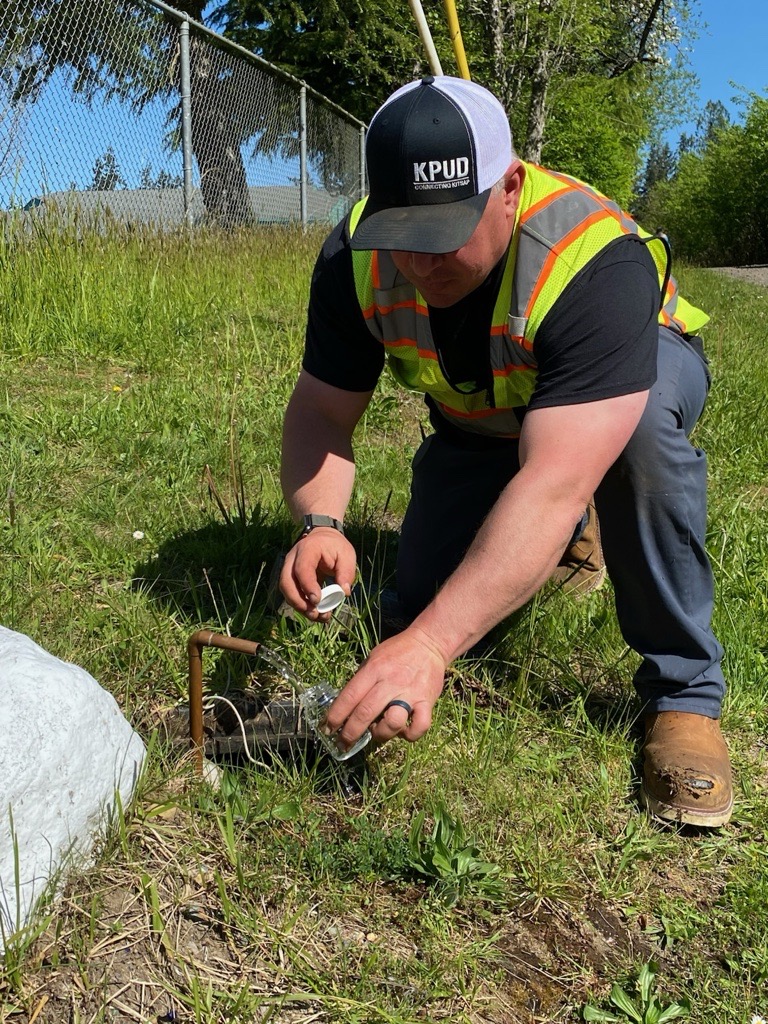
Sustainability and resilience are growing priorities. How is Kitsap PUD planning for climate impacts and long-term system reliability?
As the water resource manager for the whole county, we are focused on monitoring rainfall, streamflows, and groundwater sources to track changes we are seeing as a result of climate change. All of our groundwater is recharged by rainfall, so we actively engage with climate change models to understand what is being predicted for our area. At this time, the models show little change in the total amount of rainfall; however, that rainfall is expected to occur in larger amounts over shorter periods of time, resulting in bigger storms and less drizzle. This could be beneficial for aquifer recharge if the soil can absorb the water, rather than it becoming excessive runoff.
To ensure that we can provide a reliable water supply, we look at the county as a whole and have built regional infrastructure to move water from areas of abundance to areas with less water. This currently allows us to move water from Seabeck to North Kitsap and the systems along the way, giving us alternative sources to serve customers in the event of a catastrophic failure of any single source. We have completed all phases of this infrastructure up through Phase 8 and are currently designing additional phases. Future phases include Suquamish, Bainbridge Island, and beyond. We have been tasked by Kitsap County to manage water resources as regional assets, and this regional infrastructure supports us in fulfilling that responsibility.
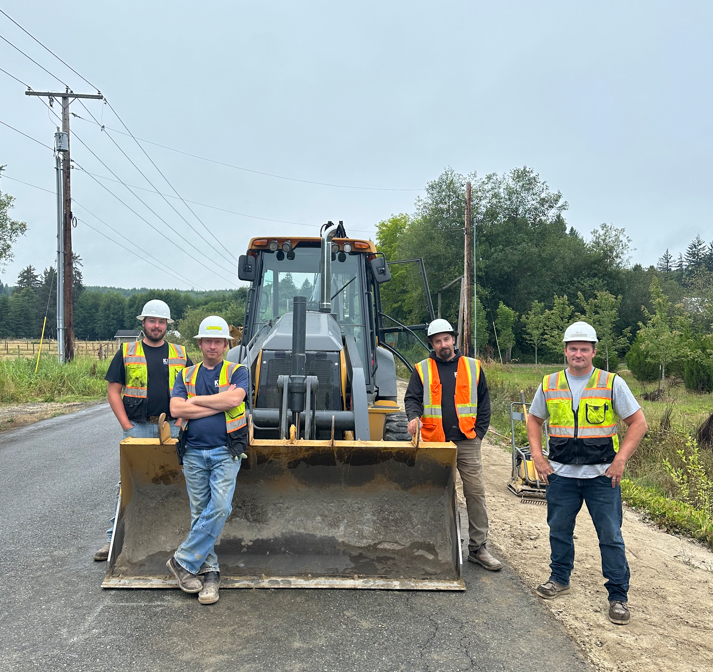
Partnerships are critical in public service. How does Kitsap PUD collaborate with local governments, tribes, and private-sector partners?
KPUD has strategic goals focused on engaging with other agencies that serve our community. Often, each agency provides a service that can be exchanged, reducing overall costs and while maintaining high-quality services.
One example is our work with local fire districts. Some rural fire stations are located where KPUD needed to house telecom distribution nodes. We were able to exchange broadband services for space and power to house these nodes, eliminating recurring utility costs for both the fire district and KPUD. We have also partnered with Kitsap Regional Library supplement community services. We have worked together to provide digital equity services, such as computer classes, in exchange for broadband connectivity.
On the water side, we partner with Silverdale Water, City of Poulsbo, City of Bremerton, and City of Bainbridge Island on a variety of water issues. Bremerton, Silverdale and KPUD are working together on a mitigation strategy to access new water rights to ensure long-term water availability for residents. This partnership helps reduce operational costs while mitigating streamflow impacts. Poulsbo and Silverdale share resources, wells and storage to better serve our residents.
At the request of the community, we recently acquired the sewer and wastewater treatment plant previously owned and operated by Kitsap County Sewer District No. 7 (often referred to as Fort Ward Sewer). Through this acquisition, we have expanded our partnership with the City of Bainbridge Island by treating sewage for nearly 400 residents who are connected to the city’s sewer collection system. This has increased opportunities we have to partner with the city to respond to emergency situations and expanded services for residents on the south end of the island. This is similar to the agreements we have with the county to exchange services and support sewer operations. By partnering with other agencies, we share resources and provide exceptional services to our residents with reduced costs.
Beyond public agencies, we partner with cellular companies by allowing antennas to be attached to water tanks to improve coverage for residents. We work with the Navy, PSNS, Olympic College, and WWU to ensure students have access to infrastructure that supports training, including providing high-speed connection between PSNS and Olympic College to allow for transfer of files for the apprenticeship programs.
For broadband, we partner with retail service providers to create a strong marketplace where consumers have choice. This has led to the growth of multiple new companies that are focused on serving residential and business customers throughout Kitsap County.
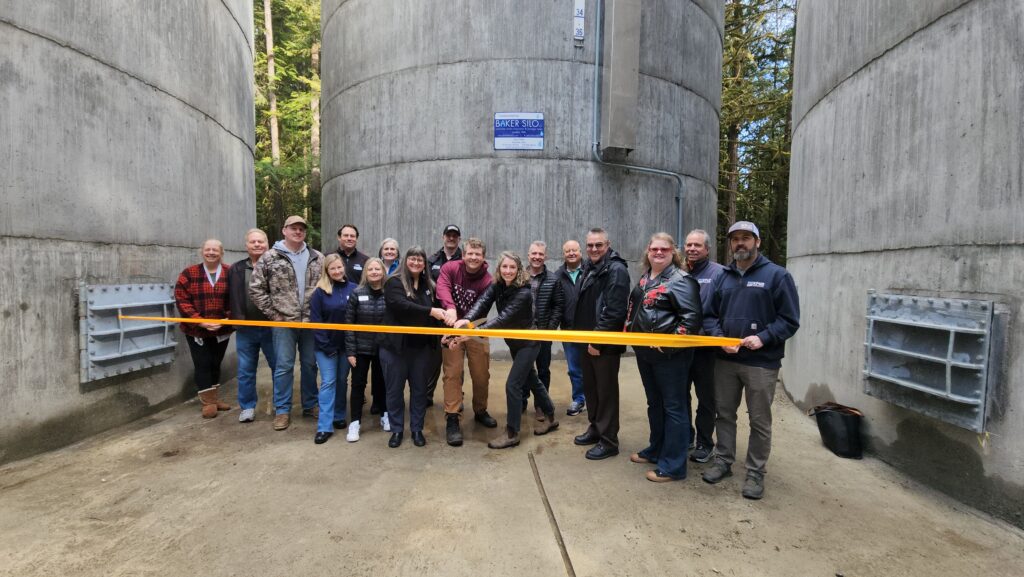
Workforce development is a challenge across many industries. How is Kitsap PUD attracting, training, and retaining skilled employees?
We take a dual-pronged approach to work force development. First, the KPUD Board looks at the broader Western Washington labor market when setting wages. We know we are competing with areas that are easy to commute to, including the Everett-to-Tacoma corridor and the Olympic Peninsula. Offering competitive wages is key to attracting and retaining quality staff.
The second approach we take is offering internal training. We regularly hire individuals that started as seasonal staff, and we provide on-the-job training. We value creating opportunities for growth within KPUD.
We do anticipate challenges in our telecom department as the nation continues to experience a workforce shortage. There are efforts at a state and national level to bolster the telecom workforce. While some initiatives have slowed due to administration changes, programs like the Tribal Broadband Bootcamp, Fiber Broadband Association certifications, and other training organizations remain active and will hopefully continue to train new workers.
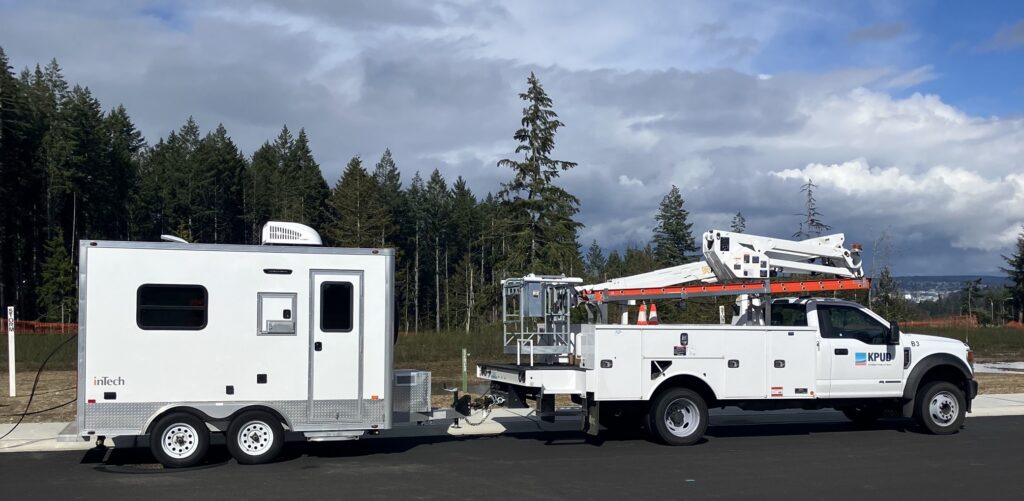
What should local business owners understand about how public utilities influence economic stability and growth in Kitsap County?
One of the most important things to know about public utilities is that your money stays in the county. We hire your neighbors, keeping high-paying reliable jobs in Kitsap County. We hire local contractors to do work, and our governance comes from elected officials, not a remote office in Colorado, Missouri, or Kirkland. KPUD Commissioners are Kitsap County residents, elected by the community, who share local values, and live in the areas that are impacted by their decisions.
We are not-for-profit utility, which means we reinvest in infrastructure instead of paying shareholders. By not having to pay shareholders, we are able to keep rates lower and invest directly in infrastructure which leads to long-term reliability. We are regularly working with small water systems that are privately owned and operated, where owners invested only what was necessary to keep the system running. When we step in, we frequently encounter problems caused by deferred maintenance and, in some cases, negligence.
You also have a direct voice in what we do. We are governed by a three-member elected commission that sets policy. Our meetings are open to the public, held on the 2nd and 4th Tuesday of the month, and we welcome input. We are here to serve, and our staff take pride in doing that well.
Economically, utility rates are reinvested back into our community. Public utilities don’t relocate. Serving the community that we live in is what motivates many KPUD employees. Utilities are a stable industry. The economy can go up and down, but we still need access to power, water, sewer and internet services.
Looking ahead, what major projects or initiatives are you most excited about over the next few years?
I will respond to this for each utility and for KPUD as a whole.
For water, we continue to consolidate small water systems. As regulatory requirements increase, we can provide economies of scale that ensure reliable, high-quality water for our residents. We have four projects over the next two years that will support small systems by either transitioning off of their current sources or treating water to remove emerging contaminants which can be cost prohibitive for a small community on its own. In these specific projects, the manganese levels are higher than what the EPA considers healthy. While manganese is a secondary contaminant in Washington State and removal is not required, it is the right step for the community
For the wastewater/sewer utility, we have recently acquired the Fort Ward Water Reclamation Facility. As the name suggests, the facility provides the opportunity to reclaim water and create an additional source for the south end of Bainbridge Island. This will require a significant investment and further study, but it is the first step in having an alternative source beyond rainfall to recharge the aquifer. Even more exciting, is the opportunity to build small-scale treatment systems that can help protect Puget Sound. In Kitsap County, we have over 250 miles of coastline, and many waterfront homes relying on aging septic systems. With most of these homes being rural, where sewer connections are not feasible, small-scale membrane treatment plants could significantly reduce contaminants entering the Sound.
For broadband, our next major step is the Broadband, Equity, Access, and Deployment (BEAD) program. We have been preliminarily awarded nearly $15 million in federal funding, $5 million from the state, and will bond for the remaining funds to build broadband infrastructure in the most unserved rural areas of the county.
For KPUD overall, we have outgrown our facilities and are conducting a facilities assessment to determine what we will need over the next 20 to 40 years. We are investing in foundational internal system upgrades that will improve payment options, communication with customers, budgeting, asset and inventory management, and more. Although these types of software implementations are challenging, they ultimately make us more efficient and responsive. I keep looking to the future and know we will be better and faster, that is why it excites me. Also, it is time for an update of our strategic plan. This year we will dive into what we want to accomplish over the next five years. Strategic planning is always energizing.
Now with that said, there are also challenges. We have limited staff and many large projects all hitting at the same time. Coordination with other utilities, such as PSE, has been challenging, time-consuming, and costly. Local jurisdictions are also facing budget constraints, and we are seeing permitting costs increase dramatically. As those costs and timelines increase, it makes meeting our goals more difficult.
Another challenge we all are facing is increasing costs in labor and materials. Some of our projects are coming in over the original estimates. It takes years to design, study, and permit a project, and we typically factor a 3-4% increase in costs over that time. In one example, we saw the costs of concrete construction increase by 250% over two years. While this is extreme, it highlights the risks we have to manage.
What leadership lessons have you learned managing a public utility that operates at the intersection of government, business, and community needs?
We have the ability to make a real difference in our communities. Government agencies can have a “yes” mentality. Since I have been at KPUD, we have done some creative things driven by our communities. With that said, we do have limitations. We operate under strict rules designed to prevent fraud, and those can sometimes create challenges. At KPUD we like to say “Yes, and.” That “and” can mean it will take time, or it will take a funding source. Our staff are empowered to say yes, and that is a part of our culture. Staff work hard to find a solution. Some of our biggest successes were driven by thinking outside of the box, partnering with other public agencies, and being prepared to act when opportunities arise. There’s often a perception that public agencies exist to say no. We strive to be different. We are funded by the community, and we are here to serve the community.
Who or what inspires you?
Our staff. I am impressed everyday by what they accomplish, their creativity, and their willingness to go above and beyond for the community. We hear regularly from customers and community members giving kudos to staff. I love getting those notes. As we grow, it becomes harder for me to engage with all staff individually, but I am proud see that even without daily interaction, our staff continue to live our core values.
Keep in touch with our news & offers
Subscribe to Our Newsletter
Thank you for subscribing to the newsletter.
Oops. Something went wrong. Please try again later.