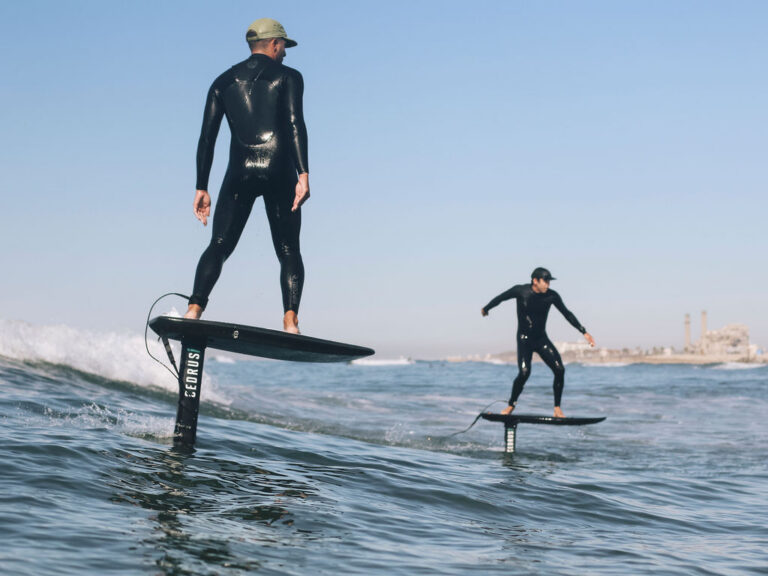
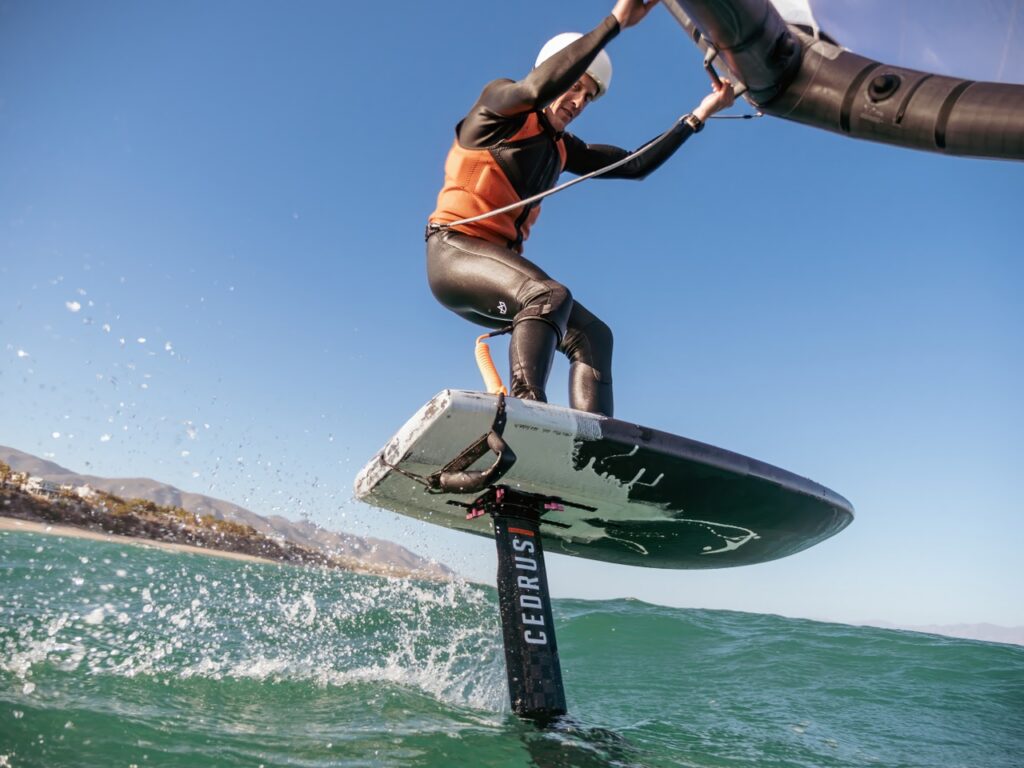
On a windy afternoon in Puget Sound, the act of rising above the water on a hydrofoil can feel almost magical. Board skims, foil hums, and suddenly the rider is flying—suspended above the chop. It looks effortless. Underneath that moment, however, is one of the most technically demanding components in modern watersports: the foil mast.
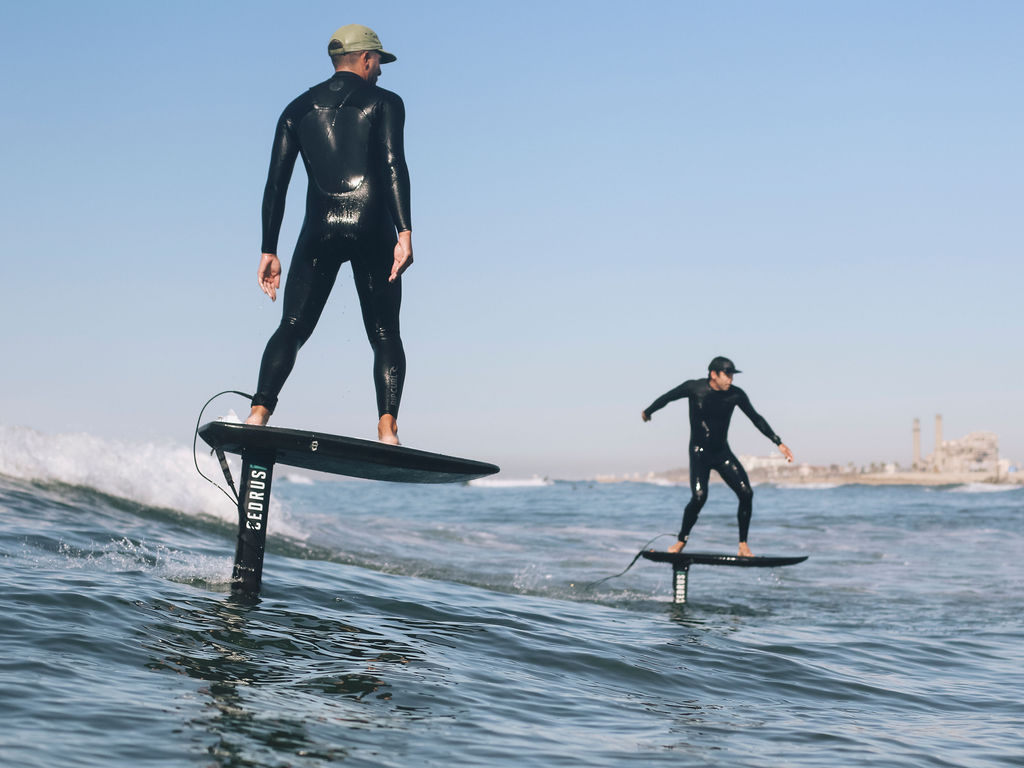
On a windy afternoon in Puget Sound, the act of rising above the water on a hydrofoil can feel almost magical. Board skims, foil hums, and suddenly the rider is flying—suspended above the chop. It looks effortless. Underneath that moment, however, is one of the most technically demanding components in modern watersports: the foil mast.
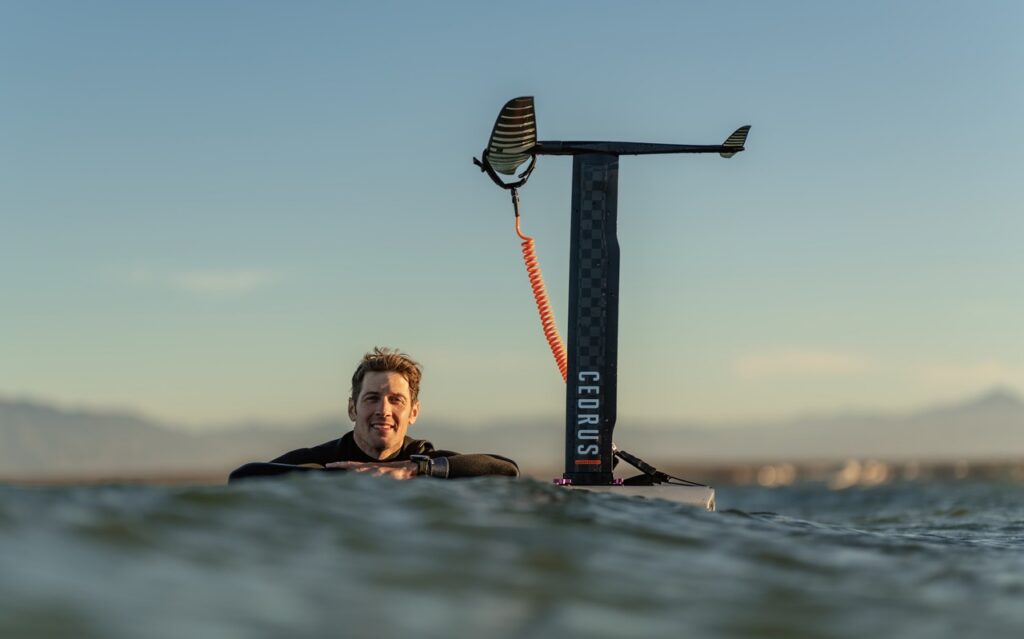
For Kyle Lobisser, founder and CEO of Foil Cedrus, that vertical strut connecting board to foil is not just a piece of equipment. It is a systems problem, an engineering challenge, and an opportunity to rethink how high-performance sporting goods are designed, manufactured, and valued.
Founded on Bainbridge Island, Cedrus is a Kitsap-based company building hydrofoil masts intended to last a lifetime. Its approach challenges industry norms built around rapid product cycles, overseas manufacturing, and planned obsolescence. Instead, Cedrus emphasizes durability, modularity, local production, and materials science—an unusual mix in a surf-adjacent industry more often driven by aesthetics and seasonal trends.
“In this sport right now, there’s like 30 different brands,” Lobisser said. “It would be the equivalent of every bike brand having their own frame and wheel standard, or every ski brand having a different ski–boot connection. Right now, every foil brand is different.”
That fragmentation, he believes, drives unnecessary cost and waste. Cedrus’ answer is a universal mast system: a single, carefully engineered mast paired with precision-machined adapters that allow riders to connect to nearly any foil system on the market. When a new foil design comes out promising tighter turns or better glide, Cedrus customers don’t have to replace their entire setup.
“You don’t have to buy that brand’s mast,” he says. “You just buy our adapter and use our mast. It saves money—and it cuts down on waste.”
From Aerospace to the Water
If Cedrus feels more like an engineering firm than a surf brand, that is intentional. Lobisser is a structural analysis engineer with more than 20 years of experience at Boeing, Apple, and multiple startups.
“I’ve worked on airplanes and iPads and flying cars, and it was all fun,” he said. “But I’m an athlete, and I really love how my gear connects me to the Earth and my friends. It’s a very social thing, whether it’s skiing or surfing. I always wanted to work on sporting goods.”
What he found when he looked closely at the industry surprised him. Many outdoor and surf brands rely heavily on overseas factories and industrial designers, with limited in-house engineering expertise.
“A lot of the brands don’t really employ engineers,” he said. “They’re more like designers focused on graphics, and maybe going to the factories in China and working with them to figure out how to make it. They don’t necessarily have that expertise in house.”
Cedrus was built to do the opposite—starting with engineering, materials science, and manufacturing process design, then letting aesthetics follow function.
The company’s origin story is tied directly to Lobisser’s aerospace background. In the wake of delays on Boeing’s carbon-fiber 787 Dreamliner program, large quantities of high-grade carbon fiber reached their regulatory shelf life. The material, stored frozen to slow the chemical curing process, can no longer be used in aircraft after five years under FAA rules.
“Because of the 787 delays, Boeing had a lot of expired carbon fiber they couldn’t use in the airframe,” Lobisser recalls. “They were auctioning it off, and I bought like 2,000 pounds. That’s how we started making masts.”
Carbon fiber, he explains, is a composite material—strong fibers embedded in a polymer matrix, similar in concept to concrete reinforced with steel. Wood, he notes, is actually nature’s first composite, combining cellulose fibers and lignin. That realization helped inspire the company’s name: Cedrus, Latin for cedar.
The name is also a nod to the Pacific Northwest and to Indigenous craftsmanship. Lobisser draws inspiration from cedar dugout canoes and longhouses built by First Nations peoples, who understood how to work with wood as a high-performance material long before modern composites existed. Cedrus’ logo—a dorsal orca fin, cedar bough, and eagle feather—was designed by a First Nations artist in British Columbia.
“I took inspiration from how they worked with wood differently,” he says. “And I wanted a logo that incorporated that artistic style.”
Solving a Hard Problem
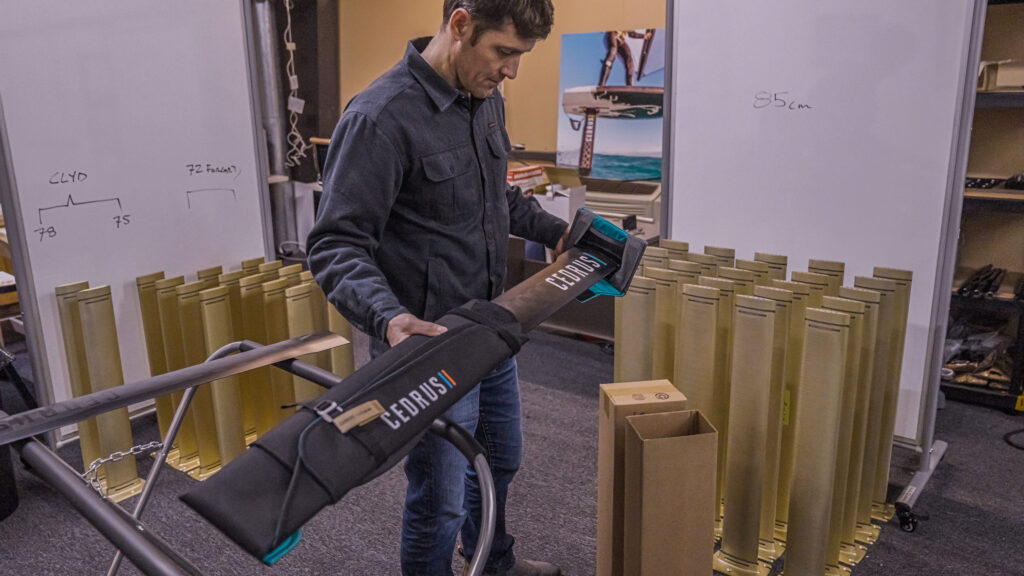
Lobisser began foiling in 2013, as the sport transitioned from a niche pursuit of elite athletes to something more accessible. Early on, he noticed a recurring issue: mast performance.
“The mast was a pretty critical structural element, and it wasn’t being designed stiff and strong enough,” he says. “Masts were breaking, or they weren’t very stiff. You’d go to turn, and there’d be this lag because the mast was bending.”
With his background, he believed the problem could be solved—but not cheaply or casually. Tooling for composite parts is expensive, making one-off builds impractical. Instead, he turned to an informal Kickstarter posted on a local kiteboarding forum.
“I just posted, ‘Hey, I’m gonna make myself a mast, and I’m going to make 20. If you want one, here’s my background, here’s everything I’ve done. I promise I’ll deliver,’” he said. “And sure enough, 20 people gave me about $1,500 each. That’s how I started.”
What drew him in was the constraint-heavy nature of the problem.
“It looks so simple, but it’s really hard,” he said. “You’re balancing drag, weight, stiffness, strength, cost, how to make it. I like really constrained problems.”
Cedrus relies heavily on upfront engineering—structural analysis, CAD modeling, and detailed design—rather than iterative trial and error.
Durability as Sustainability
Since launching its Classic mast in 2017, Cedrus has maintained a warranty rate of under 1 percent—an unusually low figure in a sport where riders regularly push equipment to its limits.
“I’m a structural engineer,” Lobisser said. “We’re going to engineer this and make a product that lasts.”
That durability is central to Cedrus’ sustainability ethos. Rather than encouraging seasonal upgrades, the company focuses on extending product lifecycles through modular design and universal compatibility. Manufacturing is done locally in small batches, allowing for continuous refinement without excess inventory.
Waste is a core concern.
“My major motivation was just seeing the waste in sporting goods,” he said. “Every season there’s a new thing, and people are constantly wanting to upgrade, when in reality all that’s changing is the color. There’s really not a lot of innovation.”
“I feel like it’s my duty to see the waste and figure out how to make it better and minimize the waste and environmental impact—and make products that last.”
Cedrus reinforces that philosophy through material choices and logistics. The company uses up-cycled aerospace carbon fiber, hollow mast designs to reduce material use and shipping emissions, and recycled or reused packaging—even when it costs more.
Making Manufacturing the Moat
For Cedrus, local manufacturing is not a marketing slogan but a competitive strategy.
“As Cedrus has evolved, my goal has been to develop real manufacturing innovation so we can compete with overseas goods,” Lobisser said. “The only way to compete is to make it more efficiently. We have to use less labor and have better quality.”
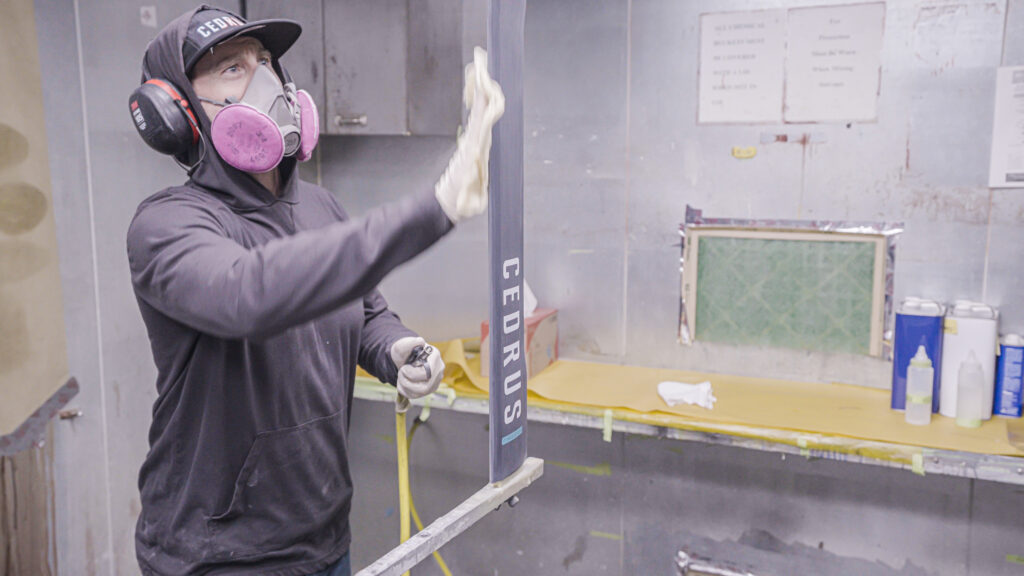
Aluminum components are machined in Kingston. A Bainbridge Island painter with a background in high-end automotive restoration finishes carbon masts using zero-VOC coatings and professional protective systems. A technician from Olympic College works hands-on with composites and machining.
“I really love seeing the impact on the community, and it’s legit,” Lobisser said.
He points to his machinist, who grew from operating a single CNC machine on family property to running a multi-machine shop in Kingston’s Kennedy Business Park.
“We’ve played a meaningful role in that,” he said.
That same manufacturing mindset has driven Cedrus’ latest innovation: an aluminum mast engineered to perform like carbon at a fraction of the price.
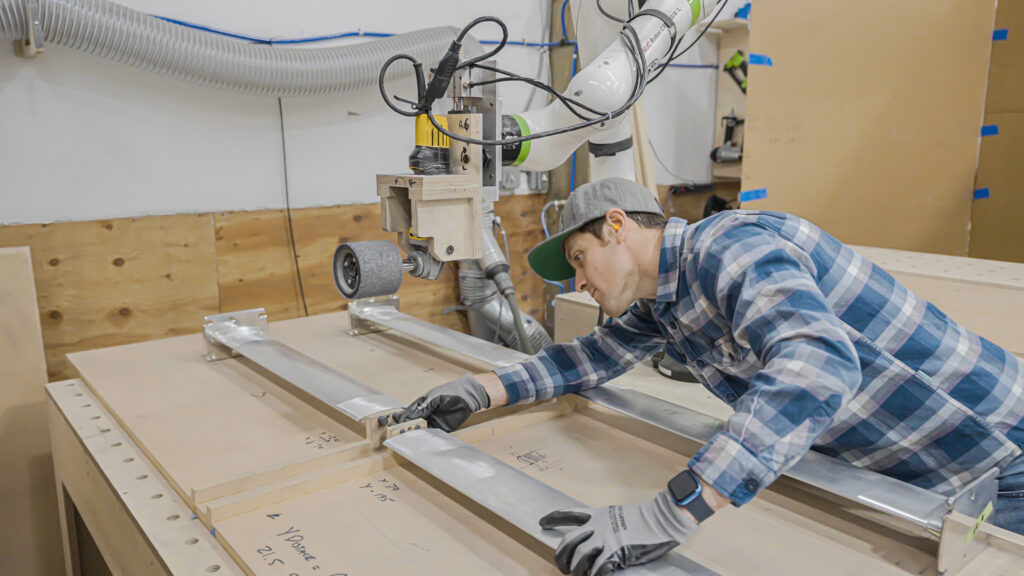
Most aluminum masts on the market are simple extrusions, limited in shape and performance. Cedrus begins with an extrusion, then forges the center section—the portion that runs through the water—under an industrial press to reduce drag while maintaining stiffness. Robots laser-weld precision components into place.
“The result basically exceeds the performance of a lot of carbon masts, but it’s like a third of the price,” he said.

The Human Side of Making Things
Running a manufacturing-based small business comes with inherent challenges, and Lobisser has navigated them firsthand.
“Small business is really, really hard,” Lobisser said. “Making things is so hard. It’s like the most thankless, unforgiving, polar opposite of what American people want right now. All that stuff, when you’re a small business, just wears you down.”
What keeps him going is not just the product, but the life it enables: working close to home, picking up his daughter from school, supporting his wife as she attends nursing school, and avoiding a ferry commute to a Seattle tech job.
A Vote With Every Purchase
Ultimately, Lobisser sees consumers as co-inventors in the system Cedrus is trying to build.
“People ask, ‘Why is your stuff expensive?’” he said. “I’m like, this is what it takes to make something in America.”
He points out that low prices often reflect hidden costs—cheap labor, cheap land, cheap environmental standards.
“If you always shop on price, someone’s getting screwed—employees, the planet, or you in the end because it breaks and you just have to buy a new one,” he said.
For Cedrus, each purchase is a vote for durability over disposability, local jobs over anonymous supply chains, and engineering-driven innovation over cosmetic redesigns.
“Consumers don’t understand the role they have in rewarding companies that are investing in the community and making a better product and not destroying the planet,” he said. “When you buy something, think about where the money is going and why it costs what it does.”
In a fast-changing niche sport, Foil Cedrus is proving that slow, thoughtful manufacturing still has a place—and that better engineering can mean not just better performance, but a better relationship between business, community, and the environment.
Keep in touch with our news & offers
Subscribe to Our Newsletter
Thank you for subscribing to the newsletter.
Oops. Something went wrong. Please try again later.