Where Beauty Becomes a Way of Connecting
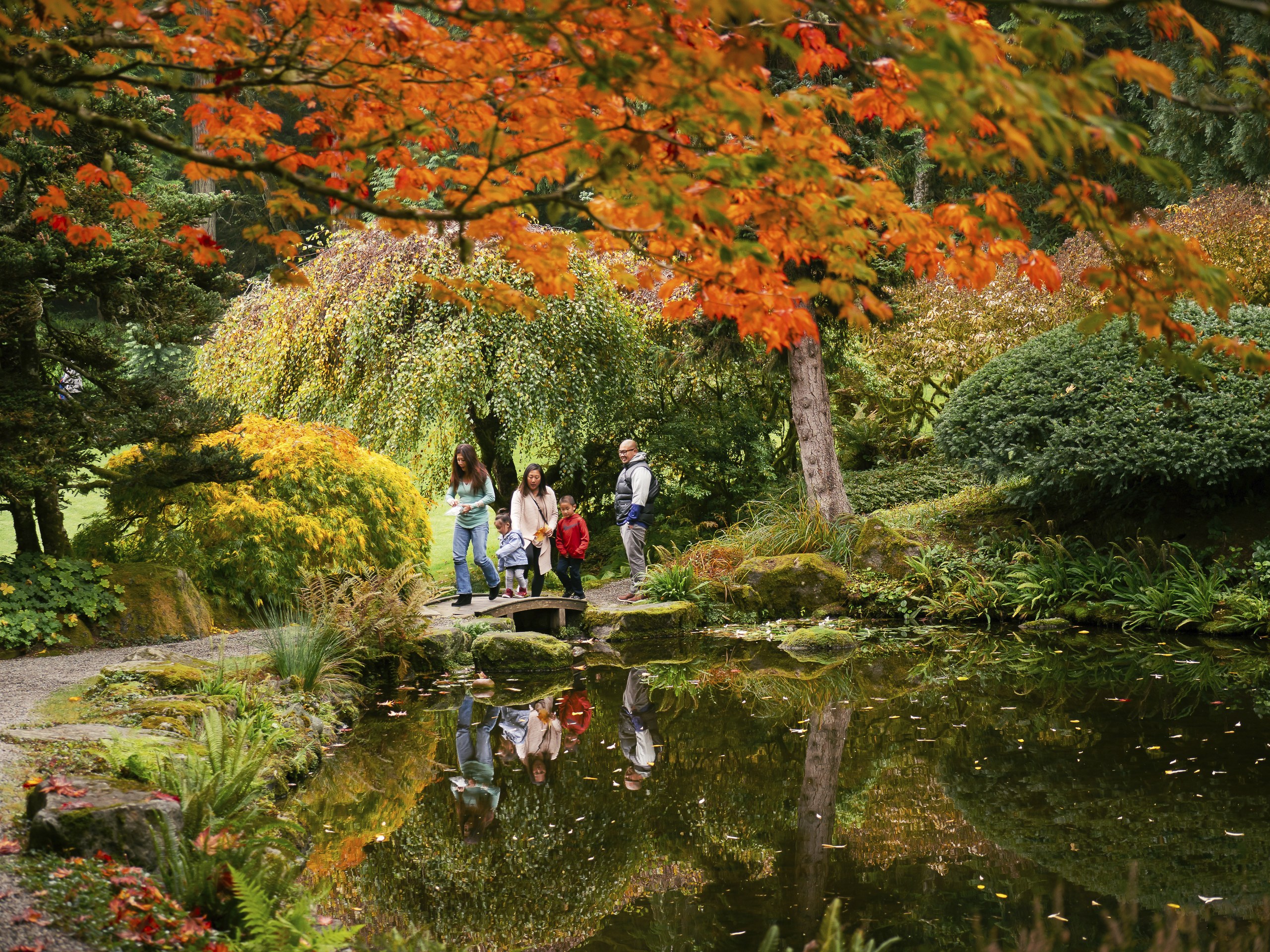
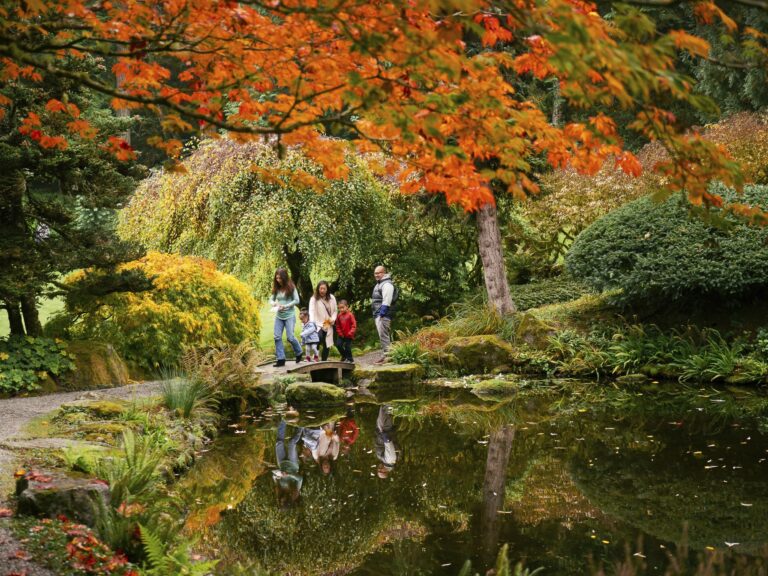
At Bloedel Reserve, visitors move through forests, gardens, ponds and moss-covered paths with little indication of the work required to make the landscape feel so effortless. Behind the scenes, horticulturists tend plants, staff manage technology and admissions, green waste becomes compost, donors help fund the operation and longtime employees carry decades of knowledge about the land.
For Meyer, president and CEO of Bloedel Reserve, all of that work serves a larger purpose.
Bloedel is not simply a beautiful place to spend an afternoon. It is a living experiment in how a garden can help define a region’s identity, support community well-being and influence how people relate to the natural world.
“We’re stewards of this incredible space,” Meyer said. “To be good stewards, we have to understand what came before us and try to predict what’s going to come after us, and position the organization and the gardens to be increasingly relevant in people’s lives.”
A garden that can only exist here
In an era of chain stores and increasingly similar communities, Meyer sees Bloedel as an antidote to sameness.
“Regional identity is super important, and places like Bloedel are the keepers of that,” he said. “What we have here, you could not duplicate anywhere else in the world.”
He points to the predictability of national retail as a contrast.
“You could go to a Target in Silverdale or a Target in Chicago, and they’re going to be basically the same thing,” he said. “But this can only be done here.”
That uniqueness goes beyond scenery. Meyer believes a strong connection to the local environment can help people better understand their role in addressing larger environmental challenges.
“We’re living through a time of major environmental issues,” he said. “The more that people are engaged with their local environment and understand what they can do to improve environmental outcomes in the future, I think is really important. We take a very soft approach. If someone comes here, visits, and leaves feeling a little moved— ‘That was so beautiful, I want to learn a little bit more’—then we’ve done our job really well.”
A private dream becomes a public treasure
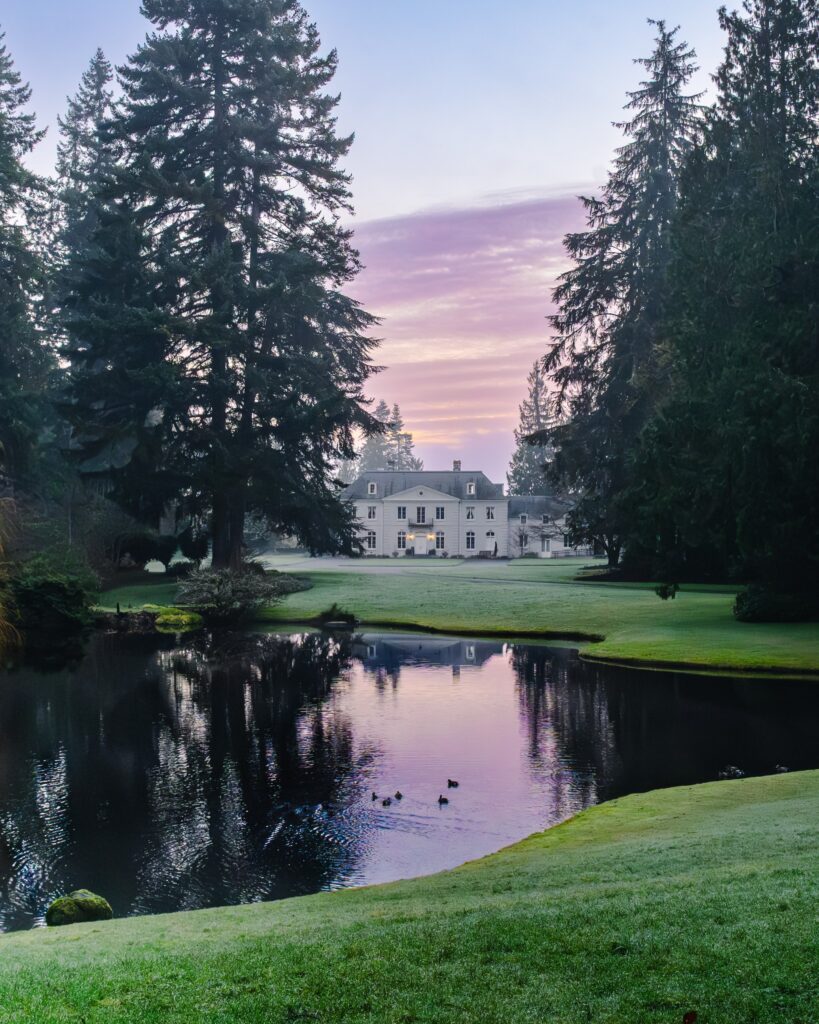
Bloedel Reserve began as the private estate of Prentice and Virginia Bloedel. After selling his shares in the Bloedel Timber Company, Prentice Bloedel devoted his retirement to creating what he hoped would become one of the great gardens of America.
The couple spent more than 30 years shaping the property before it opened to the public in 1988 as an independent entity. Their vision incorporated influences from around the world while remaining deeply rooted in the Pacific Northwest.
“What makes this garden so special is that their taste and aesthetic was very unique,” he said. “It was really grounded in an experience of coming from the timber industry—he was a science teacher—and they wanted to create something that felt like a really refined, Northwest-influenced aesthetic.”
That vision remains evident throughout the Reserve, from forests dominated by western hemlock, Douglas fir and bigleaf maple to the Japanese garden, ponds and the famous moss garden.
“This is much more of a conversation with what’s already here,” Meyer said of the design. “It’s partially a beautiful ornamental garden, partially a forest preserve. We get to play around at the intersection between conservation, land management and fine horticulture, which is a really unique blend.”
The work visitors don’t see
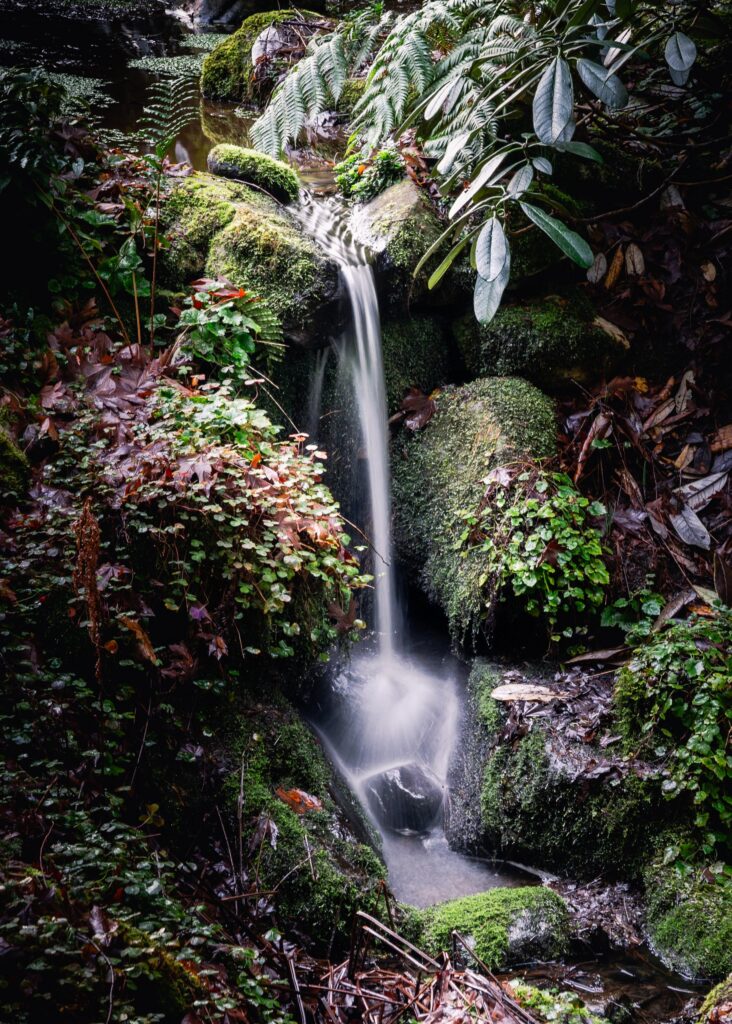
The seamless experience at Bloedel is intentional.
“One of my goals is that all the work we do in maintaining the landscape and operating admissions and all those things feels incredibly seamless for the guest,” Meyer said. “We have to work really hard so that you can get here and just sink into the beauty and the experience.”
That work requires expertise, technology, careful land management and a significant amount of community support.
Several Bloedel employees have been with the organization since the 1980s, providing a long-term perspective on the property and its changes.
Sustainability is another important part of that behind-the-scenes work. Bloedel’s composting program turns green waste generated on the property back into a resource for the landscape.
“The plants are really thriving because of this behind-the-scenes program of carefully creating compost out of our green waste,” Meyer said. “As that program has come online with a new compost facility, it’s allowed us to move in a much more natural direction and use way less pesticide and chemical fertilizers. We’ve drastically cut down on all of that, which is great for environmental purposes.”
And, like any modern organization, Bloedel also depends on technology to keep the business operating.
“Running the garden and the business itself, like anything these days, it’s a lot of technology—databases, point-of-sale systems,” he said.
The Reserve also depends heavily on philanthropy. As a 501(c)(3), admissions revenue alone does not cover the cost of maintaining 140 acres of intensively managed landscape.
“A substantial portion of our funding is coming from philanthropy,” Meyer said. “We would not be flourishing the way we are without a ton of community support and donors. I’m so grateful to the philanthropic spirit of this region that identifies the uniqueness and quality of Bloedel Reserve and makes sure it flourishes for now and for generations to come.”
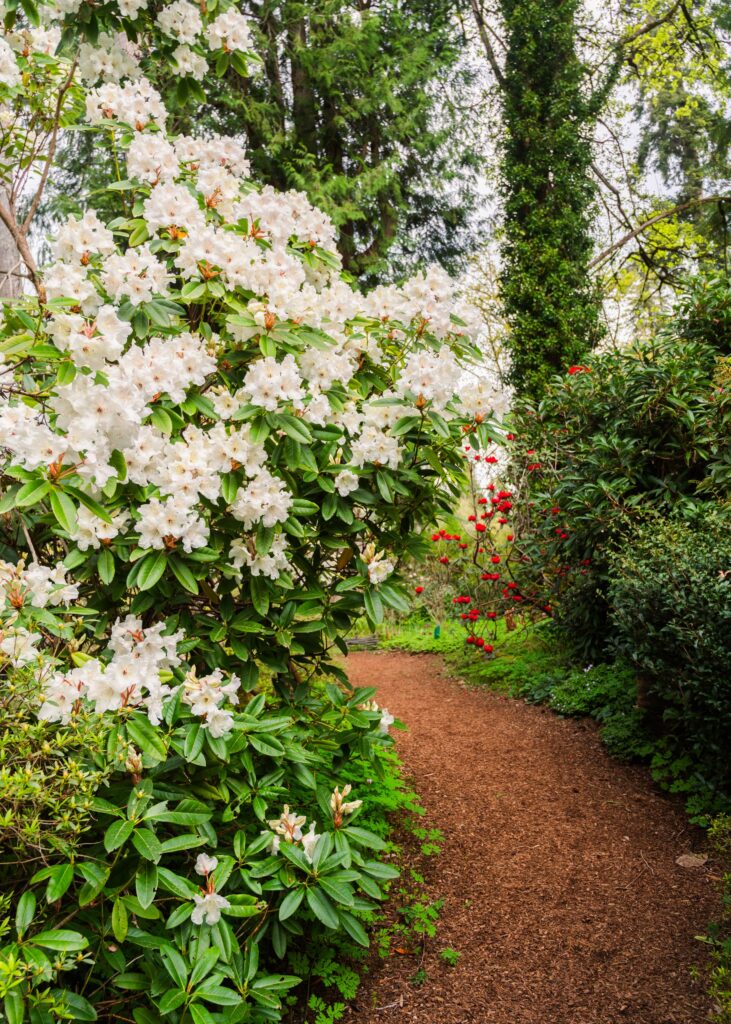
More than a destination
Bloedel is also an economic asset for the region.
“It’s one of the premier tourist destinations on Bainbridge,” Meyer said. “Having a world-class public garden in Kitsap County is a great draw for tourism and all the economic activity associated with that. It also helps spread tourists out and get some off just Winslow.”
But its role in the community extends beyond tourism.
“In the local community, we’re offering many different ways to connect,” he said. “There are events throughout the year that are very family-oriented, with food and music and art. As a place to spend time, connect with others and meet new people, it’s really important.”
Classes in horticulture, mushroom identification and plein-air painting give visitors another reason to engage with the property—not simply as spectators, but as participants.
“If you want to learn about nature and be in a beautiful space to do it, Bloedel is a great venue for that,” Meyer said.
That emphasis on connection has increasingly expanded into the relationship between nature and health.
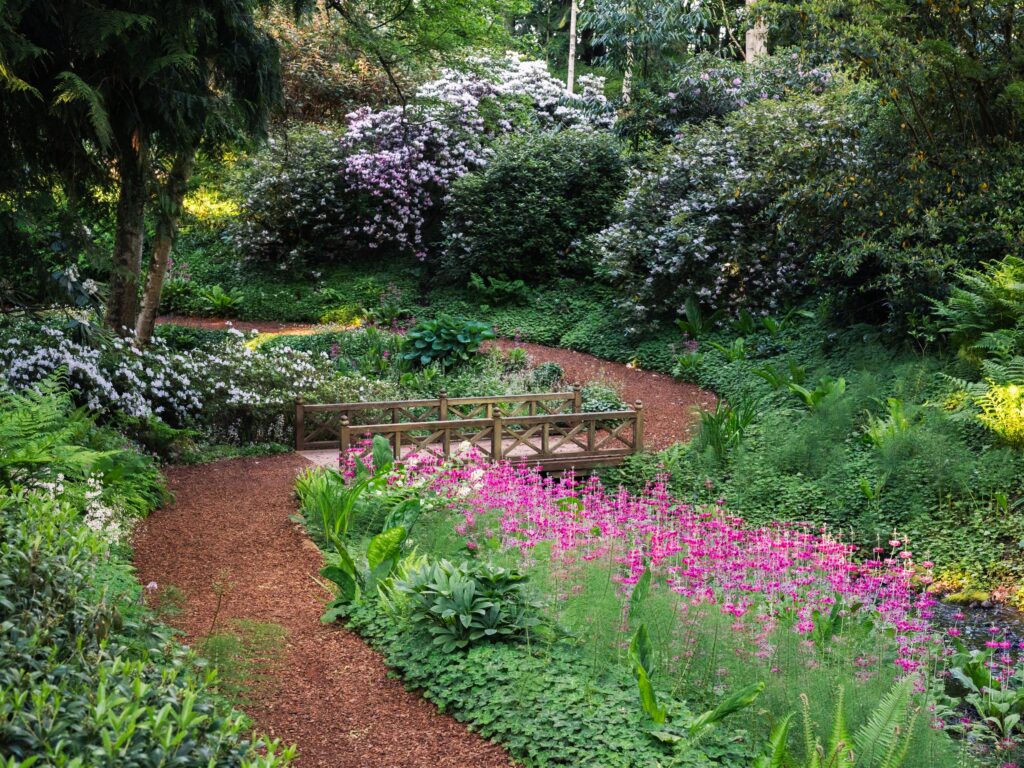
Nature as a form of well-being
Over the past decade, Bloedel has explored how time spent in nature can support health and well-being, particularly mental health.
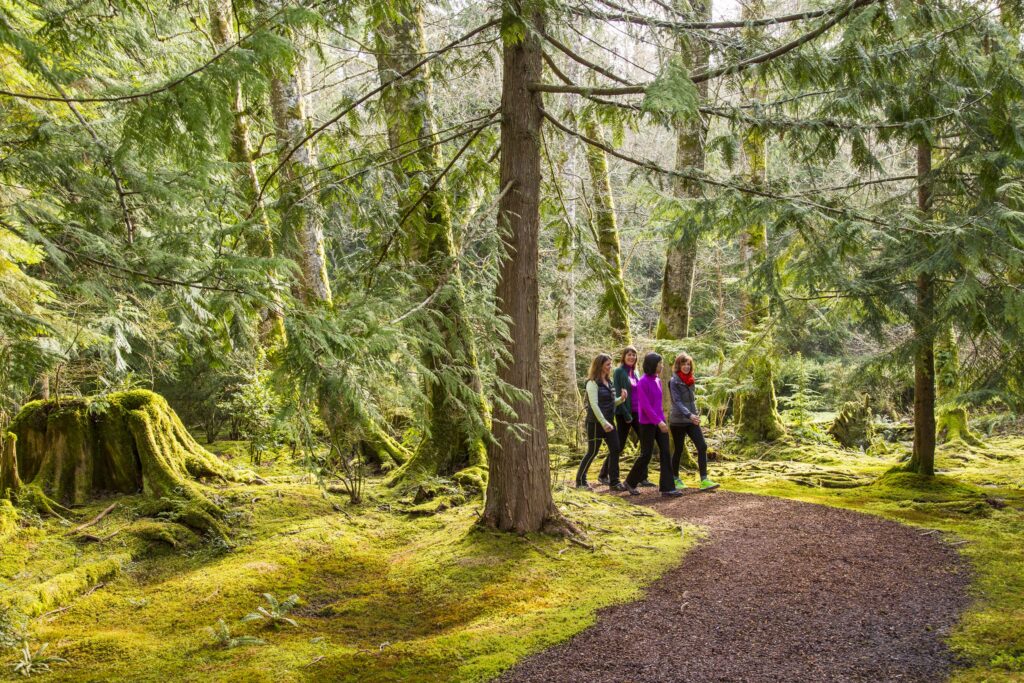
One of the Reserve’s flagship programs, Strolls for Well-Being, uses self-guided walks and group check-ins to encourage participants to slow down and pay attention to their surroundings.
“It’s really about tuning in to yourself through the act of being in nature,” he said. “It comes from a lot of different traditions, like the Japanese forest bathing tradition, but we’ve honed it specifically for our setting here. I think it’s a really innovative program.”
Bloedel also hosts grief groups, providing a setting for people processing the loss of loved ones.
“Those have been a really important offering to the community,” Meyer said. “They help people process the loss of a loved one.”
The Reserve is continuing to explore how nature-based programs can meet specific community needs. This fall, it will launch a version of Strolls for Well-Being designed specifically for new mothers. The program filled quickly.
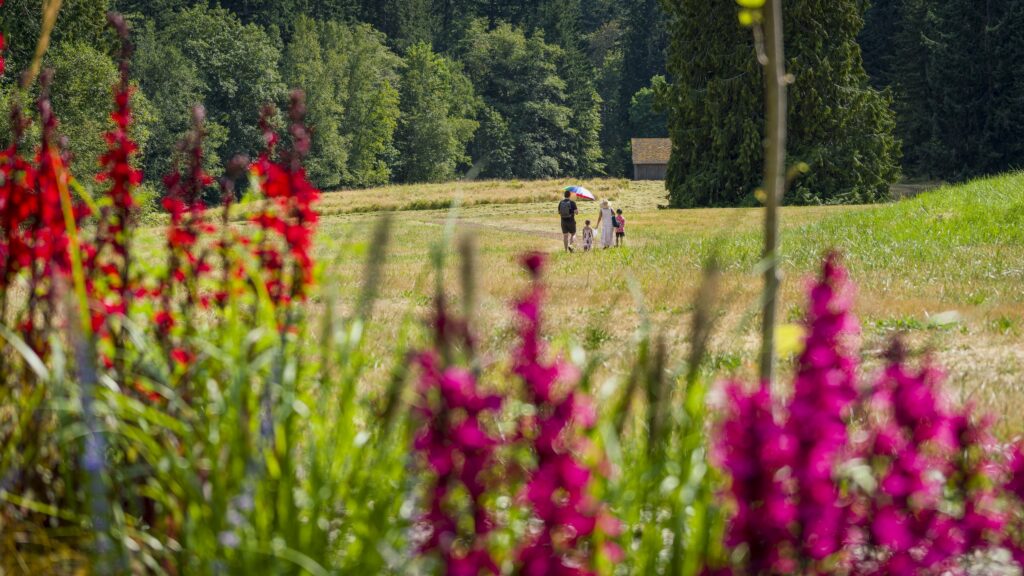
Protecting the experience
Growth brings its own challenge.
Bloedel wants to welcome more people, but too many visitors could undermine the quiet and solitude that make the Reserve special.
“Part of the DNA and the beauty of the experience here is the quiet, the tranquility, the opportunity to have solace in nature,” Meyer said. “But we also rely on visitors and ticket sales. There’s an inherent tension: as more people come, how do you preserve that experience and not have it feel crowded?”
The answer is careful management rather than unlimited growth.
“We’re really trying to navigate carefully—having open access while preserving that each individual experience is incredible,” he said. “We want to welcome as many people as we can sustainably on the site, but make sure every single person who comes has a wonderful experience.”
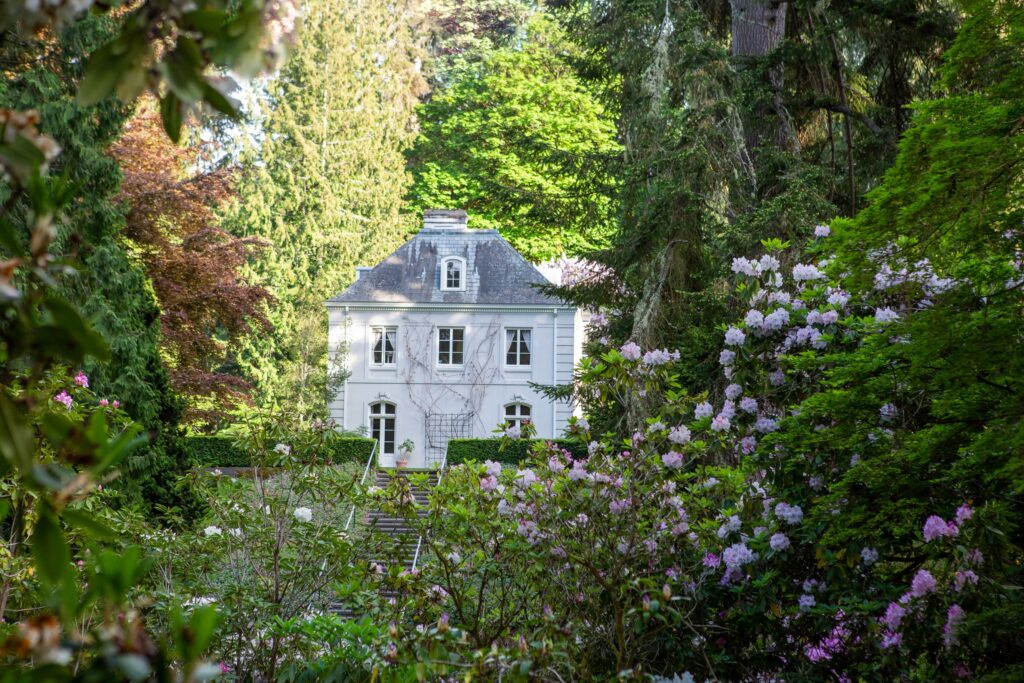
Thinking beyond the next season
Perhaps nowhere is Bloedel’s philosophy more apparent than in the way its staff think about time.
A garden does not operate on the same timeline as a typical business. A tree planted today may not reach maturity for decades. Decisions made now can shape what visitors experience generations from now.
“Being in the garden world kind of changes your sense of time,” Meyer said. “When you plant a tree, you’re thinking: in 100 years, will this be in the right place? There’s something really rewarding about having a job that puts you in this longer time range, thinking in terms of generations and decades.”
That long view is also shaping Meyer’s goals for Bloedel over the next 10 to 20 years.
The objective is not simply to increase attendance or add programs. It is to influence how people think about nature.
“We really want the unique vision here to influence the way people think about their relationship to the natural world,” he said. “We want everything—the gardens, the beauty of the trails, the programs and events—to add to the collective understanding and appreciation for nature.”
The strategy, Meyer said, is not to lecture people about what they should value. It is to invite them to experience something beautiful and let that experience create curiosity.
“We don’t approach conversations from a place of, ‘Oh my God, this is so bad,’ or ‘You’re doing this wrong,’” he said. “It’s more like, look at this beautiful thing. Welcome. Would you like to get to know more? Would you like to participate? We really focus on accessibility and reaching out to different communities across our region.”
That may ultimately be Bloedel’s most powerful role—not simply preserving a remarkable landscape, but using it to help people form a deeper relationship with the place they call home.
“I think beauty is the key that can unlock people’s hearts,” Meyer said. “That’s really what we try to do here—get people to open their hearts and their minds to beauty, and from that, a lot of other things will flow.”
Keep in touch with our news & offers
Subscribe to Our Newsletter
Thank you for subscribing to the newsletter.
Oops. Something went wrong. Please try again later.