In downtown Bremerton, inside a modest storefront on Park Avenue, a small grocery store is quietly modeling what a sustainable local economy can look like.
At roughly 1,800 square feet, Kitsap Community Food Co-op is compact. Its ambitions are not. Built on shared ownership, local sourcing, food access and waste reduction, the member-owned grocery has become both a retailer and a piece of community infrastructure — one that keeps food dollars circulating close to home.
The co-op offers a clear example of how environmental stewardship and economic resilience can work hand in hand.
A Grocery Store Owned by Its Community
Kitsap Community Food Co-op operates as a member-owned, not-for-profit grocery. Anyone can shop there, but more than 1,600 people have chosen to invest directly in the store’s future by becoming member-owners.
Membership requires a $200 lifetime share, payable upfront or in monthly increments of $10–$20. In exchange, members gain voting rights, access to board meetings and a direct voice in store governance.
“You’re becoming an owner of your grocery store,” store manager Emily Houchin said. “You have voting rights. You can go to board meetings, you can be part of the governance of the store. And it’s a very open concept with the store manager. I’m always encouraging our member-owners to let us know what they want to see in their store.”
That governance structure is not symbolic. Roughly half of the products on the shelves today are there because members requested them.
“I think it’s just a matter of putting your money where your morals are,” Houchin said. “You’re deciding to support local businesses and local farms, while also having ownership and being a part of this community.”
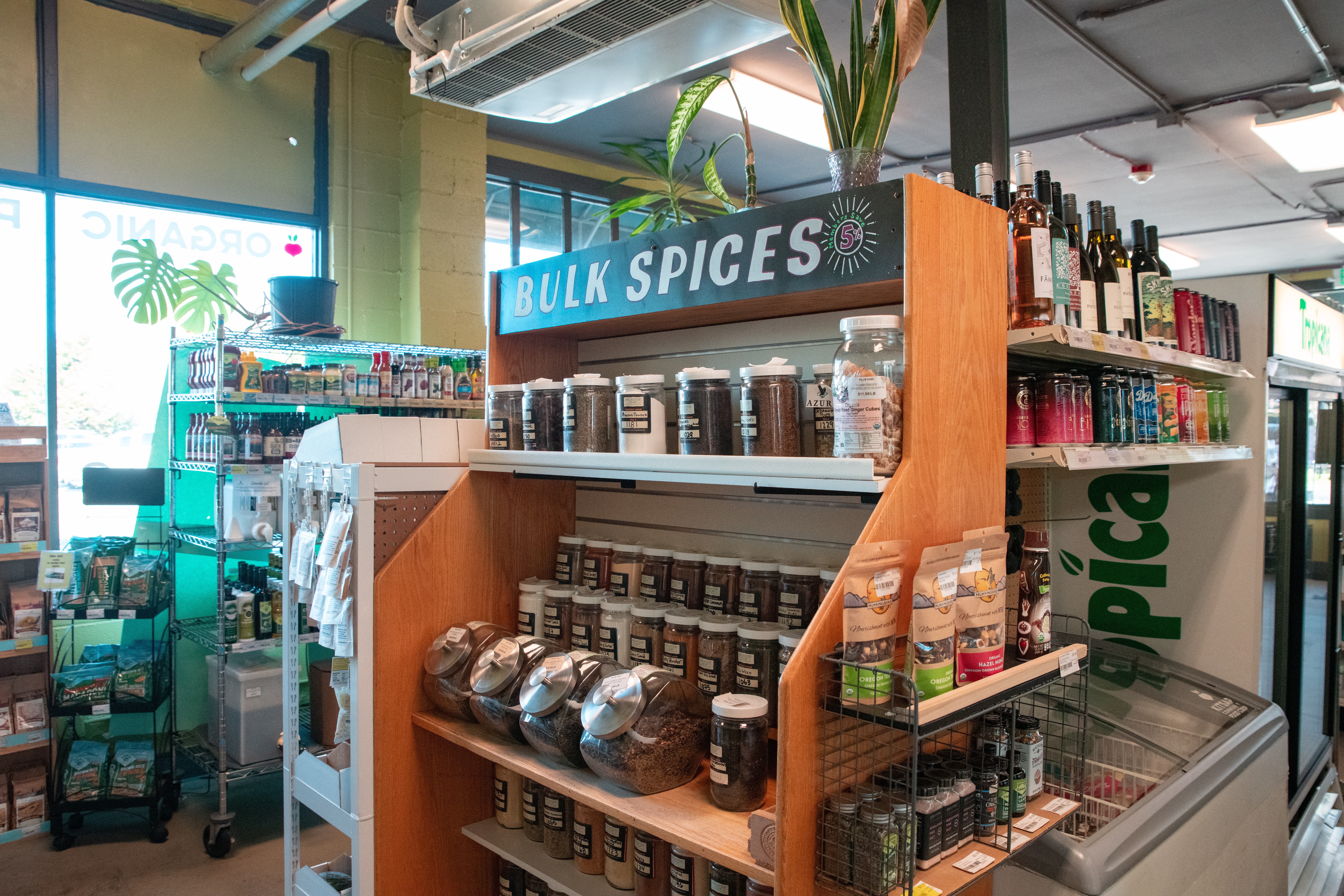
Members also receive tangible benefits: a monthly 10% off coupon, 5% off bulk items year-round and 10% off case orders.
A Long-Planned Vision
Though the storefront opened in 2019, the co-op’s origins stretch back nearly two decades. Community organizers began recruiting founding member-owners around 2008, long before there was a physical space. A small pop-up location helped build awareness and test demand before the Park Avenue store opened its doors.
Today, the co-op carries a full range of groceries — scaled down but comprehensive.
“We have just about everything you can find in the big department stores, just at a much smaller scale,” Houchin said.
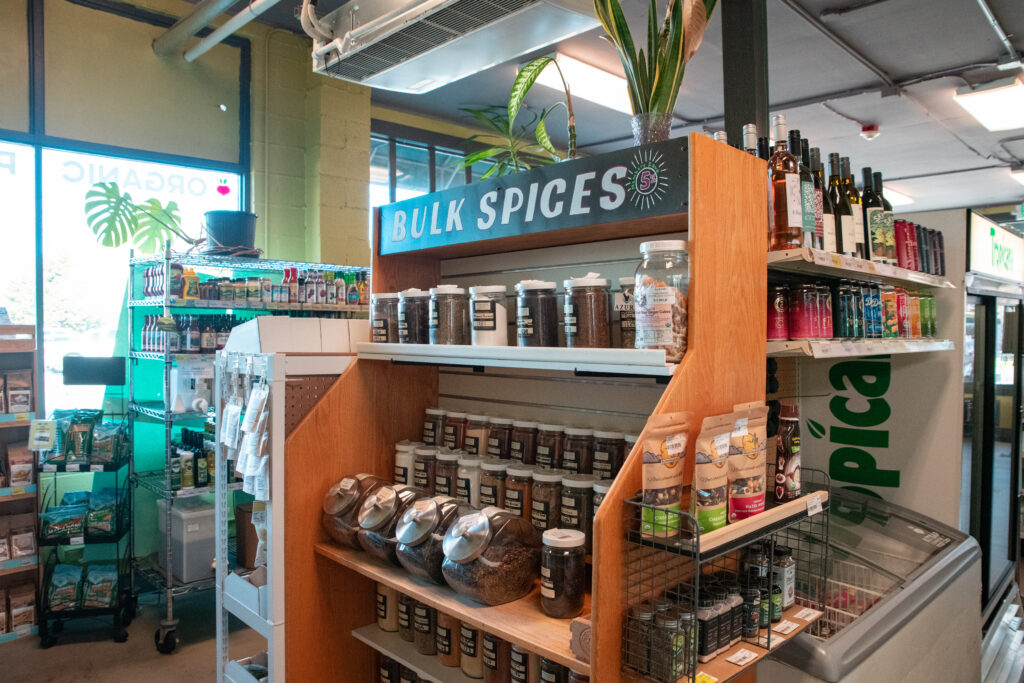
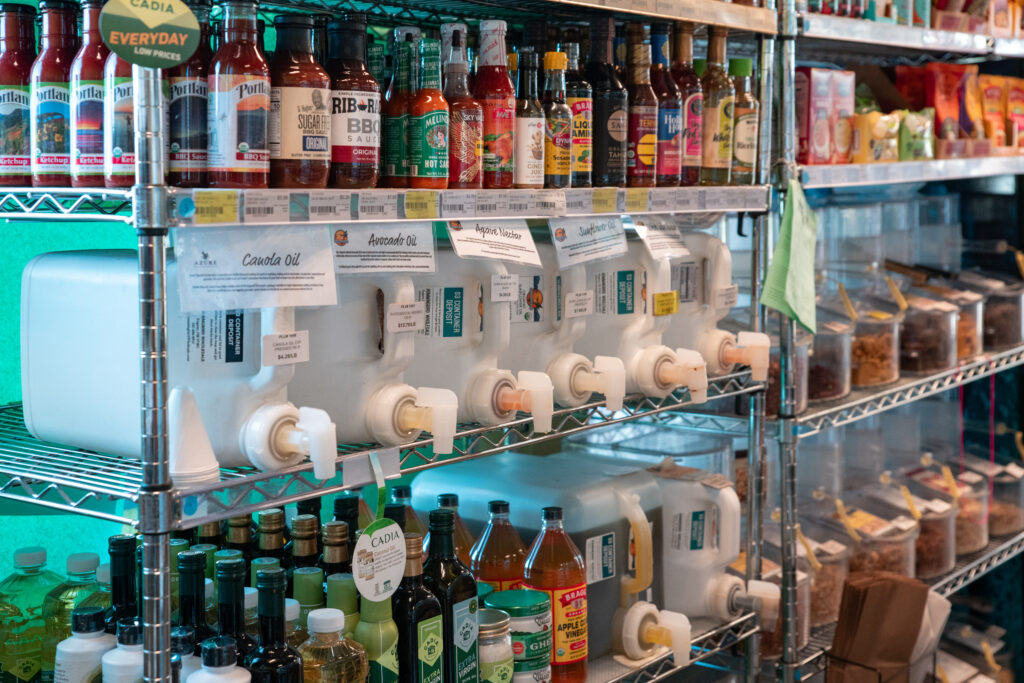
The store includes fresh produce, dairy, pantry staples, bulk goods, health and beauty items, household essentials and grab-and-go meals popular with shipyard workers and downtown employees.
Supporting Local Farms and the Local Economy
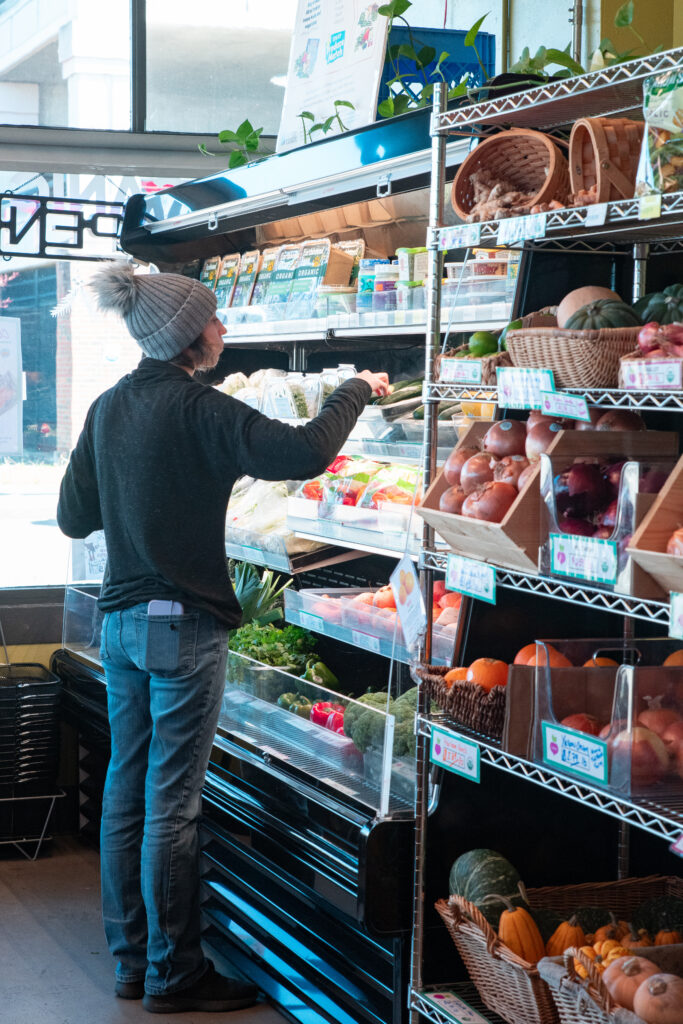
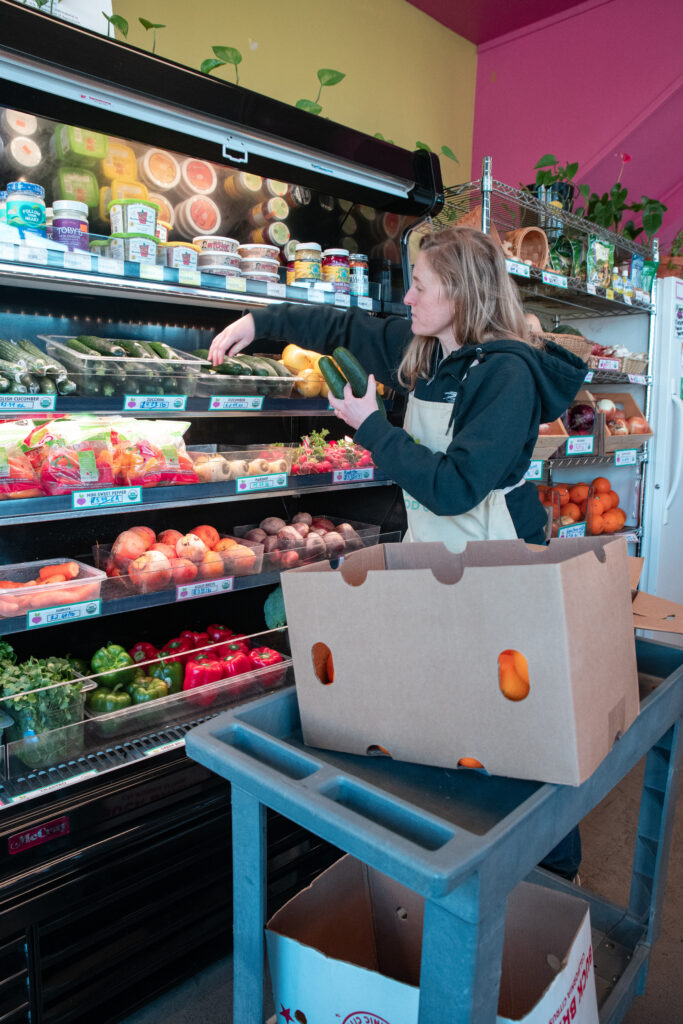
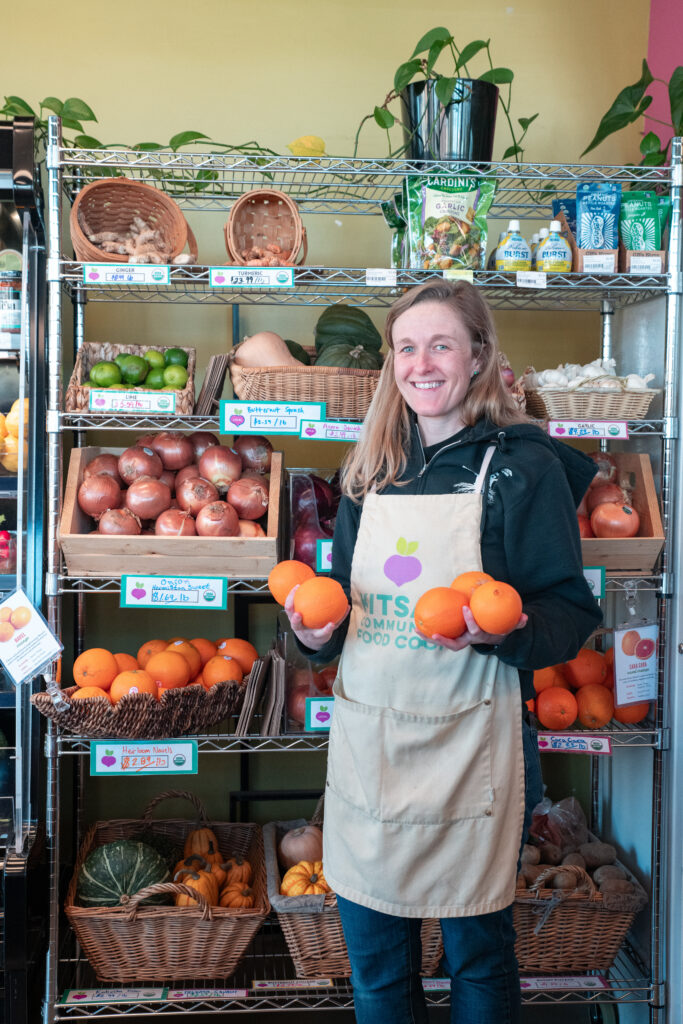
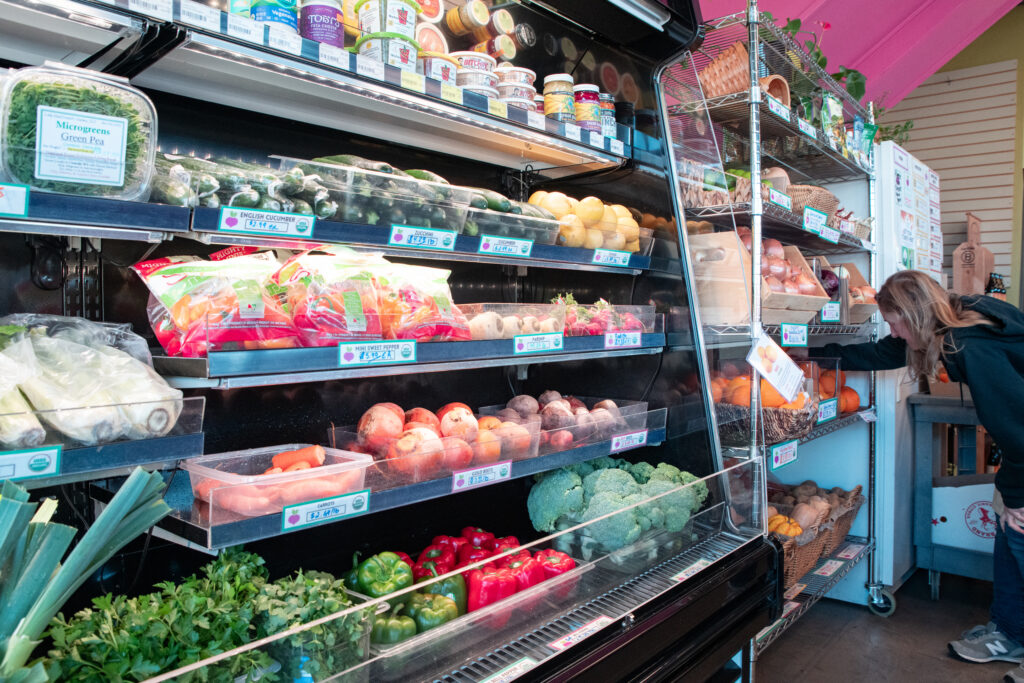
The produce department is the store’s top-selling section and the clearest reflection of its sustainability strategy.
“All of our produce is either organic or listed as local,” Houchin said.
Many partner farms use organic practices without formal certification; those items are labeled local. During peak season, the co-op works with roughly 35 local farms. Some products arrive through food hubs such as Kitsap Fresh and South Sound Fresh. Much of the sourcing, however, happens directly with farms in Bremerton, Poulsbo, Kingston and surrounding communities.
“We acknowledge which farm it comes from, so the customer can see, ‘Oh, I’m getting these carrots, and they came from Around the Table, and their farm is in Poulsbo,’” Houchin said. “That’s cool and pretty unique to us.”
The co-op also partners with small local producers across categories — from dairy to beverages to shelf-stable goods — ensuring that grocery spending supports a network of independent businesses.
“I would say our focus is to support the local economy as much as we can,” Houchin said. “Farmers need a place to sell. Farmers markets are a lot of labor, and it’s getting tougher. Having grocery stores like us that can support a good amount of their produce is really valuable.”
For some shoppers, those local shelf tags are the primary reason they walk through the door.
“We have customers who only want to buy local,” she notes. “They come in and look for those local tags because that’s the only thing they want to purchase.”
Increasing Access in a Food Desert
Location is central to the co-op’s mission. Downtown Bremerton has limited full-service grocery options, particularly for residents without reliable transportation.
“We feel like it’s kind of a food desert down here,” Houchin said. “Being here is about offering more accessibility for those who might be traveling by foot or by bike, who don’t necessarily have a car or the means of getting to a grocery store. It’s about reaching areas that deserve to have access to food that’s within reach.”
The co-op reinforces that commitment through partnerships and food recovery programs. It serves as a drop-off site for Kitsap Harvest, which distributes surplus produce to seniors. Customers and local growers can donate fresh items that are then redistributed.
The store also donates suitable surplus and short-dated foods to Food Line and The People’s Exchange.
“We’re supporting these organizations while also making sure good food gets to people who need it,” Houchin said.
Affordability as a Sustainability Strategy
Operating at a smaller scale comes with financial challenges. Limited storage means smaller orders, which can result in higher per-unit costs. To offset that reality and maintain accessibility, the co-op has layered in targeted affordability programs.
The FLOWER program — Fresh, Local, Organic Within Everyone’s Reach — provides a reduced-cost membership for customers using EBT or SNAP.
“Anyone who is on EBT or SNAP benefits can become a member with us for only $2 a month,” Houchin explains. “They get 10% off in the store all the time, not just once a month.”
The store also participates in SNAP Match, providing $5 off for every $10 spent on eligible produce.
“We do it live in the transaction,” Houchin said. “If someone has $30 worth of produce, we’ll ring it up in $10 increments so they get $5 off each $10. We’re willing to do multiple transactions to make sure they get the full benefit.”
Together, these programs position affordability not as an afterthought, but as an integral part of a sustainable food system.
Sustainability in Practice
The co-op’s environmental efforts show up in daily operations.
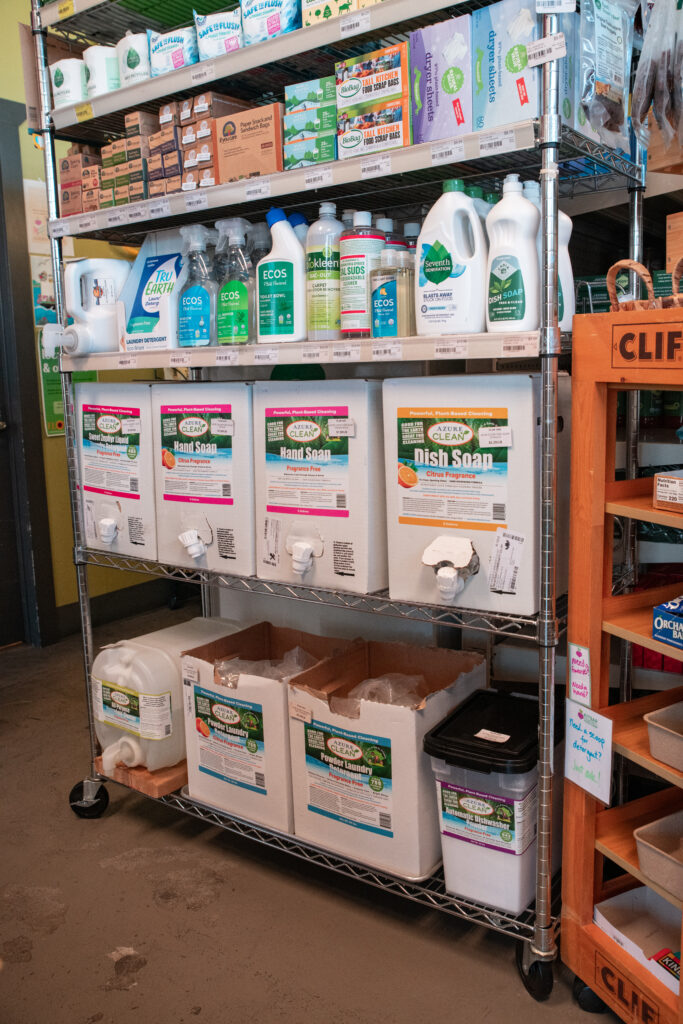
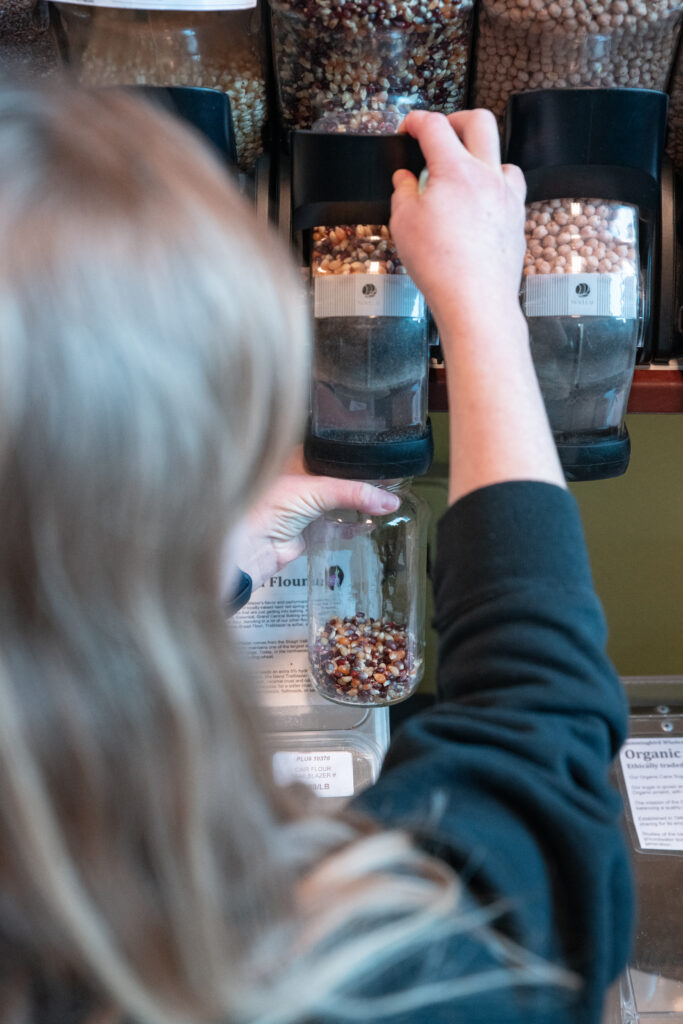
A robust bulk section reduces packaging waste and allows customers to purchase only what they need. Shoppers are encouraged to bring their own containers.
“We have a system where they can weigh their empty container at a scale next to the bulk section, then fill it up,” Houchin said.
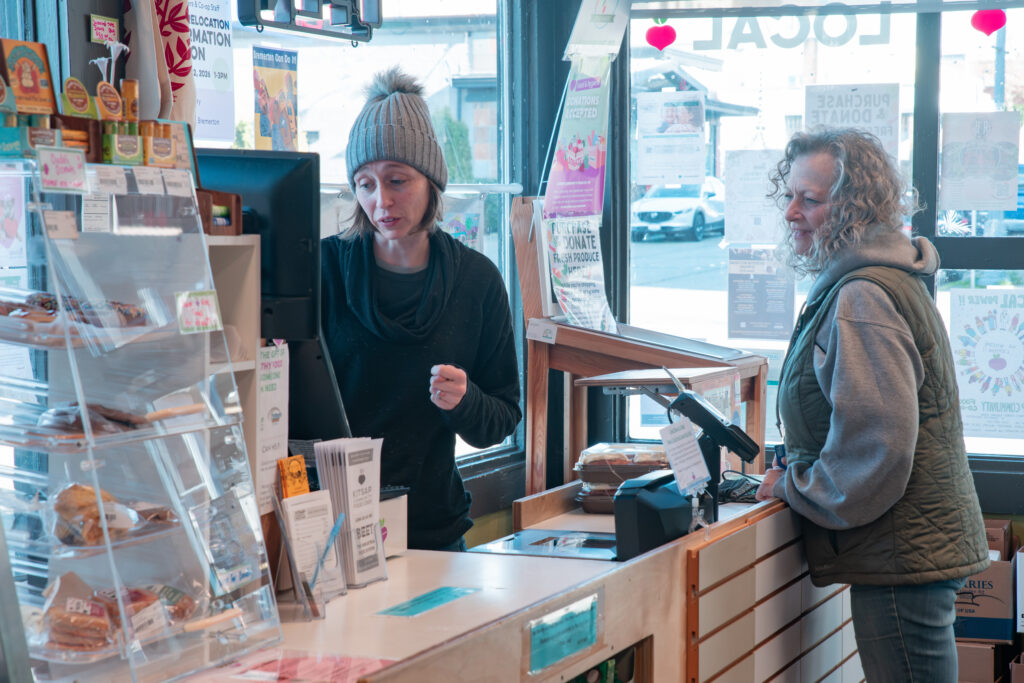
At checkout, plastic bags are not provided.
“We don’t do any plastic bags at checkout,” she said. “We just recycle whatever boxes we get from our trucks for customers to use, as well as paper bags. We’ll take donated bags for people to use, but we don’t provide any plastic bags.”
Even product sourcing reflects sustainability values. The store carries milk in returnable glass bottles from Twinbrook Creamery and bulk goods from Hummingbird Wholesale, a distributor known for ethical sourcing practices.
Powered by Volunteers, Guided by Committees
The co-op operates with a lean paid staff supplemented by volunteers who stock shelves, clean and support operations.
“We’re a skeleton crew,” Houchin said. “So having volunteer help is really awesome.”
As the co-op prepares for expansion, three committees are playing key roles: Financial Campaign, Community Engagement and Business Development.
“We’re really calling for people to join our committees, especially now that we’re doing the relocation project,” Houchin said. “We need help to get this thing moving.”
Outgrowing the Space
After years of steady growth, the Park Avenue location has become a constraint. Limited parking, minimal storage and reduced visibility have capped sales potential.
A market analysis and pro forma confirmed what leadership suspected.
“We got a market analysis done. The board has decided that we have to move,” Houchin said. “We’re getting ready to start a capital campaign fund, and we’re still looking at sites. We don’t have anything locked in yet.”
The goal is to roughly double the store’s footprint to around 3,000 square feet, improving storage, pricing flexibility and product selection while remaining grounded in Bremerton.
“The board decided they want to stay in Bremerton,” Houchin said. “We would love to stay more downtown, because we see a real necessity to remain in town rather than be on the big strip. Our market analysis said we’d make the most money if we went onto Wheaton Way and Highway 303. We’re looking at it, but it’s not where our heart wants to be.”
More Than a Store
Events like the annual “Sow & Grow” celebration extend the co-op’s reach beyond retail, bringing together farms and food organizations each spring.
“They’ve been really successful,” Houchin said. “They drive a big crowd. We’ve been very lucky with the weather the last couple of years. I’m excited about it—we’re hoping to have even more vendors this year. More than anything, we just need people to shop in our store to keep us going so we can get this new location in the works.”
Ultimately, the co-op’s model rests on a simple premise: shared ownership strengthens local resilience.
“I hope people take away that they’re getting good quality products,” Houchin said. “And that their dollars spent here are supporting a whole community of businesses—from family-owned companies like Azure Standard to farms right here in Bremerton. When you shop at the co-op, you’re not just filling your pantry. You’re investing in the local food system.”
As Kitsap Community Food Co-op prepares for its next chapter, its sustainability story is less about scale and more about structure — a business owned by its shoppers, designed to serve its neighbors, and committed to keeping both food and opportunity rooted in Kitsap County.