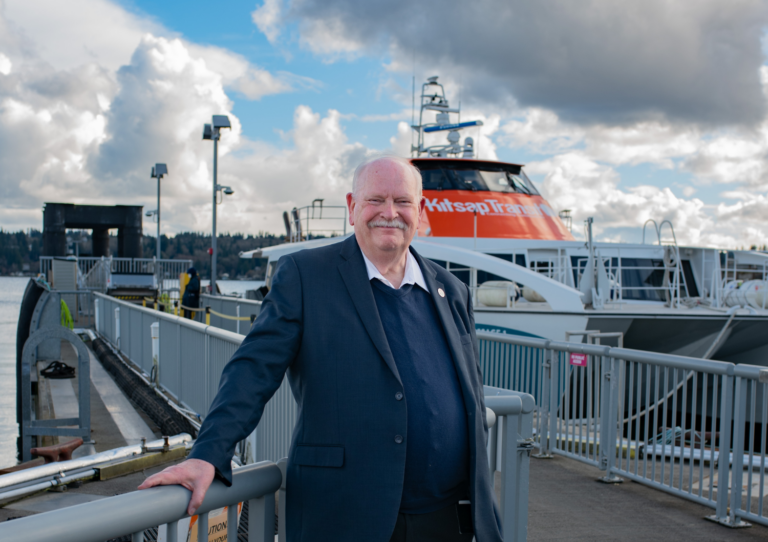
Few leaders can say they’ve grown alongside the organization they now lead. John Clauson can.
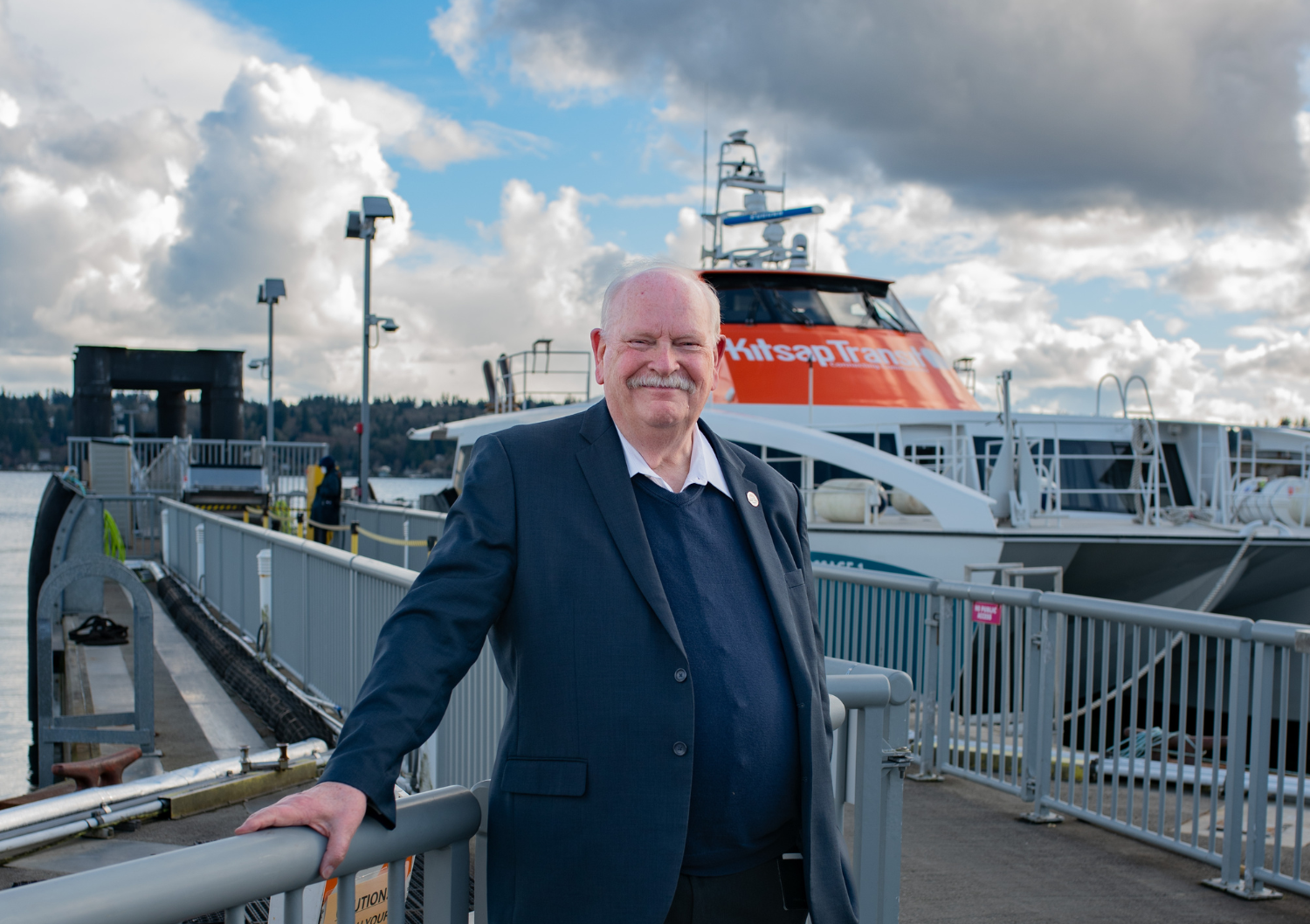
John Clauson began his career with Kitsap Transit in 1983 as a driver, just as the agency was being established. More than four decades later, he serves as executive director, overseeing a regional transit authority that has expanded to include bus, vanpool and passenger-only ferry services — including the fast ferries that have reshaped cross-sound commuting.
Under Clauson’s leadership since 2012, Kitsap Transit has grown to more than 500 employees and has earned national recognition for innovation, particularly in marine services and clean transportation infrastructure. The agency has introduced hybrid passenger ferries, electric buses, inductive charging technology and a fully propane-powered small-bus fleet — all while balancing fiscal responsibility with service reliability.
In this Executive Q&A, Clauson reflects on his path from driver to director, the evolving role of public transit in Kitsap County’s economy, and how sustainability, innovation and regional collaboration are shaping the future of transportation across urban, suburban and rural communities.
Please tell our readers a little bit about yourself and your path to becoming Executive Director of Kitsap Transit.
I started with the newly established Kitsap Transit in 1983 as a driver. In 1986, I was promoted to Service Development Manager, later retitled Service Development Director. During my employment at KT, my responsibilities expanded to include Marketing, Customer Service, Service Planning and Scheduling, Rideshare, and Transportation Demand Management administration. In 2003, after Kitsap Transit purchased the foot ferry “route” between Bremerton and Port Orchard and between Bremerton and Annapolis, my responsibilities expanded yet again, to include the management of this passenger-only ferry service.
When the original Executive Director of Kitsap Transit announced his retirement after nearly 30 years, I was asked by my fellow directors to apply. After a nationwide recruitment and interview process involving members of the Kitsap Transit Board of Commissioners and my peers at the agency, I was chosen to fill the position in 2012.
How do you describe Kitsap Transit’s role in Kitsap County’s economy and day-to-day business activity?
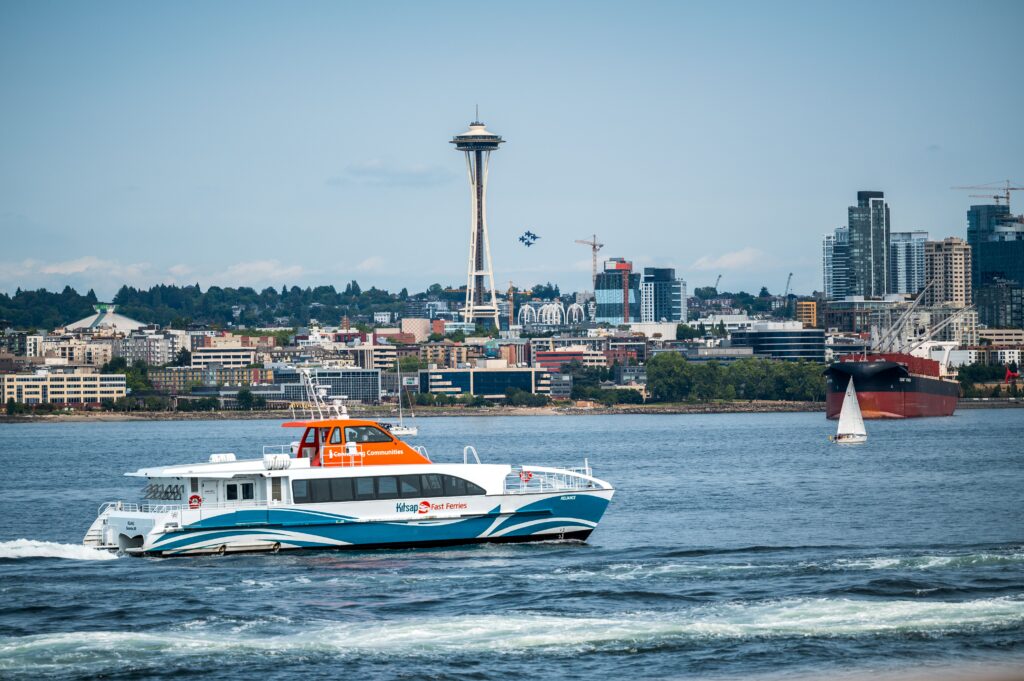
Kitsap Transit is a major employer in Kitsap County. Since the start of our fast-ferry service in 2017, we have grown substantially into a transit authority with more than 500 employees, most of whom live, shop and eat here in Kitsap County. We also prioritize supporting local businesses when we can, whether it’s catering a special event, printing our brochures, or requesting embroidery on our uniforms.
Just as important is how Kitsap Transit acts as a catalyst for development and growth management. We have partnered with cities and the county to develop park & ride lots in fast-growing areas so that housing and commercial development can work with transit instead of promoting only automobiles, which leads in the long term to traffic congestion. We’ve seen some exciting transit-oriented development in Bremerton and Poulsbo in recent years.
What are Kitsap Transit’s top priorities as the region continues to grow and change, and how do those priorities shape your decision-making?
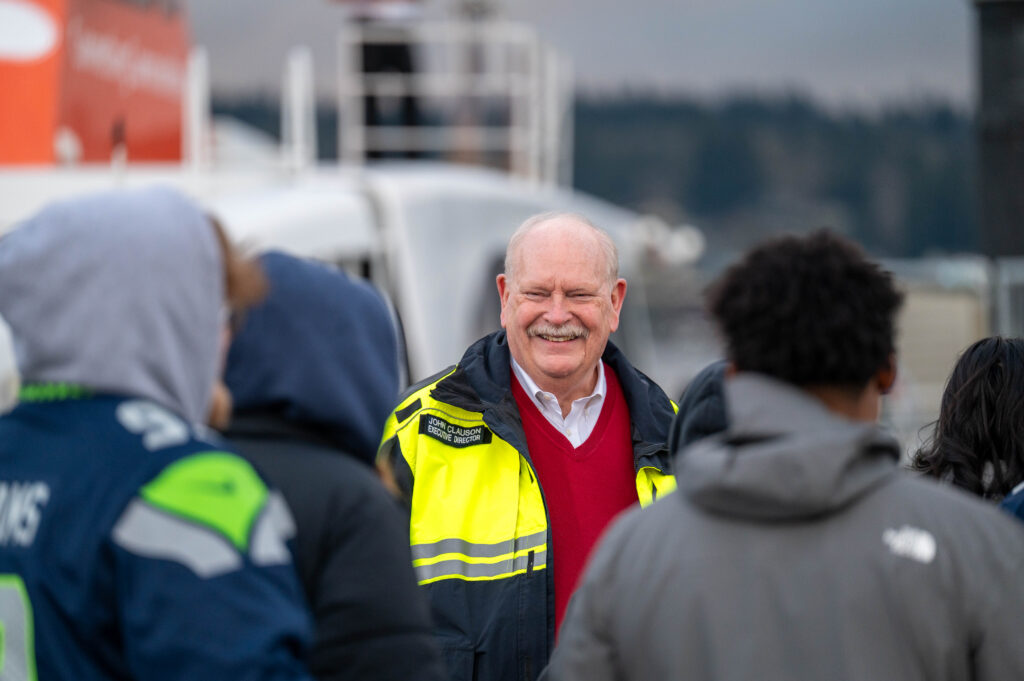
Kitsap Transit’s top priority is to provide safe, reliable and efficient transportation choices that enhance the quality of life in Kitsap County. We want to be responsive, within budget constraints, and serve as much of the transportation needs of our community, including those that are transit-dependent, our senior/disabled community, the younger people that may not have other transportation options available, and certainly the commuters to help reduce congestion on our local roads and highways.
We always strive to learn and understand what the changing travel demands may be for our communities and, to the best of our abilities, we want to make sure our system is flexible to make necessary adjustments to respond to them.
How does Kitsap Transit ensure transit solutions meet the needs of diverse communities across urban, suburban, and rural areas, including supporting workforce access for local employers?
We strive to provide opportunities for not only the community to communicate with us but for us to reach out and solicit information. We have a rather robust customer comment system for which community members can communicate via phone, email, internet, or comment cards on our vehicles and vessels, submitting comments and suggestions. In addition to that, once a quarter we publicize and I hold virtual community meetings where I will share recent things we are up to and provide equal time for attendees to ask questions and provide input directly. And we frequently conduct surveys to give the community an opportunity to tell us what they need from Kitsap Transit and what they think of our service or proposed capital projects.
The Community Advisory Committee (CAC) was established by the Kitsap Transit Board of Commissioners to provide guidance to the agency’s senior management and directors. The CAC serves as (1) a sounding board for proposed policies and plans; (2) a communication link between residents within the service area and Kitsap Transit leadership; and (3) a body that offers recommendations on plans, policies, and procedures to the Board of Commissioners. In addition, the CAC supports and promotes agency accountability. The CAC aims to bring together members who reflect the diverse communities across Kitsap County, including Bainbridge Island, Poulsbo, Kingston, Silverdale, East Bremerton, West Bremerton, Port Orchard, and South Kitsap. The Committee also seeks representation from key community and advocacy groups—such as Olympic College, Puget Sound Naval Shipyard, and local social service agencies—as well as a wide range of Kitsap Transit riders. This includes users of ACCESS, routed bus service, the Worker/Driver program, local ferries, fast ferries, and vanpool. Currently we have vacancies in representation from Olympic College, PSNS, Kitsap Community Resources, Poulsbo, and riders from our local ferry, vanpool, routed service, and Worker/Driver service.
As far as supporting workforce access for local employers, not only do we provide transportation options through our Worker/Driver and vanpool programs but take many opportunities throughout the year to attend transit fairs and community functions such as the Kitsap County Fair to provide information and solicit input from community members.
Sustainability is a key focus of this issue. What does sustainability mean in the context of public transit, and how does Kitsap Transit put it into practice?
We look at sustainability from multiple perspectives – financial, operations, and environmental sustainability are all critical. We want to make sure the system operates within its financial abilities and constraints. We work diligently with the Federal Transit Administration (FTA) and the State Department of Transportation on grant opportunities to help fund a lot of our capital projects. We are also cognizant of the fact that we don’t operate service based on grant dollars. Grant funds are not guaranteed, so we don’t want to be in the position of impacting service levels if we are not successful in an application.
We are always striving to be more efficient, which includes bringing in new technology that will 1) be cost effective and 2) improve the quality of service we provide to the community. As an example, we were the first in the Puget Sound to have a hybrid passenger ferry which we put into operation between Bremerton and Port Orchard. This has allowed us to operate that service at a lower cost per hour than an equivalent diesel vessel.
Looking at electric buses is another example of being cost effective in our operation, especially compared to equivalent diesel buses. We have learned that the life of a set of brake shoes is longer on an electric bus than on a diesel bus, primarily because when an operator releases the throttle, the vehicle goes into a regeneration mode which slows it down on its own rather than primarily using the brakes. Also, electric buses aren’t subject to things like oil changes, etc. We’re seeing that the cost per mile of electric buses is less than that of equivalent diesel buses.
From an operating perspective, we try to be strategic when we introduce new service because we don’t want to have to take it away from the community later. We have limited resources for operating bus service over a large area, so we have focused our transit service on urban corridors, where we can deliver service efficiently and conveniently to the greatest number of people and employers. To use a food analogy, we don’t want to spread the peanut butter so thin that it seems insignificant.
Finally, our organization takes environmental sustainability seriously. Our bus depots in Bremerton and Poulsbo, as well as our Bremerton ferry dock operations, have been certified as meeting a global standard for environmental management systems (ISO 14001). We have a standing internal team and coordinator that set annual goals for reducing our greenhouse gas emissions, preventing oil and chemical spills and improving how much we recycle. Through this process, we successfully substituted clean biodiesel as the fuel for our diesel buses.
Kitsap Transit has made significant investments in electric buses and clean energy infrastructure. What milestones are you most proud of so far?
In general, I would say the approach we took to bringing in the technology of electric buses. The first electric bus we purchased was bought with local funds, so there were no federal strings attached. We bought it primarily to see if an electric vehicle would work in our environment, given the topography, weather, and other things that have an impact on electric vehicles. Once we learned we could operate an electric bus, we purchased a second vehicle from a different manufacturer. We then solicited input from our drivers on which one they preferred. Asking for their input helped increase operator acceptance of the new technology.
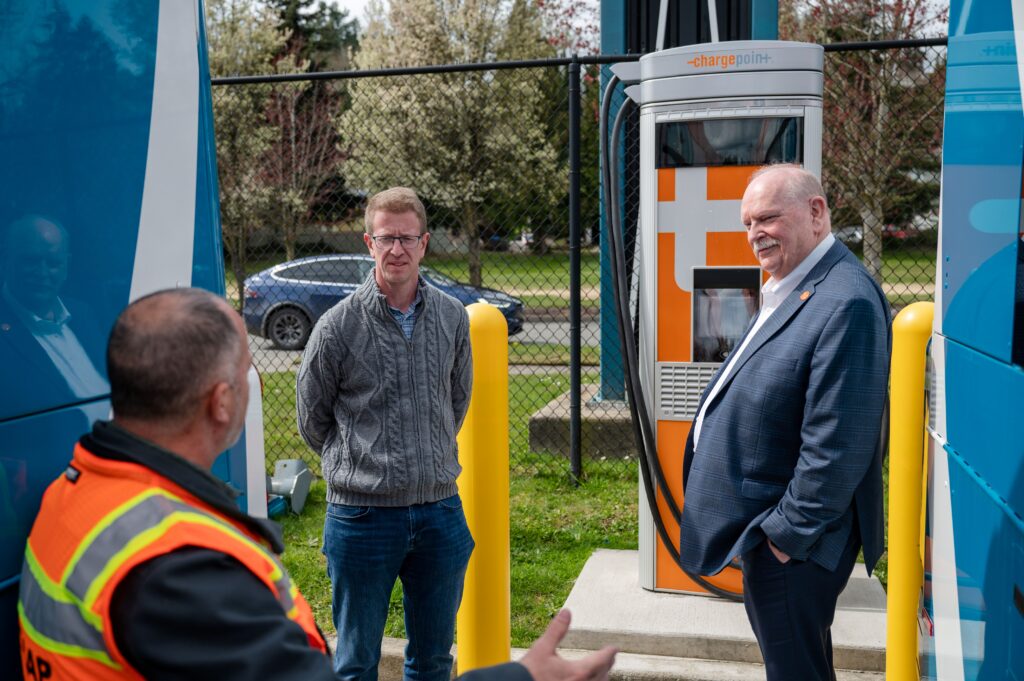
Another related milestone is the fact that we were one of the first transit agencies in the northwest to incorporate an inductive charging system into one of our transit facilities. In 2024 we opened our Silverdale Transit Center which features four inductive charging pads. These wireless charging pads “top up” the batteries of our electric buses while they’re in service, allowing us to operate the buses for longer stretches than if we had to plug them in at our bus depot.
Lastly, there is currently not a US manufacturer that builds small electric buses, like the ones we use in our ACCESS and demand response system. Because of that, we started working on introducing propane conversions into our fleet as small buses came due for replacement. Today, 100 percent of our small bus fleet operates on propane which is less expensive than diesel and gas and is much better for the environment.
What challenges come with transitioning to a greener fleet, and how has your team worked to overcome them?
The first challenge was getting our operators and maintenance staff to accept electric vehicles, both to operate and maintain. This was a relatively easy hurdle to overcome, as we kept them involved in the process. Once the drivers got the hang of the system, it was easy. Training required on the part of our maintenance staff was a little more involved, however, as there are many safety aspects that need to be adhered to when dealing with these high voltage DC current vehicles.
To the issue of training, and on a side note, we have worked with Olympic College on a low voltage training course, hosted by the college, to lay the groundwork for high voltage system training, which we are also collaborating with them on. Staff also works with the West Sound Science, Technology, Engineering, Mathematics (STEM) network, providing hands-on low voltage electrical circuit training to all Kitsap schools with STEM programs.
Another challenge was the introduction of the charging infrastructure necessary, be it for plug-in stations or the inductive units, and working with Puget Sound Energy to make sure we have adequate power at our facilities to charge multiple vehicles at once.
Acceptance in the community has been the easiest part of the transition. The vehicles are quieter, they don’t have the exhaust smell that comes with internal combustion vehicles, and there is much support in the community to go to zero-emission vehicles.
In what ways has technology or data helped improve operations, service delivery, or rider experience at Kitsap Transit?
Kitsap Transit has been and continues to work with Clever Devices on new technology for our buses that will provide us with an accurate counting of passengers boarding and alighting at specific locations. We will soon be able to report on the most highly used bus stops, which will assist us when allocating amenities such as shelters. The technology also automates the announcement system for the next stop approaching, making navigation easier for our visually impaired riders. The system also includes an automated vehicle locator (AVL) system that we can use for KTTracker, our real-time map, trip planner, and stop prediction service. The AVL will also provide us with historical data on if, when and where our buses are not able to maintain the schedule so we can make necessary adjustments and produce more accurate schedules that reflect current traffic issues.
Recent improvements in our rider alert system have not only enabled customization of alerts but have enabled things such as service disruptions to be sent out quicker than before. Our newest project involves rolling out our Text for Next Arrival messaging service where riders can text a phone line with their stop number and receive a text with the expected time of arrival of up to three buses within the next hour.
Kitsap Transit has been recognized nationally for innovation, including fast ferries and electric infrastructure. How do you foster a culture of innovation within a public agency?
Part of it is making sure you keep your affected staff involved in the discussion and decision-making process on whatever technology is being researched. We’ve been able to foster an environment where people are comfortable “pushing the limits” without fear of failure. Along these lines, you need to perform adequate cost/benefit analyses or evaluations of the success/failure of each project.
I also make sure to keep our Board of Commissioners informed and familiar with each step along the way toward the decision to introduce new technology so that they understand it and are supportive of bringing it in.
Another aspect is learning from others. We are a member of a very good national public transit association (American Public Transit Association/APTA) and an equally impressive state organization (Washington State Transit Association/WSTA). Through these organizations, we can learn from the experiences of others and reach out to those that are considering similar projects or concepts, creating a type of “lessons learned” atmosphere. In general, we pay attention to our industry and look at different opportunities for introducing innovation and doing reasonable cost/benefit analysis of the technology.
How do you evaluate success for Kitsap Transit beyond traditional measures like ridership?
One of the most common things we use are the positive responses we frequently receive from the community on our service, whether it’s providing essential transportation for the car-less and transit dependent community to making sure the system responds as best as it can for their daily transportation needs or a celebration event such as a parade. I’m, of course, referring to the recent Seahawk Super Bowl Championship celebration parade. Throughout the day, I watched our system work and saw and heard positive comments from users, expressing how well our fast ferries performed, the supporting bus service, and just working closely with Washington State Ferries on making things flow as easy as possible. This is a stellar example of community support, acceptance, and success of service delivery.
Of course, we can’t ignore the efficiency matrix used that involves ridership, cost per passenger, passengers per hour, and the like. Hard figures help us see how successful we are and help plan for the future while staying within budget and forecasted revenue.
What excites you most about the future of Kitsap Transit over the next five to 10 years?
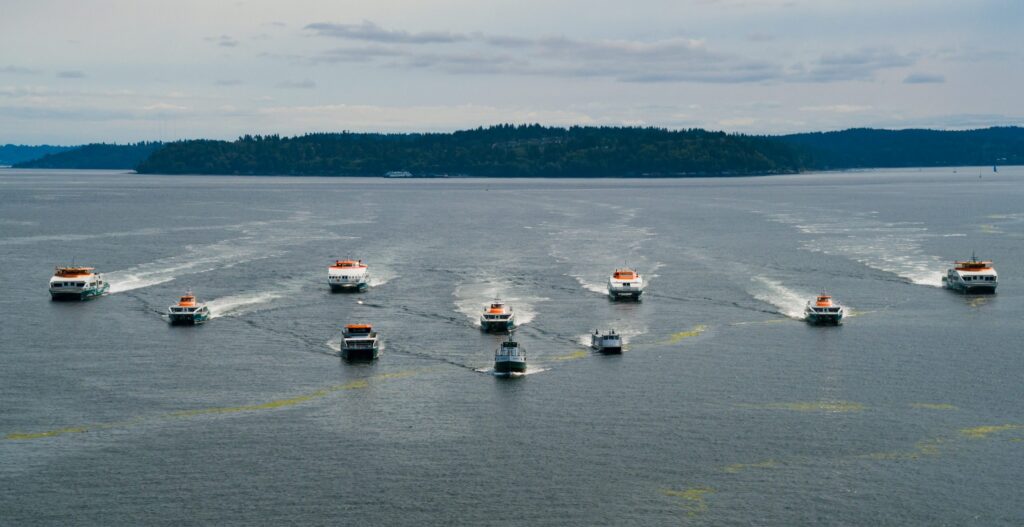
We have a lot of projects that we are striving to complete that will improve service delivery to our communities. One of these projects is the development of a new passenger-only ferry terminal in Seattle. This is critical, as we are currently sharing King County Water Taxi’s dock, which is designed for no more than two boats at a time. We have three boats in operation in the morning, and King County has two. The challenge is to find blocks of time where the dock is available. As a result, our schedules are not written based on community needs but on when dock is available in Seattle. By developing a new passenger-only ferry terminal, we can adjust our schedules based on community needs and not dock availability.
Continuing with our Marine Services Department, we are looking at the need to build a new Marine Maintenance facility. This will provide us with the ability to haul our vessels out for US Coast Guard inspections and maintenance without having to wait for an opening in the various shipyards in the Puget Sound.
On the transit side, we are working on building a couple of new park & rides in the community: One on Hwy 305 and Day Road on Bainbridge Island and a larger facility in South Kitsap on Sidney Road, just north of the intersection with Sedgwick. That facility will provide a large amount of parking for people coming out of the south end of the county that can hop on a bus to help reduce congestion in Gorst. We are always looking for opportunities to improve service delivery, be it restructuring current routes or schedules or experimenting with ways to serve more rural communities. A successful example of this is our BI Ride, Kingston Ride, and SK Ride services. These are commonly referred to as micro-transit, but I like to think of it more in the line of public transit’s version of Uber, where users can schedule rides via phone or app.
We are introducing more opportunities for zero-emission vehicles and vessels. We are working with people in the Puget Sound to develop a prototype for an all-electric passenger-only hydrofoil. When the technology is validated with the prototype, it will allow for greater capacity on our Bremerton to Seattle runs and still reduce the impact on beaches, bulkheads, and the environment. On the bus side, we are exploring the potential of bringing hydrogen generation to the community as well as hydrogen fuel cell technology for buses. We are early in the planning stages but are looking at this as another option for a zero-emission approach to service delivery.
How does Kitsap Transit collaborate with local governments, tribes, and regional partners to advance shared sustainability and transportation goals?
First, we have staff that work very closely with the planning departments at jurisdictions to make sure our long-range plan is in sync with their comp plan, enabling everyone to head in the same direction. Our Board of Commissioners is made up of all three county commissioners, the mayors of all four cities, an additional member from the Bremerton City Council and an At Large member that is rotated through the three smaller cities. This fact alone ensures we are collectively aware of what the cities and communities are doing, as well as keeping them informed of what we are doing. In addition, we strive to provide the highest level of communication and transparency to the tribes in Kitsap County. I sit on the Board for the Kitsap Regional Coordinating Council along with representatives from the Suquamish Tribe and Port Gamble S’Klallam Tribe. We also have many opportunities to communicate with our regional partners: some of our Board members sit on the Puget Sound Regional Council Transportation Policy Board, and Kitsap Transit is the lead planning agency for the Peninsula Regional Transportation Planning Organization. This body works with the various jurisdictions and tribes in Jefferson County, Clallam County, Mason County, and Kitsap County.
We are also a member of the Washington State Transit Association, made up of all of the other transits in Washington State, we work closely with Washington State Department of Transportation, with the legislature during sessions, and are a member of the American Public Transit Association.
Who or what inspires your approach to leadership in public service?
I would have to say it started in high school, when I was a member of the local volunteer fire department. This introduced me to the concept of structure, leadership, training, and serving the community. With that, I’ve always had a general interest in serving my community. In my early involvement, I volunteered with the City of Port Orchard in civil service, later being appointed to city council, where I served with various people over my 40+ years on the council.
In many ways, my desire to be involved in the community comes from wanting to help make it better for my three children and now my four grandchildren. Contributing, even in a small way, to improving our community and protecting our environment for the future continues to motivate me. Setting a positive example for my children and grandchildren has always been at the heart of that commitment.
In terms of transit, being part of this organization since its early days gave me the opportunity to learn from many talented people, with much of the credit going to former Executive Director Richard Hayes. I continue to have tremendous respect for him and learned a great deal from his experience and leadership. I’ve also been fortunate to work alongside an exceptional team at Kitsap Transit. It has truly been an honor, and their dedication continues to inspire and motivate me.
Keep in touch with our news & offers
Subscribe to Our Newsletter
Thank you for subscribing to the newsletter.
Oops. Something went wrong. Please try again later.