How a Living-Room Boutique Grew Into a Multi-Million-Dollar, Purpose-Driven Brand
When Christie Johnson launched Purpose out of her living room 12 years ago, she was simply trying to combine two passions: fashion and giving back. She had no blueprint for a regional retail brand, a growing leadership team, or more than $550,000 donated to nonprofits. She just wanted shopping to feel meaningful.
“I’ve always loved style and fashion,” Johnson said. “But on its own, shopping can feel kind of vain. I wanted to create something that wasn’t just about clothes, something that had a little more umph to it.”
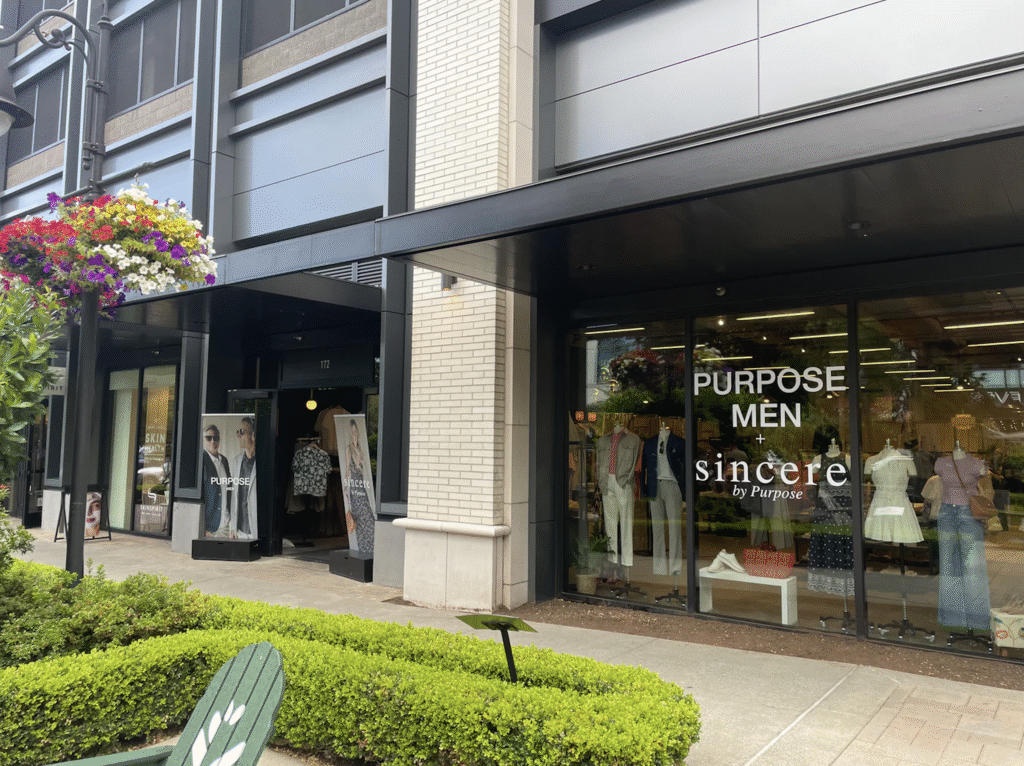
That “umph” became Purpose—a faith-informed, philanthropy-minded retailer now operating eight stores across Washington, including women’s boutiques and the growing Purpose Men / Sincere by Purpose concepts. With more locations in the works and annual revenue approaching eight figures, Purpose is at an inflection point: scaling like a modern retailer while holding onto the intimacy of a living-room trunk show.

Where It Began
Purpose began with small “shop nights” at Johnson’s home. She got a business license, curated racks of clothes, invited friends over, and donated all proceeds to charity.
“I honestly had no idea about profit,” she said, laughing. “I just gave all the money away. I thought, ‘Oh, this isn’t a business, this is basically a nonprofit.’”
Word spread quickly. Friends started asking to shop outside the parties, and soon people Johnson didn’t know began calling.
“Once that started happening, I realized, you’re not actually allowed to have a boutique in your house,” she said. “It’s illegal. So that kind of forced me to start my first store.”
She found a space in downtown Bremerton through local artist Amy Burnett.
“I told her my idea, and she said, ‘Well, I don’t think this other space is right for you, but what if I move all my stuff out of this little space and you just take that part of the store?’” Johnson recalls. “I had a one-page lease. Now my leases are like 100 pages. It was $800 a month. Back then that felt like so much.”
That tiny, scrappy corner shop became Purpose as the community knows it.
“You could never do that today,” Johnson said. “You can’t just walk up with an idea and have the building owner say, ‘Oh, fun, let’s try it.’ I feel really grateful that someone took that chance on me.”
A Spiritual Nudge and a Clear Mission
Blending fashion with giving wasn’t just a business calculation—it felt like a calling.
“I had a very spiritual moment where I felt like God was actually speaking to me, calling me to do it,” she said.
At the time, her husband was a submarine officer stationed locally, and Johnson was far from home in North Carolina with a one- and three-year-old.
“I don’t know how I survived,” she said. “I’m a quick yes, and then I figure out all the problems later. I said yes, and then I was like, ‘Oh my gosh, the kids, the business, life is crazy.’ And you just figure out those pieces.”
Rethinking the “Give Back” Model
Initially, Johnson donated everything. As payroll, rent, and inventory realities set in, she had to restructure.
“I moved to a percentage-of-profit model, and then realized in the first year, being profitable in retail is really hard,” she said. “Especially at the beginning.”
Today, Purpose uses a hybrid giving model: donating either 10% of net profit or 1% of all sales—whichever is greater.
“So whether we’re super profitable or not, something is always going out,” Johnson said. “I own the company fully, so the giving model can be exactly what I want it to be. That’s how we’ve done it from then on.”
From those first living-room sales, Purpose has now donated over $550,000, with a long-term goal of hitting $1 million.
“My goal when I started was a million,” Johnson said. “What’s cool now is that as the business grows, that number multiplies each year. We’re getting there faster. I’m not very good at stopping to celebrate where we are—I’m always like, ‘Well, we’re not there yet.’”
Her team, including Marketing Director Kylie Danskin, is quick to push back.
“As a small business, giving over half a million dollars is huge,” Danskin said. “Christie’s ready to say, ‘Okay, we’re going to hit a million next,’ and I’m like, ‘No, wait, we’re going to celebrate this first.’”

Giving Impact
Purpose’s first nonprofit partner was Atlas Free, a Kirkland-based organization fighting sex trafficking worldwide and in the U.S.
“I heard about them at church right after Purpose started,” Johnson said. “A friend of mine was really into researching nonprofits—where the money goes, how they’re structured—and she dug into Atlas Free and presented it to me. We felt really good giving our money there.”
Purpose’s second major partner is Olive Crest, a foster care–focused nonprofit added in recent years.
“Their main goal is to keep children out of the foster care system,” Johnson explains, “but they also support foster families and placements. They’re growing in Washington, including a big contract covering the Spokane area. It feels really good to support that.”
The connection between the two causes is intentional.
“A very high percentage of trafficked youth come from the foster care system,” Johnson said. “So supporting Olive Crest also ties into our focus on human trafficking prevention.”
The relationship isn’t just financial. Purpose employees have served as foster parents; others have gone on to work at Atlas Free.
“Two of our main employees left Purpose and went to work for Atlas Free,” Johnson said. “We’re still connected. We haven’t stolen any of their people yet,” she jokes.

Customers as Co-Givers
Johnson is clear about the role customers play.
“The customer is the one that gives all the money,” she said. “It’s 100% their money. We couldn’t do any of this without them.”
At the same time, she avoids leaning on the give-back story as a marketing crutch.
“There’s a part of me that doesn’t want to sell it that way,” she said. “I want Purpose to be so excellent at what we provide—our service, our styling, who we are—that people shop with us because of that. The giving is the cherry on top.”
Her team shares milestones and impact updates, connecting customers to Atlas Free and Olive Crest.
“I like to say, ‘Here’s what’s been donated, thank you so much,’” Johnson said. “But day to day, we’re focused on doing the work really well so that we have more to give.”

Styling as Ministry
Some of Johnson’s most meaningful moments are quiet and personal. She recalls an elderly customer who shopped regularly.
“She was so frail, but she loved Purpose,” Johnson said. “She was losing weight, she needed new denim, and it got to the point where I was physically in the dressing room, dressing her.”
One day, Johnson gave her a ring as a small gift. When the woman passed away, her daughter returned to the store.
“She brought the ring and said, ‘My mom has clothes in her closet she never even wore. She just came here because she loved it so much. She came for the experience’.”
“For me, that’s the story of what we do,” Johnson said. “Purpose was her happy place. We really took care of her.”
Danskin said stories like that happen every day.
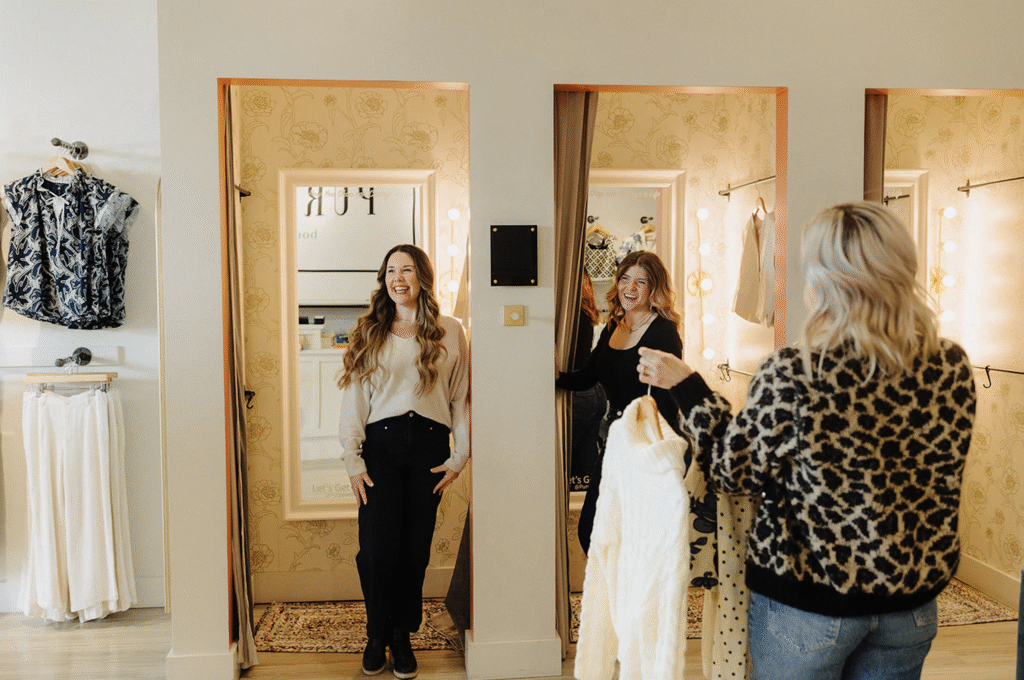
“Our stylists have those moments constantly,” she said. “A mom who just had a baby, someone going through cancer, someone who’s lost a spouse—when they walk in, your job is to be their friend immediately, to encourage them and help them feel beautiful. We don’t just sell clothes.”
Scaling Without Losing the Living-Room Feel
Today, Purpose is on track to close the year around $9 million in revenue, with a clear path to $10 million and beyond.
“Now I’m kind of on a revenue kick,” Johnson admits. “We’ll end this year around nine million, and based on our stores, we’ll be over ten next year. I want to take that from ten to twenty pretty quickly.”
The fastest path: opening more stores—both women’s and men’s.
“More stores is the fastest way to grow,” she said. “It’s the fastest way for our team to grow, and it’s the fastest way for our giving to grow.”
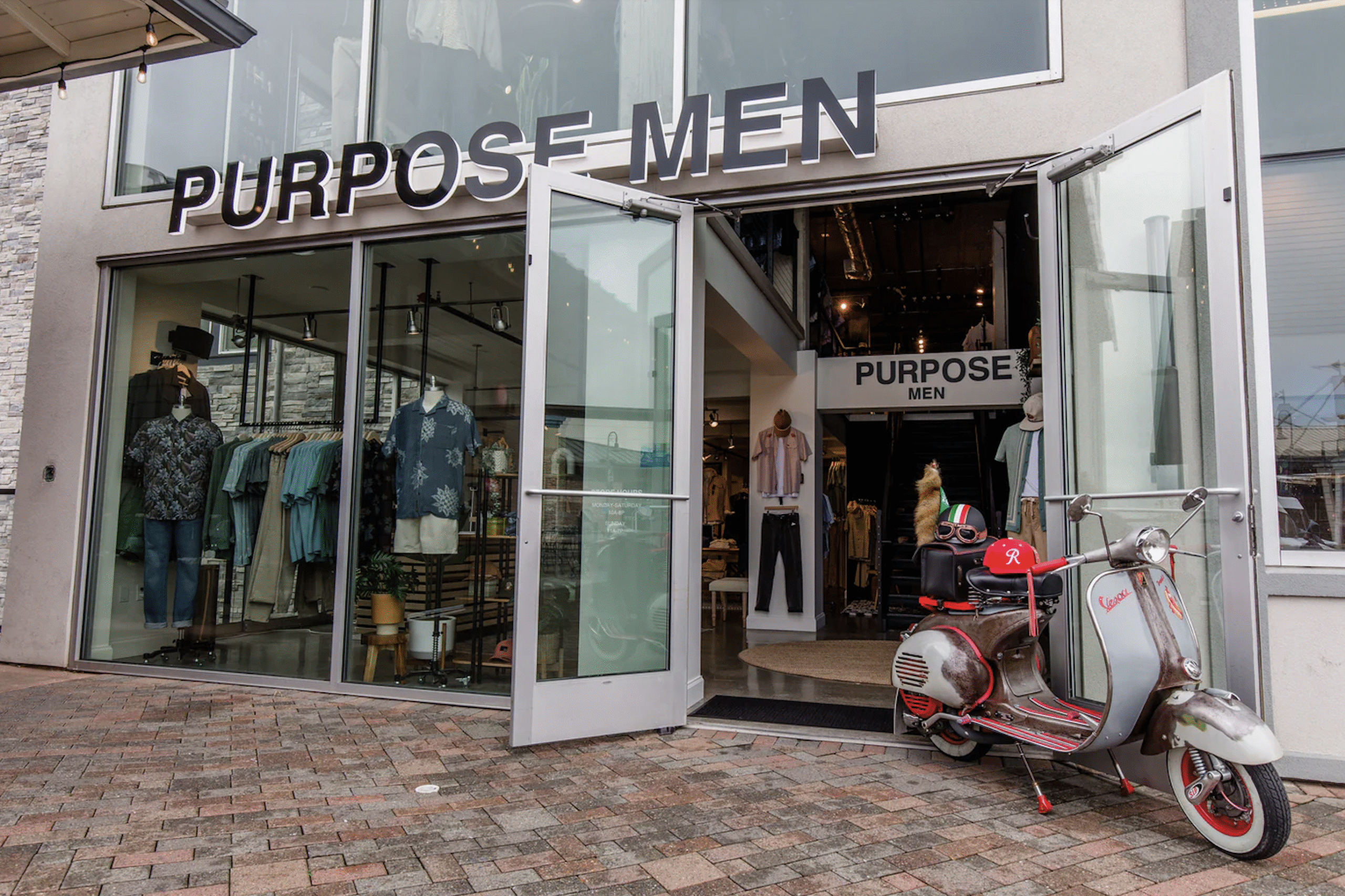
The Tacoma men’s store is already Purpose’s second-best-performing location.
“We thought women would shop for the men,” Danskin said. “Turns out, men love to shop too. They want to feel confident just like anyone else.”
For Johnson, the hardest part of scaling isn’t real estate—it’s people.
Purpose operates with an intentionally designed culture built on five core values that put people first, prioritize genuine relationships, create win-wins, celebrate often, and commit to constant improvement. That culture—embodied by what they call a “Purpose person”—shows up in everyday leadership and meaningful gestures, turning values from words on a wall into actions that support both employees and customers.
“Business is easy until people get involved,” she said. “People are the best part of business and the hardest part. As an entrepreneur, you’re constantly at your leadership lid. The next level is always something you don’t know yet, and you have to figure it out.”
But challenges are where the growth lives.
“Every mistake and every failure has strengthened the business,” she said. “If I accidentally order way too much denim, that forces us to build a better buying system and get creative with a big denim event. A bad hire teaches you how to hire better next time. Opening a store that isn’t the best fit might lead you to the best store you’ve ever opened. As long as you don’t run out of cash,” she said, “you can turn almost anything into learning.”
Advice for Purpose-Led Entrepreneurs
“You have to be really profitable to do that,” Johnson said. “I’d say, focus on being profitable—and then give the money.”
She emphasizes product-market fit.
“Make sure you have something people actually want or need,” she said.
And the most important trait? Humility.
“As a leader, don’t walk into any room needing to be the smartest person there,” she said. “Let your ideas be challenged. Let your team poke holes in them. If your people don’t feel important and special, it’s going to be really hard to grow.”
Purpose started with fear—and learning to walk through it.
“At the beginning, Purpose taught me how to defeat fear,” she said. “Taking an idea that doesn’t exist yet and making it real is terrifying. I worried what other moms would think—my kids were little, what if it failed, what if people didn’t like it? I learned to defeat that by taking steps anyway.”
Twelve years, eight stores, and more than half a million dollars in donations later, those steps have taken Johnson—and the communities she serves—far beyond her living room. And she’s just getting started.
Keep in touch with our news & offers
Subscribe to Our Newsletter
Thank you for subscribing to the newsletter.
Oops. Something went wrong. Please try again later.