How Green Mountain Technologies Scales Composting from Kitsap to the World
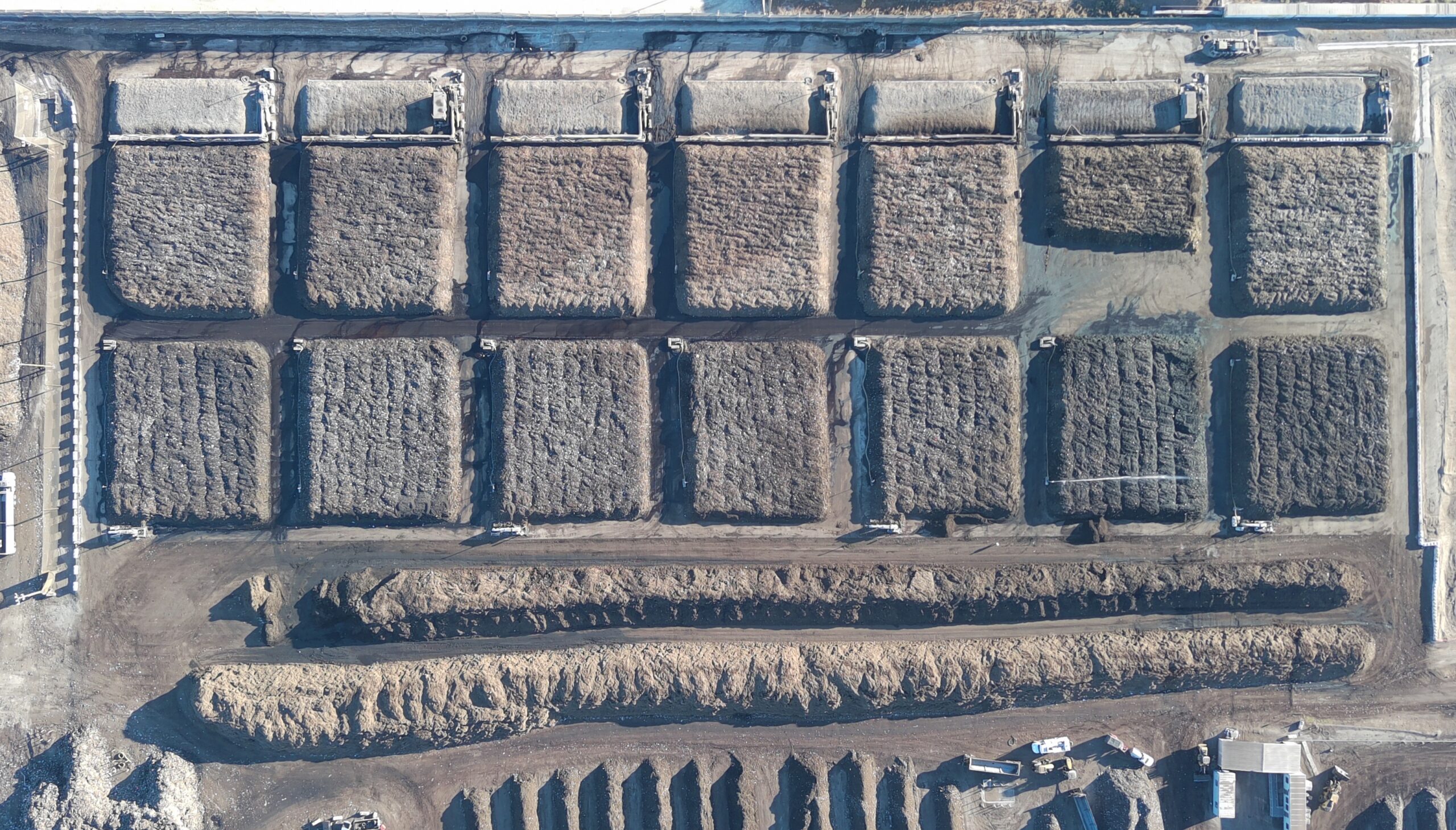
Every year, millions of tons of food waste in the United States rot in landfills, releasing methane — a greenhouse gas far more potent than carbon dioxide in the short term. It’s an invisible climate problem, buried beneath layers of trash. But in Kitsap County, a small family-run company is quietly helping to reverse that equation at massive scale.
Through the systems engineered by Green Mountain Technologies (GMT), an estimated 2.5 million tons of food waste can be composted annually instead of landfilled. That diversion represents roughly 1.25 million tons of carbon dioxide–equivalent emissions avoided each year. In climate terms, that’s not symbolic progress — it’s infrastructure-level impact.
Compost does more than reduce emissions. It builds soil that holds water more efficiently, reduces plant disease, restores microbial life and even helps pull carbon back into the ground. By designing the technology that makes large-scale composting possible, GMT is contributing to a regenerative cycle: waste becomes soil, soil grows food, and food nourishes communities — all while shrinking the carbon footprint of the system.
“We’re a company that helps people compost by bringing the infrastructure side,” said Orion Black-Brown, president of GMT. “Our mission is to help people create compost by driving technology and innovation.”
When most people hear the word “composting,” they picture a backyard bin or a small countertop container. GMT operates at an entirely different scale: university campuses, municipalities, regional waste authorities and large commercial facilities. From Bainbridge Island to California’s Central Valley — and even dense urban environments like Manhattan — the company designs and engineers the systems that make large-scale composting possible.
“We’re talking university scale and bigger,” Black-Brown said. “All the food waste from a university or community goes to a centralized location, and we provide the infrastructure that makes that work.”
GMT represents something essential but often unseen: the infrastructure that makes climate solutions practical.
From Vermont Roots to Bainbridge Island
GMT’s story began in 1992 in Vermont, where Black-Brown’s father founded the company and named it for the state’s iconic Green Mountains. In 2000, the family relocated to the Pacific Northwest.
“My mom’s family is fifth or sixth generation Bainbridge Island,” Black-Brown said. “We’ve been on Bainbridge for a really long time, and she wanted to be closer to her family. So we moved, and since then the company has been based there.”
For years, GMT was literally headquartered out of his parents’ home.
“For a long time we were at my parents’ house, and my dad was trying to retire — and failing miserably while the business was still there,” he said with a laugh.
Today, the company is in a transition phase, with fabrication operations in Suquamish and some office functions still tied to Bainbridge Island. Despite its small size, GMT’s reach is substantial.
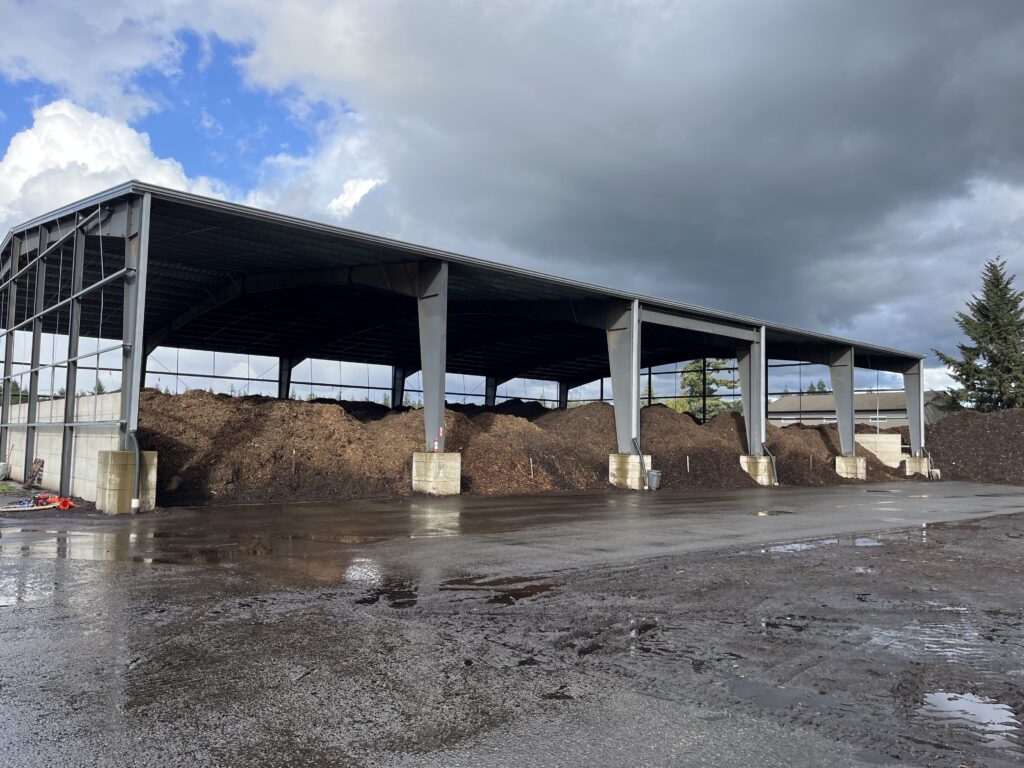
Locally, its systems are integrated into sites such as Bloedel Reserve and IslandWood on Bainbridge, Olympic Organics (formerly EMU Topsoil), which handles much of Kitsap County’s curbside organic waste; a facility in Shelton operated by Brady Trucking; and long-running sites in Pierce County and Tacoma, including the Compost Factory and Purdy Compost.
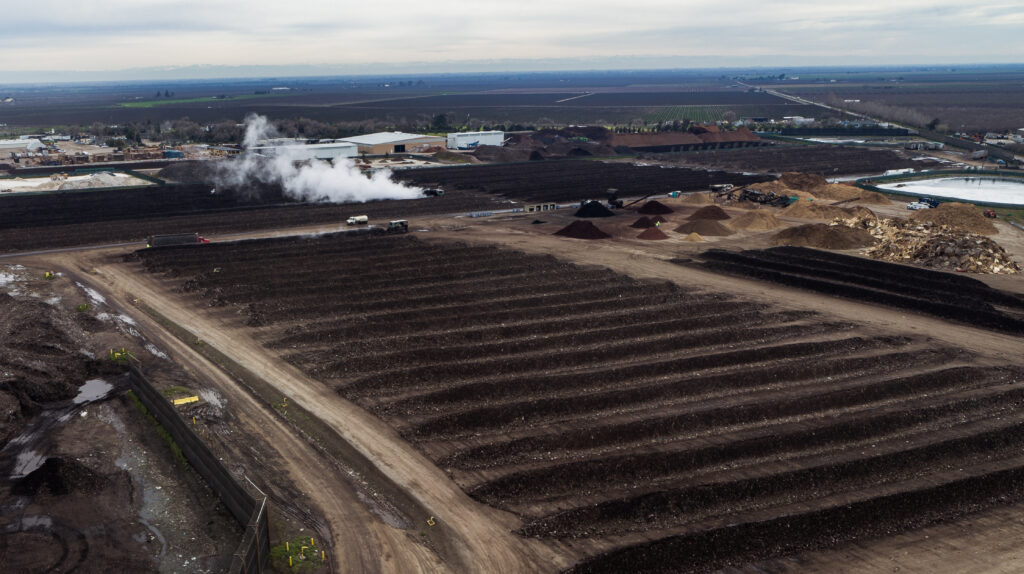
Beyond Washington, GMT has installed systems across the country, including what Black-Brown believes is the largest food-waste composting facility in North America — possibly the world — in California’s Central Valley, processing significant volumes of organic waste from the Bay Area.
For a company that grew out of a family home, that global footprint is striking.
Why Food Waste Is a Climate Issue
GMT’s work focuses overwhelmingly on food waste — the most difficult and consequential material in the composting world.
“Food waste is the hardest thing to compost,” Black-Brown said. “It comes with the most contamination — especially plastic — and it’s really stinky. It can have the most negative environmental impact, but also the highest positive environmental impact if we handle it correctly.”
When food scraps end up in landfills, they decompose anaerobically — without oxygen — producing methane, a potent greenhouse gas.
“Methane is one of the biggest contributors to climate change,” he said. “When food waste goes into a landfill, that’s kind of worst-case scenario.”
Diverting that same food waste into a properly designed composting system dramatically changes the climate math.
“If you divert roughly one ton of food waste from the landfill to a well-managed composting facility, that’s about half a ton of CO₂-equivalent emissions that you don’t put into the atmosphere,” Black-Brown explained.
And emissions reduction is only part of the story. Compost improves soil health, increases water retention and boosts nutrient density in food.
“When you put compost in the soil, you increase fungal growth, and as those fungi grow, they sequester CO₂,” Black-Brown said. “We also know compost helps reduce plant disease and brings more nutrients into our food. That’s the difference between a homegrown tomato and one that tastes like nothing.”
Composting, in other words, is not just waste management — it is regenerative agriculture and climate mitigation rolled into one.
Building the Invisible Infrastructure
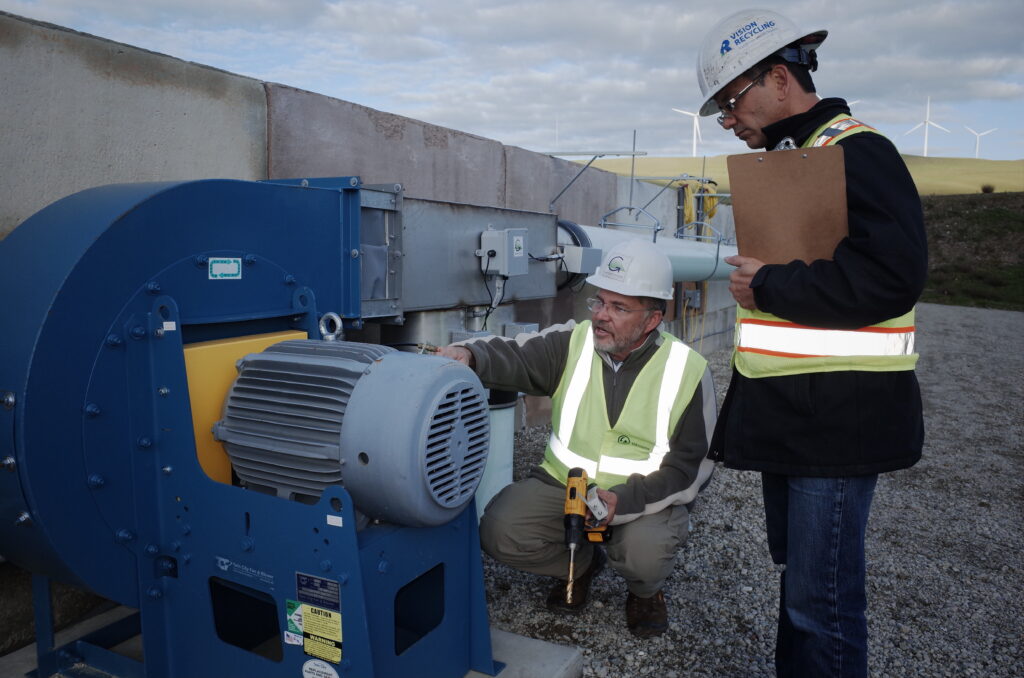
What GMT provides isn’t a retail product. It is infrastructure — deeply integrated into concrete pads, drainage systems and control panels.
Composting at scale is highly regulated, particularly when food waste is involved. Facilities handling it are treated like solid waste processing sites, subject to extensive permitting, environmental review and operational standards.
“It’s not like you can just build a big composting facility in your backyard and start taking food waste,” Black-Brown said. “You’re going through a lot of the same permitting process you’d see for a landfill or transfer station.”
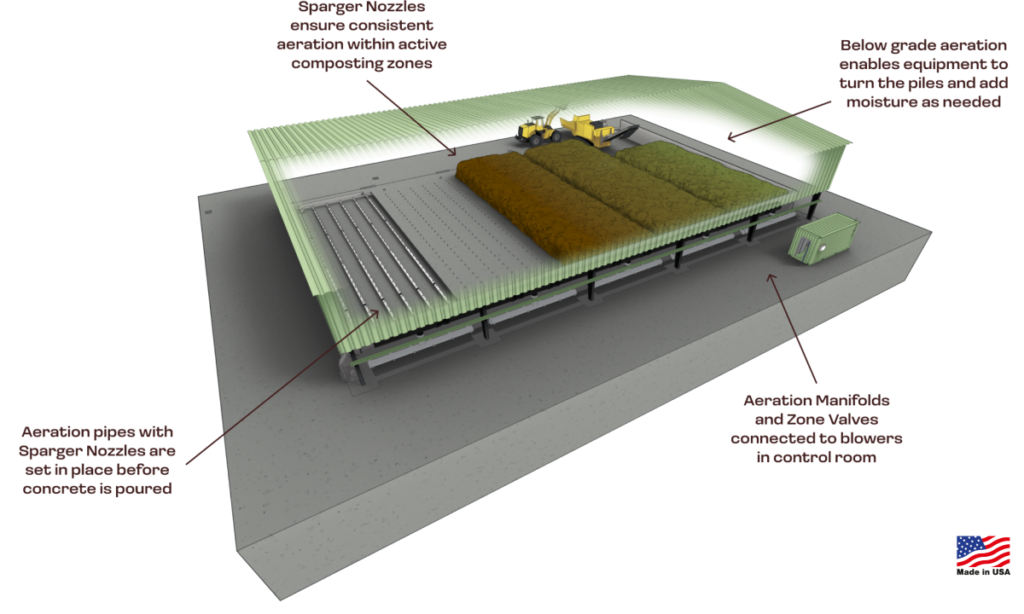
GMT’s core technology often centers on aerated static pile (ASP) composting. To visualize it, Black-Brown uses a surprisingly accessible metaphor.
“We build what are basically big air-hockey tables,” he said. “Composting needs air. If it’s aerobic, you get compost. If it’s anaerobic, you get methane and other problems. So we embed pipes and aeration into concrete pads and integrate that into the site design.”
Airflow is controlled beneath compost piles, maintaining oxygen levels and temperatures that encourage beneficial microbes while minimizing odors and methane emissions. Sensors, blowers and monitoring systems help operators manage the biological process with precision.
“You kind of get one chance to build this right,” Black-Brown said. “A lot of this is embedded in concrete. If you mis-design it, it’s incredibly expensive to fix.”
Operational efficiency matters as much as environmental performance.
“For a typical composting facility, about 75% of the pro forma is operations costs,” he said. “You’re running big grinders, loaders and other machinery. If the site isn’t laid out properly, you end up running that equipment a lot more — burning more diesel and spending more money.”
Design affects not only cost but community acceptance.
“Odor is the number one way big facilities get shut down,” Black-Brown said. “Those odors are basically VOC emissions that can travel for miles. If you don’t manage the process properly — air, moisture, stormwater — you can run into huge regulatory and community issues.”
Good engineering, in this industry, is also good neighbor policy.
Making Composting Accessible
While GMT has completed large municipal projects, Black-Brown emphasizes that the company is mission-driven.
“What’s a little bit unique about us is that we’re mission-motivated,” he said. “Most companies in the space have a product and a niche, and they just sell there. We’re focused on the full spectrum because we want everyone to have composting infrastructure.”
For small operators, the barrier is often regulatory and financial. Permitting a food-waste composting site in states like Washington or California can cost hundreds of thousands of dollars.
“That’s a huge barrier to entry for someone who just wants to start composting at a smaller scale,” he said.
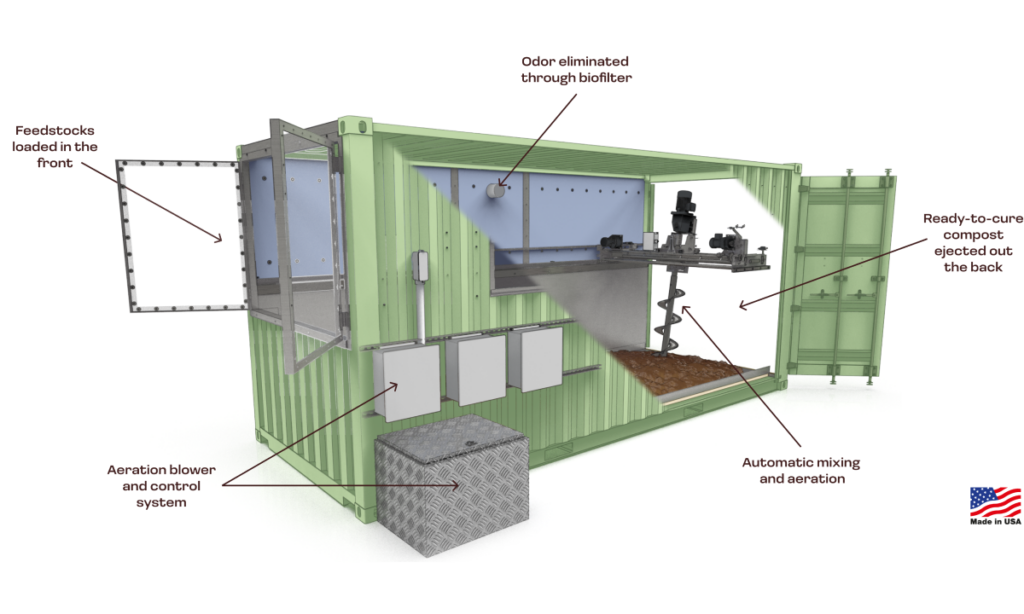
To help bridge that gap, GMT developed Earth Flow, a retrofitted shipping container system that functions as a self-contained composting vessel with built-in aeration and leachate capture.
“There’s an Earth Flow in downtown Manhattan composting food waste,” Black-Brown said. “You’re not going to have odor issues in that kind of setup.”
The goal is flexibility: solutions scaled to context, rather than one-size-fits-all.
Growing a Green Business in Suquamish
Behind GMT’s climate metrics is a growing local workforce. The move into a fabrication shop in Suquamish allowed the company to expand its production team from four to seven employees, with plans to double space as neighboring units become available.
“At that point, we’ll have to hire more people,” Black-Brown said. “We’re growing and building out that side of the business.”
Bringing more manufacturing in-house allows for continuous improvement.
“Basically every single time we ship a system, we learn what we could have done better and implement that into the next design,” he said. “We’ve been doing that for 30 years.”
For a Kitsap-based company, that blend of local job creation and global environmental impact reflects the heart of green business: solving systemic problems while strengthening community.
Closing the Loop
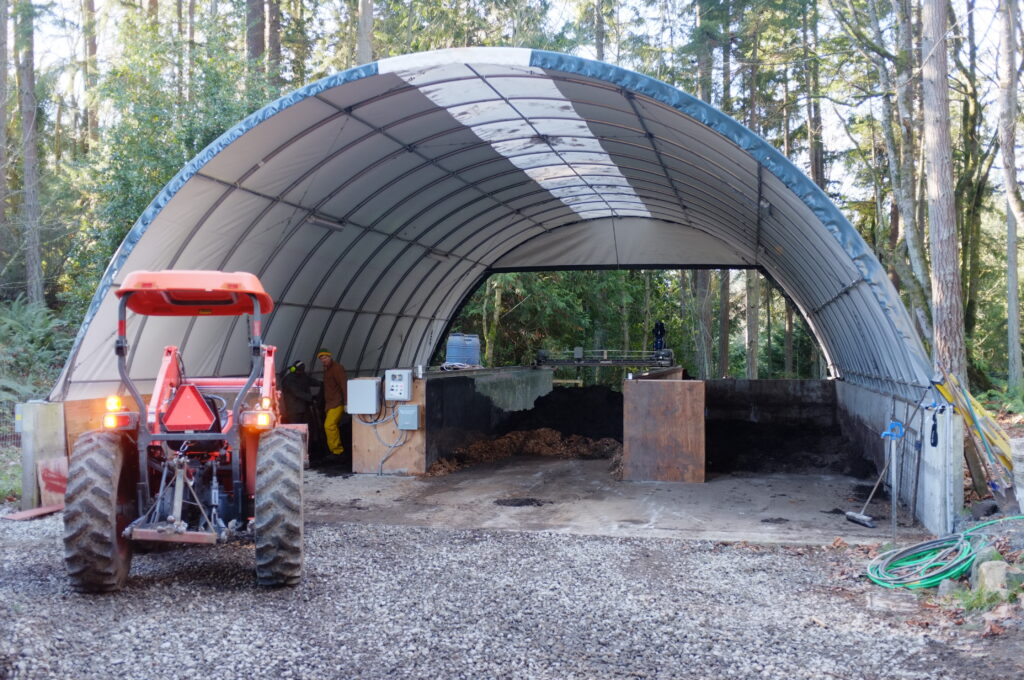
For Black-Brown, composting is ultimately philosophical as much as technical.
“Composting sits at the part of the loop people don’t want to look at — the death-to-life part,” he said. “As our population grows and we need more circularity to sustain humanity, composting is a very important piece of that puzzle.”
From a resident’s perspective, composting may feel simple — rolling a green bin to the curb and enjoying a trash can that “doesn’t smell horrible,” as he puts it. Behind that simplicity lies engineering, permitting, regulatory navigation and innovation — much of it shaped in Kitsap County.
“We can’t just keep taking our waste and putting it into a landfill and think we’re going to survive on this earth as a species,” Black-Brown said. “Eventually all our resources end up there. We need to create circles — and that’s what composting is. It’s just doing what nature has always done to sustain itself, but at a scale that matches how we live now.”
For Green Mountain Technologies, that means designing the unseen systems that turn waste into soil, methane into avoided emissions and local manufacturing into global climate impact — one facility, one community and one ton at a time.
Keep in touch with our news & offers
Subscribe to Our Newsletter
Thank you for subscribing to the newsletter.
Oops. Something went wrong. Please try again later.