
By connecting commercial innovators with naval defense, Kitsap is demonstrating how regional innovation can strengthen both national security and economic growth.
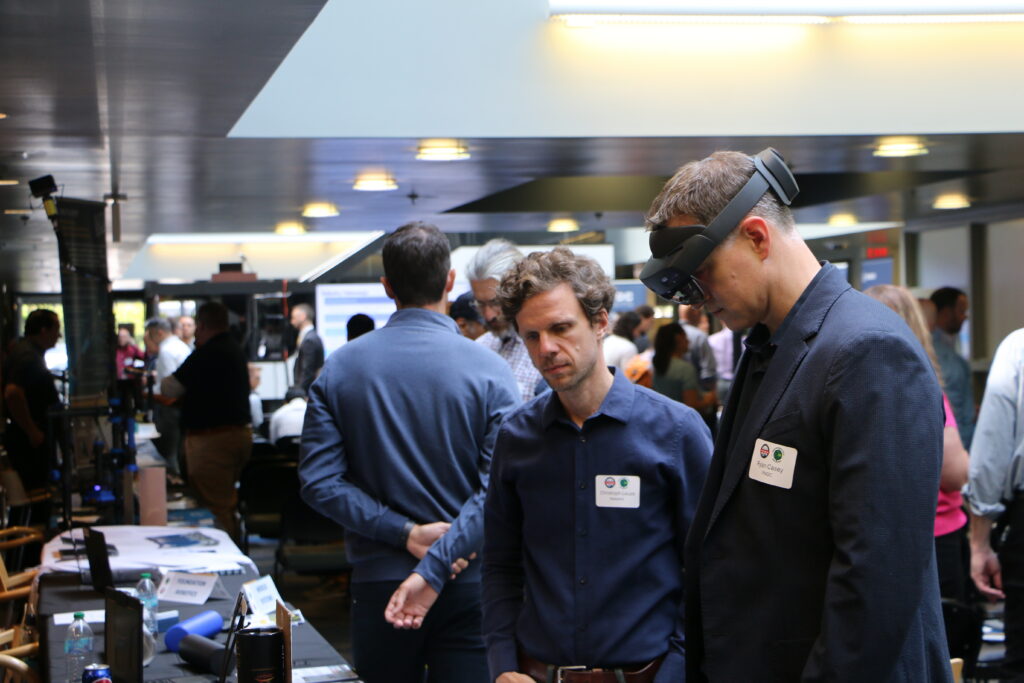
The future of defense is changing faster than ever. Artificial intelligence, autonomy, robotics, advanced manufacturing, and other emerging technologies are redefining how wars are fought and won. We need only look to current conflicts—including Ukraine’s use of autonomous systems—to see that military advantage increasingly belongs to those who can learn, adapt, innovate, and deploy the fastest.
At the same time, the source of innovation has changed. Many of the technologies transforming modern defense are emerging beyond the traditional defense industrial base—not from established defense contractors, but from early-stage startups, university laboratories, and “garage innovators” working at the speed of commercial innovation. Yet these companies often struggle to navigate the Navy’s unfamiliar, slow, and complex acquisition process, while others decide the opportunity cost of engaging with the Department of Defense simply isn’t worth it.
To maintain our competitive advantage, we need intentionally stronger pathways that connect the nation’s most innovative companies with the Navy before our adversaries do.
Technology Is Only As Strong As the Innovators Who Build It
America’s technological advantage won’t be determined solely by the systems we build. It will be determined by our ability to discover, support, and connect with the people creating what’s next. And that innovation is already happening in Kitsap.
Few communities combine the concentration of naval expertise, maritime engineering, advanced manufacturing, and entrepreneurial talent found in our region. Anchored by Naval Base Kitsap—one of the nation’s largest centers for naval capability—Kitsap brings together engineers, manufacturers, researchers, technicians, entrepreneurs, and investors working to solve some of the world’s most complex technical challenges.
Every year, experienced service members transition into the private sector, applying decades of operational knowledge to companies developing the next generation of commercial and defense technologies. Organizations like Matchstick Lab help those founders connect with mentors, partners, and the broader entrepreneurial ecosystem, ensuring promising ideas have the support needed to become viable businesses.
Whether it’s next-generation environmental protection, wireless marine mobility, or smarter waterway management, Kitsap’s innovators are developing dual-use technologies that strengthen both our economy and our national security. While their applications may differ, they share a common purpose: solving complex problems through mission-driven innovation.
Transforming the region’s top innovators into the Navy’s strongest defense
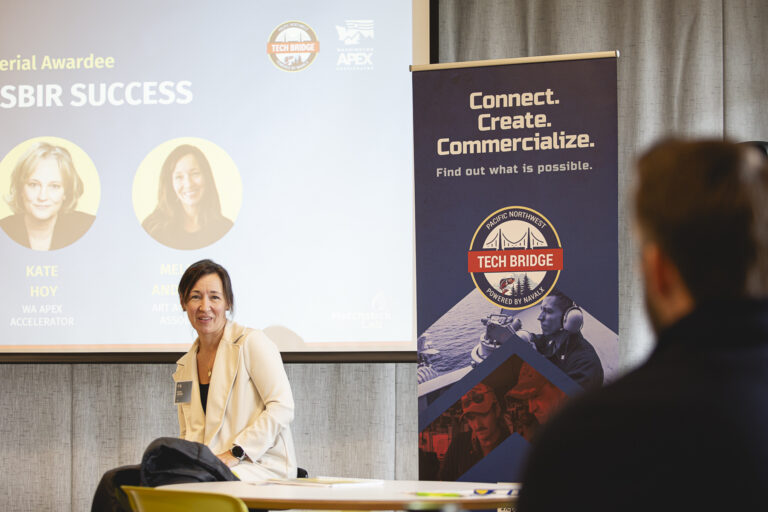
To close the gap between early-stage innovation and naval defense, I helped launch the Northwest Tech Bridge through NavalX in 2019. Since then, we’ve worked to connect innovators, entrepreneurs, manufacturers, investors, researchers, and Navy stakeholders into one of the nation’s most trusted regional innovation ecosystem that transforms promising commercial technologies into mission-ready capabilities.
And it’s based right here in Kitsap.
Working alongside Naval Undersea Warfare Center Division (NUWC), Keyport, as well as local institutions like Kitsap Bank, Olympic College, Matchstick Lab at Vibe Coworks, the Kitsap Economic Development Alliance (KEDA), and innovation partners across the Pacific Northwest, we’ve demonstrated how regional collaboration can accelerate innovation for both defense and commercial markets.
Driving national security and regional economic growth
The impact of this work extends well beyond national defense. By nurturing this ecosystem, we aren’t simply accelerating naval capability, but we’re also strengthening Kitsap’s regional economic growth. Every startup that succeeds, every manufacturer that expands, and every entrepreneur who chooses to build a company here contributes to a stronger Kitsap economy. The same ecosystem that accelerates capability for our men and women in uniform also creates high-skilled jobs, attracts private capital, strengthens local supply chains, and positions our region as a destination for innovation.
Over the past six years, through the Northwest Tech Bridge, we have demonstrated what that future can look like. Now we have an opportunity—and a responsibility—to build on that foundation.
Innovation doesn’t happen in isolation.
It grows where ambitious people and strong institutions come together to solve shared challenges. Kitsap’s competitive advantage isn’t just our naval presence or our technical expertise—it’s our willingness to collaborate across industry, government, education, and entrepreneurship. The next chapter of this work belongs to all of us: business leaders willing to mentor founders, manufacturers eager to test new technologies, investors who see potential before everyone else, educators preparing tomorrow’s workforce, and civic leaders committed to creating the conditions where innovation can thrive.
The next generation of defense capability will begin in communities like Kitsap—where innovation and mission come together to solve tomorrow’s challenges.