From a broken piano in a Massachusetts chicken barn to a Silverdale teaching studio, Christine Kastanopolous has built a life in music around persistence, problem-solving and second chances.
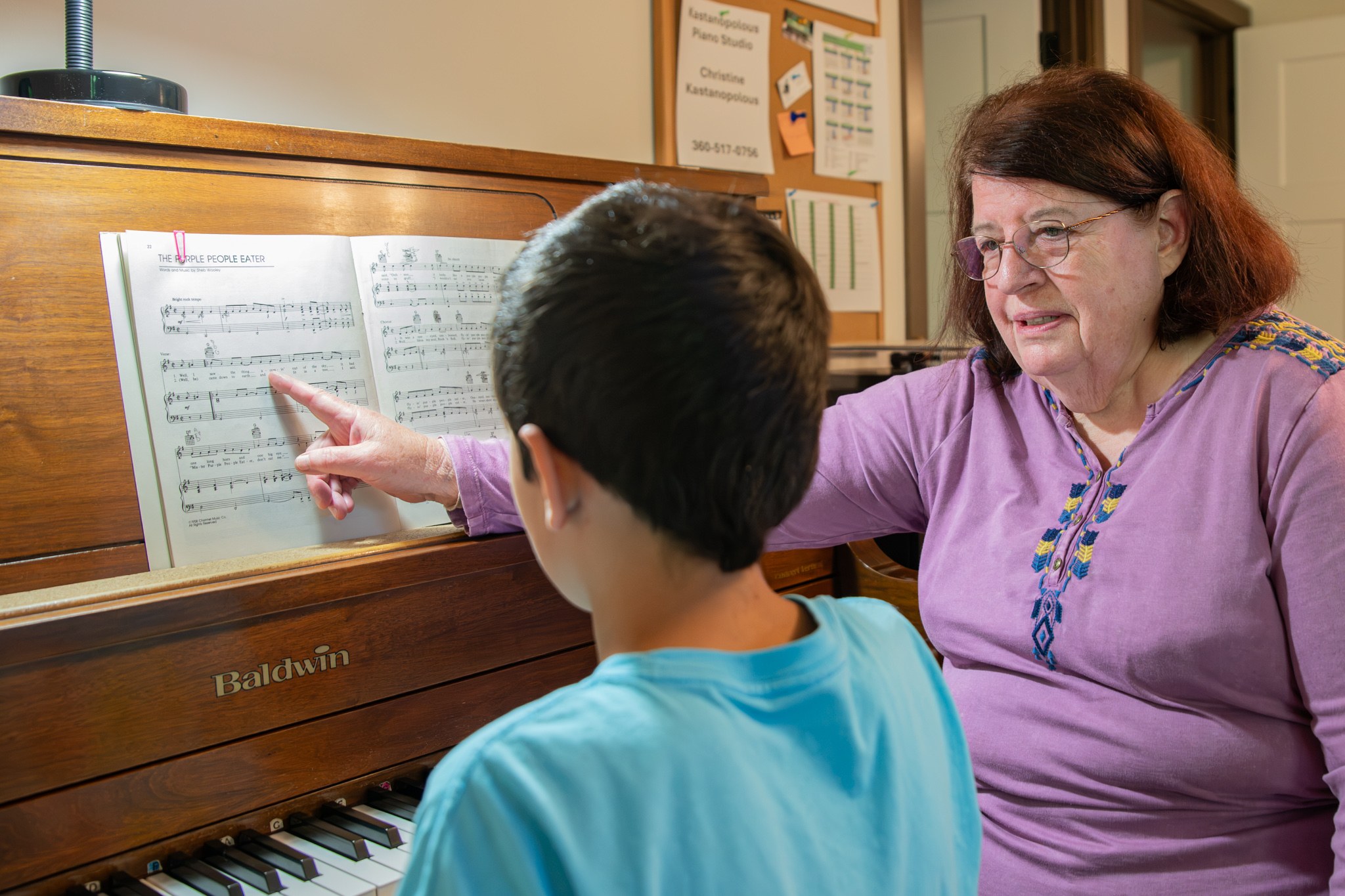
The first piano Christine Kastanopolous ever played was a giveaway — the kind of instrument a congregation hands off when it’s past saving.
“If they gave you a piano, it’s really past dead,” she said.
Her father, a member of a Congregational church in Massachusetts, took the piano anyway and put it in the chicken barn. Kastanopolous was 6 years old.
Some keys worked. Some didn’t.
So she figured out how to make the broken ones work.
She used Band-Aids and whatever else she could find until the entire keyboard played. It was never tuned.
“That never even crossed my brain,” she said.
A book sat beside the piano. She couldn’t read the title, but she could tell it was showing her how to play. She followed what she could and taught herself to read music.
The chickens became her first audience, lining up on the piano lid and bench. One preferred to sit on her head.
“Nobody ever knew where I was,” she said. “But nobody really cared.”
That changed when her father opened the barn door and heard what was happening inside.
He called a piano teacher, who told him she didn’t take students under 10. He suggested Kastanopolous might be the exception.
The teacher held firm.
So Kastanopolous kept teaching herself.
That instinct — to keep working at something until she figures it out — has shaped a career that has taken her from a Massachusetts chicken barn to New England Conservatory, from a music school in Alaska to a teaching studio in Silverdale.
It also shapes the way she teaches today.
Finding her way to music
In high school, Kastanopolous asked to join the band and was told she couldn’t play piano in one. Instead, she was handed a French horn, an instrument she had never seen before.
She took to it quickly.
Before long, her band director told her she needed more instruction than the school could provide and sent her to Boston.
Beginning at age 13, Kastanopolous spent every Saturday at New England Conservatory from 7 a.m. to 7 p.m., studying piano, French horn, theory and ensembles. She studied horn with the principal player of the Boston Symphony Orchestra and, through that connection, could cross the street to Symphony Hall and sit in on rehearsals.
Her audition remains vivid.
Playing in Jordan Hall, she forgot she was being judged. The acoustics were amazing.
“It was like the shower amplified,” she said.
When she finished, nobody spoke.
She assumed she had done something wrong.
Instead, the orchestra conductor invited her to join his theory class, wind ensemble, brass ensemble and chamber orchestra.
The conservatory was demanding. Students faced jury exams every semester, and graduation required an hour-and-a-half memorized recital.
Three hundred students entered with her. Seventy-five graduated.
“I’m not afraid of dying and going to hell, because I’ve already been there,” she said.
Kastanopolous knew, however, that she wanted to teach rather than simply perform. She transferred two blocks away to Boston Conservatory for its stronger education program.
Building a school around music
After graduation, Kastanopolous met her future husband — his dog chased her cat up a tree on Commonwealth Avenue — and the couple headed west.
In 1970, they flew to Calgary and traveled overland to Anchorage with matching backpacks and a black Lab who carried her own matching pack. The journey took a month.
Alaska taught her another lesson in persistence — and humility.
On an early winter trip toward Talkeetna, Kastanopolous set out on foot carrying her gear. Within a third of a mile, she couldn’t breathe or feel her hands.
It was 40 degrees below zero.
“Mother Nature is not your mother; she’s somebody else’s mother,” she said. “If you’re being stupid, you’re going to pay the price.”
Her Anchorage teaching studio grew quickly. But Kastanopolous wanted something more than half-hour lessons in isolation.
What had made the conservatory meaningful to her was the interaction between musicians — different players, instruments and sounds working together.
So she built a music school.
The preparatory school had 16 teachers whose credentials matched or exceeded those at the local university. It was designed for children rather than college students and offered musicals, ensembles, open-air concerts at malls and competitions her students routinely won.
There was one rule Kastanopolous considered particularly important.
“There was no blame and shame,” she said.
Eventually, the demands of running the school became greater than what it could return financially. She closed it and returned to private teaching. A parent later bought the school and kept it operating for about two years.
The experience gave Kastanopolous something that would stay with her: a clear idea of the kind of teacher she wanted to be.
Music could be demanding without being punitive.
Students could make mistakes without being made to feel like failures.
And learning could be about more than playing the right notes.
Another new beginning
Kastanopolous moved to Kitsap County in 2016, bringing her teaching experience with her.
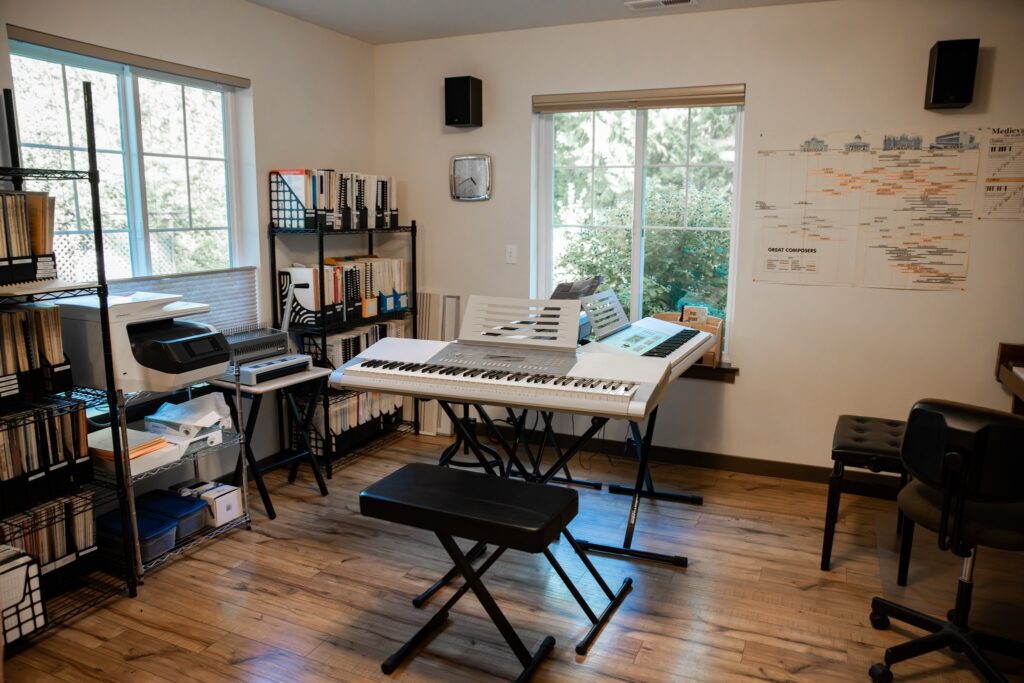
She bought property in Silverdale and eventually established her home and studio there.
Building the house presented its own challenges, including a long dispute with her first builder. Rather than give up, she found another path forward.
A conversation with workers across the street led her to builder Dave Wideman of Big Sky Enterprises, who completed the house in six months.
“He said, ‘You’re one tough cookie,’” she said. “I said, ‘No — what is my choice?’”
The same question would become even more significant a few years later.
Losing the music — and finding a new way to teach it
About three years ago, Kastanopolous underwent her second total knee replacement.
She had warned her surgeon that anesthesia had become dangerous for her. She went under Dec. 2 and has no memory until Dec. 25.
After being sent home, she suffered a bilateral stroke the following Monday.
Her family was told she could die that evening, remain in a vegetative state or become totally paralyzed.
Instead, Kastanopolous began the painstaking process of rebuilding skills she had spent a lifetime developing.
She had to relearn speech, eating and the use of her hands.
Two months later, she sat down at her piano.
“I know what I want. I know how to do it,” she said. “There was no connection from here to my hands.”
Every piece she had learned was gone.
But once again, Kastanopolous did what she had always done.
She started figuring it out.
What the stroke taught her about teaching
Someone gave Kastanopolous a book, Learn Faster, Perform Better by violist and neuroscientist Molly Gebrian, about why practice sometimes fails to stick.
The book helped her understand her own experience and rethink the way she taught her students.
The answer, she discovered, was often to slow down.
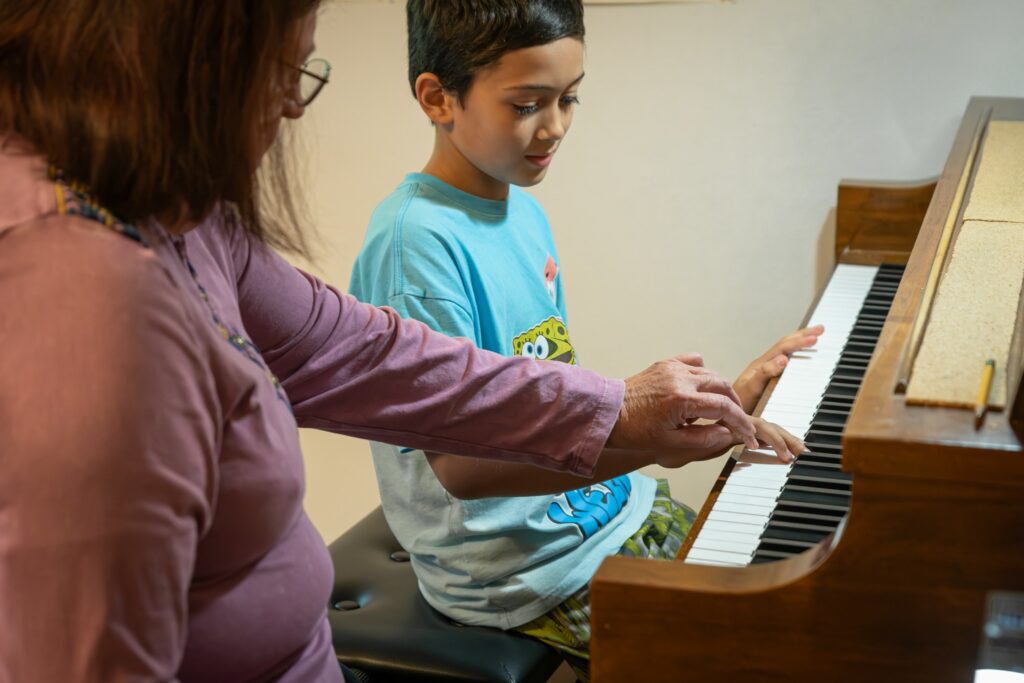
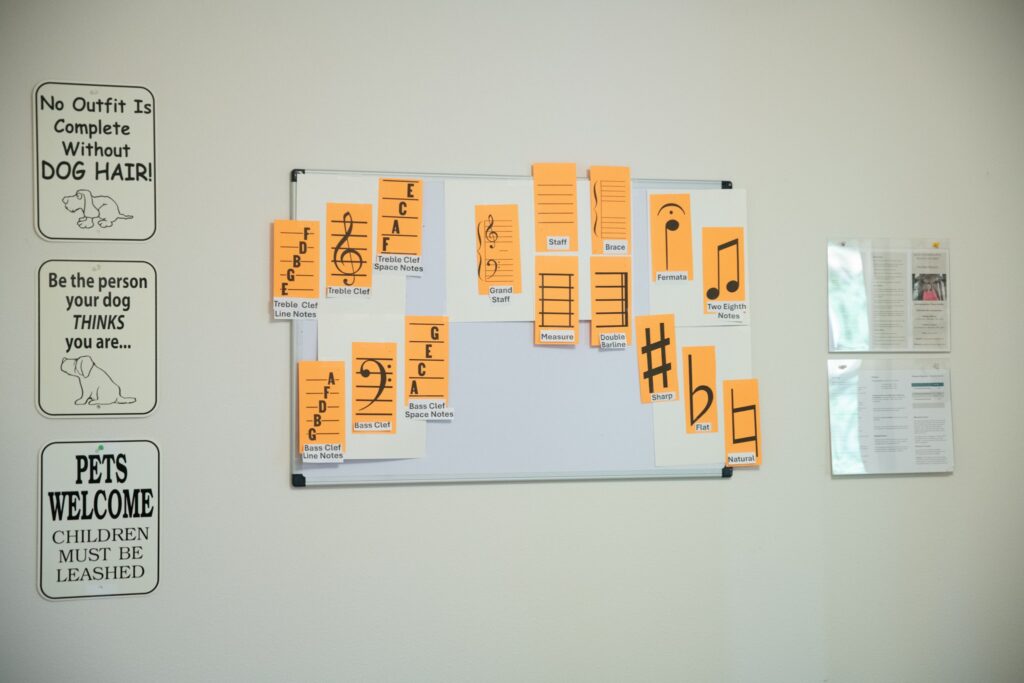
Number the measures. Work on one measure at a time. Use a metronome. Play slowly enough to get the passage right three times. Then move to another section.
The goal is to give the brain enough information to understand where a passage begins, where it goes and how the pieces fit together.
“I don’t do slow,” she said. “So I had to go, ‘Hold on, horses.’ If I can’t do it, why do I think they can?”
Her approach is not simply about learning music. It is about learning how to solve problems.
With a 13-year-old working on a Bach invention after only a year of study, for example, the work might be less about the piece itself than about focus and control.
When a student gets angry at a mistake, Kastanopolous stops them.
“If you’re getting upset, you’re just mad at yourself,” she said. “Just dial it back. Find out what went wrong, and fix it.”
Her analogies often come from another longtime passion: horseback riding.
When she taught in Alaska, she took students on an annual trip to Homer that included tide pooling and horseback riding, along with a playing challenge students had to complete to earn a seat on the horse.
“If you sit on the horse and go, ‘Go, horsey’ — good luck, I’ll see you at the end of the trail,” she said.
The horse knows the moment a rider tightens their knees.
“So does the piano.”
The best “Stuck on C” player she’s ever met
One of Kastanopolous’ favorite stories from her years as a teacher involves a class clown at his first recital.
He had Robert Vandall’s “Stuck on C” cold.
Then he walked onto the stage and froze.
Kastanopolous stepped between him and the audience and made him look at her.
“I know your brain just went, ‘No.’ Don’t worry about it,” she told him.
Once she got him talking to her, the fear began to break.
Then she turned to the audience.
“Ladies and gentlemen, I want you to meet the best ‘Stuck on C’ player I have ever met.”
He absolutely nailed the piece, she said.
Today, he is a professional performer working in the United Kingdom. Years later, he emailed Kastanopolous to tell her that he would have questioned himself forever if she hadn’t intervened that day.
For Kastanopolous, the story captures something central to her approach to teaching.
“It’s a lot of giving what I wish somebody gave me,” she said.
The next chapter
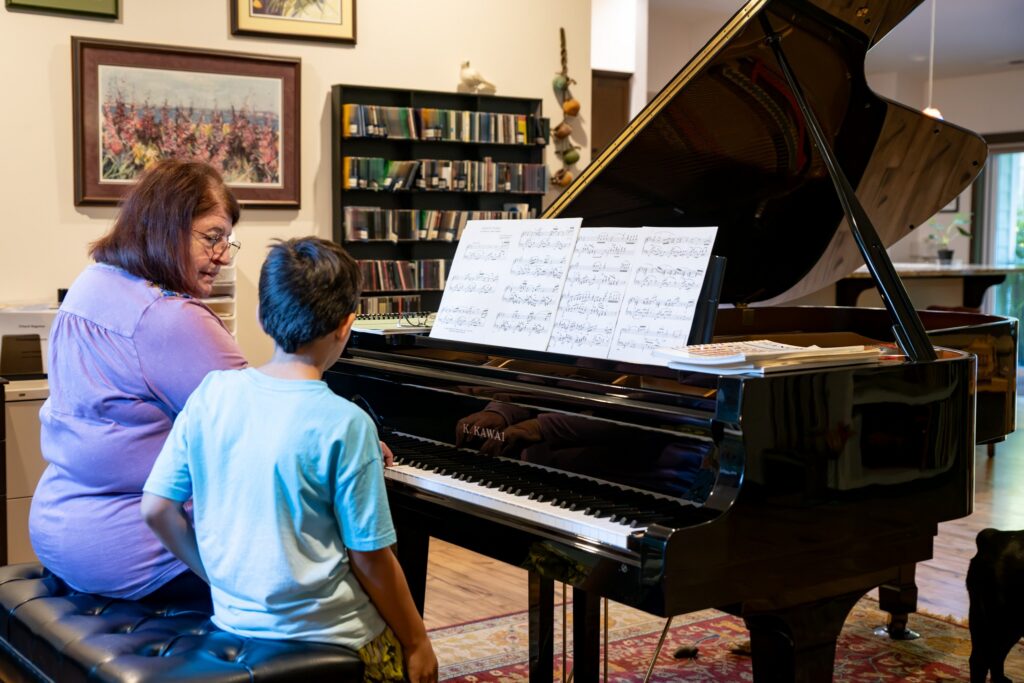
Kastanopolous Piano Studio operates out of her Silverdale home, where lessons are often supervised by Zoey, her small, treat-motivated and opinionated dog.
She teaches piano and keyboard and can teach any brass instrument, although piano remains her specialty.
She calls it the king of instruments because a pianist must understand every clef and the relationships between notes at the same time.
After decades of teaching, she knows that students don’t all learn in the same way.
Some need more structure. Some need encouragement. Some need to slow down and isolate a problem. And some need a teacher who can help them get past the moment when frustration threatens to take over.
Her own experience has made that lesson particularly meaningful.
Kastanopolous had to relearn how to play after her stroke. She had to accept that some things might not return and then find new ways to approach the things that did.
She brings that same patience and persistence to her students.
The studio has room for new students, particularly teenagers and adults looking for individual piano instruction from an experienced teacher. More information about lessons can be found on her website sesamestreetmusicstudio.com.
For Kastanopolous, teaching remains less about perfection than progress.
And perhaps that’s fitting for someone whose musical life began with a piano that was supposed to be beyond repair.
The keys didn’t all work.
She played anyway.
Keep in touch with our news & offers
Subscribe to Our Newsletter
Thank you for subscribing to the newsletter.
Oops. Something went wrong. Please try again later.