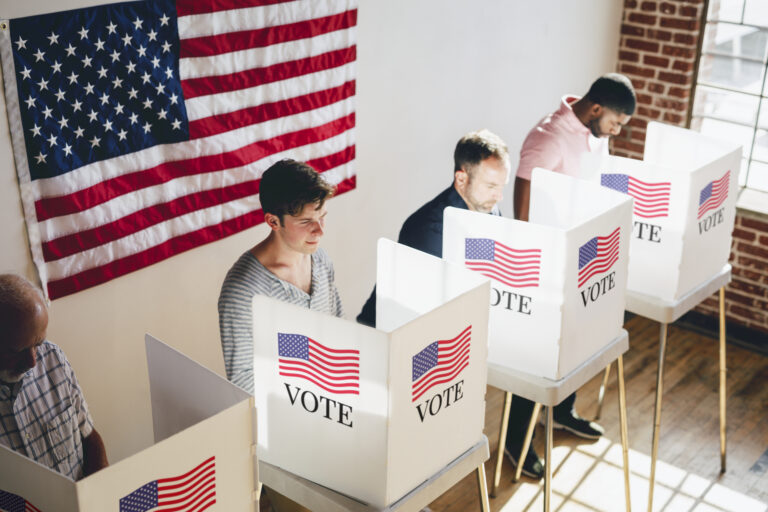

A week from today, the election will be over.
The ballots will have been cast. The campaign advertisements will stop. The yard signs will begin disappearing, and the conversations that have dominated so much of our attention will gradually give way to other concerns.
Some candidates will celebrate. Others will be disappointed. Some voters will be pleased with the results, while others will wonder what comes next.
And on Nov. 4, we’ll all wake up in the same communities we call home.
We’ll shop at the same grocery stores.
Our children will attend the same schools.
We’ll encounter the same neighbors, work alongside the same colleagues and depend on many of the same people we did before Election Day.
The person whose yard sign we disagreed with will still live down the street.
The candidate we didn’t support may become the public official representing us.
And the challenges facing our communities won’t disappear simply because the votes have been counted.
That’s something worth remembering as we approach Nov. 3.
Elections matter. They are one of the most important ways we participate in shaping the direction of our communities, our state and our country.
The decisions made by those we elect affect our schools, public safety, infrastructure, taxes, businesses and quality of life.
We should take those decisions seriously.
We should study the candidates, examine their positions, ask difficult questions and make informed choices.
We should vote.
But democracy asks something more of us than simply filling out a ballot.
It asks us to remain invested in the communities we share, even when the outcome isn’t what we hoped for.
That can be difficult.
Elections have a way of turning differences of opinion into something much more personal. We begin to see candidates not simply as people with different approaches to governing, but as representatives of everything we support or oppose.
Sometimes that attitude extends to the people who support them.
A neighbor becomes a political label.
A friend becomes a vote we disagree with.
A disagreement over policy becomes a judgment about someone’s character.
And before long, we risk forgetting that the people on the other side of an election are the same people we share our communities with every day.
I’ve always believed one of the strengths of small communities is that we have opportunities to see one another as more than our opinions.
We may disagree at a city council meeting and then find ourselves sitting next to each other at a school concert.
We may support different candidates but work together on a community fundraiser.
We may have very different views about government but share the same concerns about our children’s education, the cost of living or the future of our local businesses.
Those shared experiences matter.
They remind us that disagreement does not have to become division.
And they remind us that the work of building a community doesn’t stop when an election ends.
In many ways, that’s when some of the most important work begins.
Newly elected officials must move from campaigning to governing. Promises must become decisions. Ideas must be tested against budgets, laws, competing priorities and the practical realities of public service.
Those who win deserve the opportunity to do the jobs voters have entrusted to them.
They also deserve thoughtful scrutiny.
Supporting a candidate doesn’t mean agreeing with every decision that person makes.
Opposing a candidate doesn’t mean hoping that person fails.
We should want our elected officials to succeed in serving the public, regardless of whether we voted for them.
And we should be willing to hold them accountable when they fall short.
That is not a contradiction.
It is part of responsible citizenship.
The same responsibility applies to those of us who don’t hold public office.
It’s easy to become deeply engaged during an election, when campaigns are competing for our attention and every issue seems urgent.
It’s harder to remain engaged afterward.
Attending public meetings, following local government decisions, understanding how tax dollars are spent and participating in community discussions require time and effort.
They rarely generate the excitement of a campaign.
But they are essential to making local government work.
At Ward Media, we see this responsibility as part of our mission.
Our job is not finished when the election results are reported. We must continue covering the decisions elected officials make, asking questions, examining public spending and helping readers understand how those decisions affect their lives.
That work should be fair, accurate and independent, regardless of who wins.
Because accountability should never depend on which candidate we supported.
I also think we have an opportunity to reconsider how we treat one another after an election.
There is little to be gained by humiliating people whose candidates lost.
There is equally little to be gained by assuming the worst about everyone who voted differently.
Winning an election does not make every opinion correct.
Losing one does not make every concern invalid.
And neither outcome changes the basic responsibility we have to treat our neighbors with dignity.
We can celebrate victories without gloating.
We can express disappointment without bitterness.
We can challenge decisions without attacking the people who make them.
And we can recognize that our shared future matters more than the satisfaction of winning an argument.
None of that requires abandoning our convictions.
It simply requires remembering that our communities are bigger than any single election.
As you consider your ballot over the coming days, I hope you’ll take the time to understand the choices before you and make your voice heard.
But I also hope you’ll think about what happens afterward.
Will we remain engaged?
Will we continue asking questions?
Will we give newly elected officials a fair opportunity to lead while holding them accountable?
Will we be willing to work alongside people who voted differently?
Will we remember that the people we disagree with are still our neighbors?
The election will determine who leads our communities.
The days that follow will reveal what kind of communities we choose to be.
Terry Ward
CEO & Publisher, Ward Media