How Tribal Ownership Is Reshaping the Future of Kitsap OBGYN and Women’s Healthcare in Kitsap County

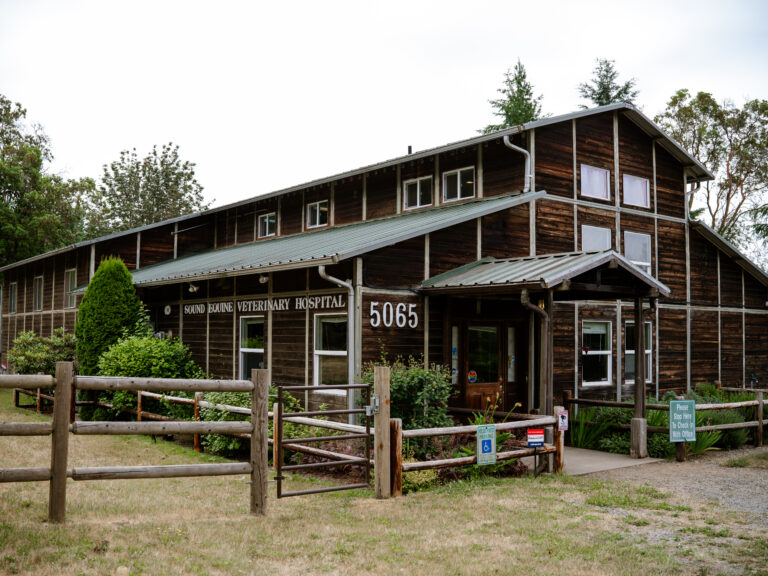
When the Suquamish Tribe acquired Kitsap OBGYN earlier this year, the immediate impact was clear: one of Kitsap County’s primary providers of obstetric and gynecologic care would remain open.
But the significance of the move extends well beyond preservation. It marks the beginning of a broader shift—one that could reshape how women’s healthcare is delivered in a region long challenged by provider shortages, system strain, and growing demand.
For tribal leaders, the decision was driven by urgency. For providers, it offers stability and renewed focus. For patients, it signals something more lasting: a future where access to care may no longer feel uncertain.

A System Under Strain
Kitsap County’s challenges in women’s healthcare are both well documented and deeply felt.
“We’ve known for a long time that Kitsap County has serious gaps in OB-GYN care,” said Jeff Riggins, Community Health Program Manager for the Suquamish Tribe. “When you look at the data, this county is not trending in a good way around this care.”
The numbers underscore that reality. Kitsap County has fewer than six OB-GYN providers per 100,000 residents—less than half the state average. Only 55% of expectant mothers receive adequate prenatal care, and for those on Medicaid, that number drops below half. About one in four women leaves the county to give birth, Riggins said.
“Those are pretty sad realities,” he said. “People simply can’t find providers here to care for them.”
As one of the county’s primary OB-GYN providers, Kitsap OBGYN has long operated at the center of that strain, balancing high demand with limited regional resources.
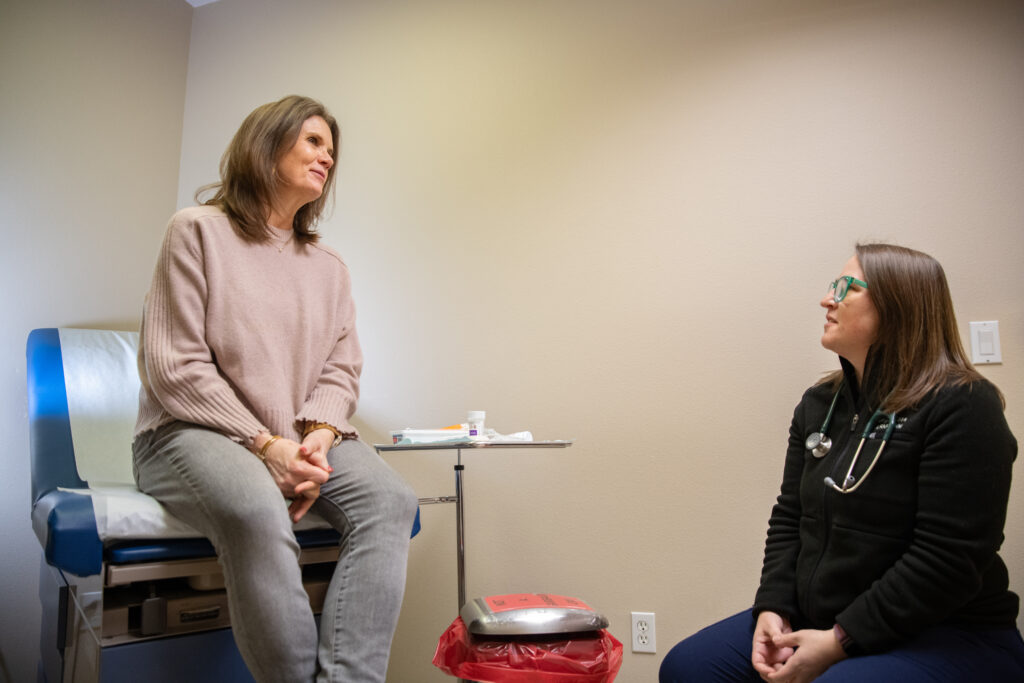
“We can provide a certain level of care at St. Michael, but we can’t provide a higher level of care than that,” said Dr. Amity E. Marriott. “Our specialists and higher-level care teams are outside the county, and that’s normal—we’re not a big urban center. But there’s also a geographic pull over to Seattle and down into Tacoma.”

From Ownership to Opportunity
For years, Kitsap OBGYN functioned as a physician-owned practice, with four doctors managing both patient care and the operational demands of running a business.
“I was one of the four owners, so I was very instrumental in making that decision,” Dr. Marriott said. “All four of us met several times and worked on this together. It has been an incredibly positive experience.”
That model required physicians to oversee staffing, payroll, and long-term planning. The transition to tribal ownership has shifted that balance.
“I don’t have to worry about how I’m going to pay my staff or how I’m going to keep them at a living wage anymore,” she said. “I can think about what the best practices are for our clinic in managing patients and managing concerns and how we can better serve this community. That is such a huge weight off our shoulders as physicians. Now we can do the things we’re really here to do, which is provide care.”
“For me, and I think for my colleagues as well, not having to worry and focus on running the business, but being able to really dig into how we can improve the way we provide care in this community so that it best serves the people that live here—that’s amazing,” she added.
The result is a clinic newly positioned to think beyond day-to-day survival and toward long-term improvement.
An Urgent Intervention
For the Suquamish Tribe, the acquisition was not part of a long-term expansion strategy—it was a response to an immediate need.
“We were working hard on getting used to having our own doctors and our own health services systems,” said Leonard Forsman, Chairman of the Suquamish Tribe. “We weren’t making plans for expansion into other health programs. So when this came up, it was not in our strategic plan. It was an opportunity.”
That opportunity came with significant stakes. Tribal leaders say the clinic was at risk of closing—an outcome that would have further strained an already fragile system.
“We heard what the emergency situation was,” Forsman said. “People knew the impacts that would have arisen if we hadn’t stepped forward at a time when I don’t think there was anybody else that could have. We felt we needed to step forward and invest in it—not only for us to grow our health system, but to provide that service to the whole county.”
Riggins emphasized what that moment meant for the region.
“The fact that we were able to save women’s maternal and child health—and to some extent women’s reproductive rights—in this county is the most rewarding part of this,” he said. “Without the tribe stepping up to the plate, this place would have closed down. So for us to think about that reality where we’re already hurting—these clinics see 160-plus patients a day—that would be gone.”

Stabilizing the Present
Since the acquisition became official in January, the tribe’s first priority has been continuity.
“Our first priority is making sure we’re not affecting the patient care that currently exists,” Riggins said. “We don’t want patients to be forced away to find other obstetric care somewhere else.”
For patients, that stability is largely invisible. Providers and staff remain in place, insurance contracts continue, and care has not been disrupted.
Behind the scenes, however, the operational shift is significant.
The Suquamish Tribe brings a robust organizational infrastructure, including established HR, IT, and accounting departments. That support relieves the clinic of administrative burdens and allows providers to focus more fully on care.
“We have the internal structure to manage a facility,” Forsman said. “That has made the clinic more focused on providing services and less on the headaches of managing a health system and getting bills paid and all those things.”
Riggins said that support enables both immediate problem-solving and long-term planning.
“We can offer them an entire HR department, an entire IT department. We have staff who do integrations with electronic health record systems,” he said. “We can throw people at some of the problems they were facing, but we can also provide systematic solutions and things that only a tribe, with this structure, can do.”
Reframing Care for the Future
While stabilization is the immediate focus, the long-term vision for Kitsap OBGYN is broader—and more holistic.
“From my angle in health and wellness, we’re trying to take care of mind, body, and spirit all together,” Riggins said. “That’s how we look at health.”
“In the long term, my hope is that patients don’t notice a huge change in their current care at first—except for the positive,” he added. “But from a tribal view on health, I’d like to include a holistic view from a patient-centered seat where they come in and we can address mind, spirit, and body as much as possible.”
For providers, that vision aligns with long-standing needs across the region.
“I would love to see more providers,” Dr. Marriott said.
“I would love to see more ancillary care—physical therapy, psychiatric care, better availability of all different kinds of practitioners, so that people can get in with the specialists they need.”
“We need better availability of primary care doctors so that when people need to transition to primary care, they can do that without interruption,” she said. “Just a more robust system across the board.”
Building a Data-Driven System
Looking ahead, data will play a central role in shaping how care evolves.
“I’m working with some folks at the Department of Health right now, trying to understand how we collect and utilize birth data in this county,” Dr. Marriott said. “Once we get a better sense of what is happening in the county—locations of births and how many births are happening here versus elsewhere—then we can really start to understand what the needs are and try to design care around that.”
That approach reflects a shift from reacting to demand toward proactively designing a system that better serves the community.
As Kitsap County’s population grows, that kind of planning will be essential to addressing persistent gaps in care.
A Community-Based Model
For the Suquamish Tribe, the acquisition reflects a broader philosophy: healthcare as essential community infrastructure.
“Our community understands that when we bolster our healthcare footprint, that’s sovereignty for our people,” Riggins said. “They’re able to see us put our words into action with these types of acquisitions.”
That approach extends beyond tribal members to the wider population.
“The tribe’s number one goal, as far as I can see, is that they need to provide for their tribal members,” Dr. Marriott said. “But they also see that there is a synergy with how the tribe is working and how the rest of the community is working. If they aren’t supporting everyone, then they can’t best support their own tribal members. That understanding—that no one is working in a vacuum—is so unique and yet so important.”
Measured Growth Ahead
Despite the urgency that prompted the acquisition, leaders emphasize that change will be deliberate.
“Kitsap OBGYN has been doing their practice for 40-plus years,” Riggins said. “This is our first year in this type of care. We don’t want to come in with huge 10-year goals that might work against what the providers, patients, and community actually need. We want to listen first.”
“There’s nothing that I can talk about discreetly at this point,” Dr. Marriott added. “We have a lot of ideas, but nothing that is firm enough to really talk about as a plan.”
For now, the focus remains on maintaining access while building a stronger foundation for the future.
A Turning Point
For Kitsap County, the acquisition of Kitsap OBGYN represents both stability and possibility.
In the short term, it ensures that a critical provider remains open. In the long term, it creates the foundation for a more coordinated, community-centered approach to women’s healthcare.
“It’s paramount,” Dr. Marriott said. “Women make up such an expansive population, and whether you’re having babies or not, you need OB/GYN care. It’s so important and so vital at every point in a woman’s lifespan.”
As the clinic enters this new chapter under tribal ownership, its future will be shaped by careful planning, community input, and a shared commitment to improving care.
For patients across Kitsap County, that work carries a simple promise: the care they rely on today will not only remain—but evolve to better meet their needs in the years ahead.
Keep in touch with our news & offers
Subscribe to Our Newsletter
Thank you for subscribing to the newsletter.
Oops. Something went wrong. Please try again later.