When Sam Wyeth drove through the Kitsap Peninsula on a vacation two years ago, she didn’t know she was tracing the outline of her future.
When Sam Wyeth drove through the Kitsap Peninsula on a vacation two years ago, she didn’t know she was tracing the outline of her future.
At the time, she was living in Phoenix, working long hours on massive industrial electrical projects across the West. But something about Western Washington lingered—its water, its trees and the balance between city access and the outdoors.
“I got back to Phoenix and just could not stop thinking about this whole area,” Wyeth said. “Anytime I had time for a vacation, it was always Western Washington—go hike, go out to the lakes. I just love how Bremerton specifically has the accessibility to Seattle, but then also to the Olympic Peninsula. It’s the best of both worlds, city life and outdoorsy life.”
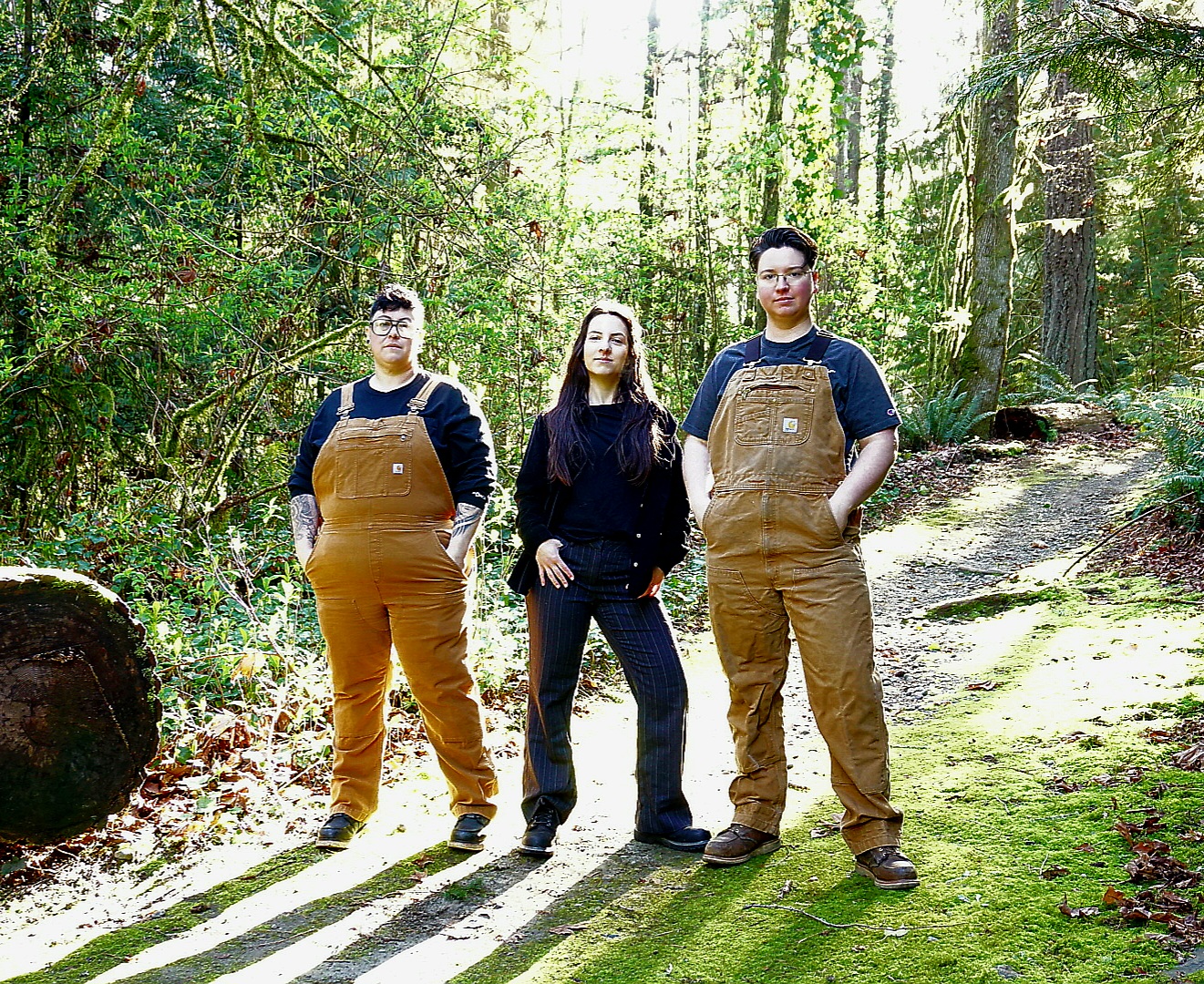
Today, Wyeth, along with her wife Brittany Baggett, is the owner and founder of Siren Electric, a Bremerton-based, woman- and queer-owned electrical contracting business that is just six months old but already establishing a clear identity: high-quality work grounded in comfort, safety and inclusion.
Joining her is Sasha Escarcega, Wyeth’s best friend and newest employee, who moved from Arizona two months ago as demand for the company grew.

Finding a path in the trades
Wyeth didn’t set out to become an electrician. After trying college, she realized she needed a different direction.
“I’ve always worked with my hands. I was a tinkerer when I was young,” she said. “I tried the college route; it didn’t really work out for me. Once I left, I knew I needed to learn a skill.”
An apprenticeship program in Tucson opened that door—and expanded her expectations.
“I thought I was just going to be changing out switches and outlets,” she said. “Once I got into the apprenticeship, I learned it was so much more… every job is different. It’s exciting and keeps my attention. It’s all like a puzzle.”
Escarcega found the same program after cycling through jobs that never held her focus.
“I wanted a career. I would get bored at everything and then I would just leave,” she said. “There are so many different things you do—it’s not the same thing over and over.”
The work reshaped her.
“That apprenticeship broke me and then rebuilt me,” Escarcega said. “You gain a certain type of confidence and strength through it… It’s the one thing I’ve done that kept me engaged—and still does.”
The two met during that apprenticeship and quickly became close.
“We worked together for two weeks, but we became best friends,” Escarcega said.
A different kind of service
Both women experienced what it meant to work in a male-dominated field, often as the only women on a job site.
“There were times when I was the only woman on the job site,” Wyeth said. “It was wildly uncomfortable, and I would just have to push through it.”
Escarcega recalled how rare it was to see other women in their union hall.
“It was very few and far between that you’d see another woman on the job,” she said.
The challenges weren’t just social—they affected how they were treated on the job.
“You get moved to another job site or a new contractor and you have to prove yourself,” Escarcega said. “It’s a constant need to prove your worth, and it’s exhausting.”
Those experiences shaped the foundation of Siren Electric.
So I wanted to be able to provide a this service that’s wildly needed to a niche market to make them feel more comfortable in their homes, like we do. We do a lot of work with women and people in the queer community and in their homes. Your home is such an intimate space, and you have people working around all of your things and your personal personal space, and so we’re able to provide a necessary service without the uncomfortability that is usually around the trades.”
“I wanted to be able to provide a service that’s wildly needed to a niche market, to make people feel more comfortable in their homes,” Wyeth said. “We do a lot of work with women and people in the queer community and in their homes. Your home is such an intimate space, and you have people working around all of your things and your personal space.”
While the company serves a broad range of clients, many find them because of that approach.
“It just seems to be the majority of our customer base because they find us online or through social media,” Wyeth said. “I just try to provide a different comfort level.”
That sense of trust is central to their work.
“We have customers who will just leave and say, ‘We feel safe with you here,’” Escarcega said. “It’s nice to create a safe space for anybody… where they feel safe in their own home.”
Craft and communication
Siren Electric may stand out for its identity, but Wyeth and Escarcega emphasize that craftsmanship and communication are what keep customers coming back.
“What sets us apart is taking the time to discuss with the customer what’s going on, what needs to be done, what it’s going to look like,” Wyeth said. “We’re not just showing up to their house, putting a bunch of wires everywhere, and then being like, all right, it’s good and leaving.”
Her experience training apprentices helped shape that approach.
“I’ve taught the trade to a lot of apprentices, so I’ve had to refine how I explain things,” she said. “That helps me explain to customers in plain language.”
Customers notice.
“A lot of people tell her, ‘I really appreciate how thorough you are, and how you explain it in a language I can understand as a consumer,’” Escarcega said.
That attention extends to the work itself—especially in older homes.
“We’ve been complimented on how minimally invasive we are,” Escarcega said. “We really pride ourselves on keeping things clean… especially in older homes with plaster and lath walls.”
They’re often called in to fix poor work left behind by others.
“We’ve seen work where you’re like, ‘How are you okay leaving this in somebody’s home?’” Escarcega said. “We take a lot of pride in our quality of work… The goal is to keep our customers’ homes safe and their families safe.”
Old homes, new demands
Historic homes have quickly become a specialty for the company.
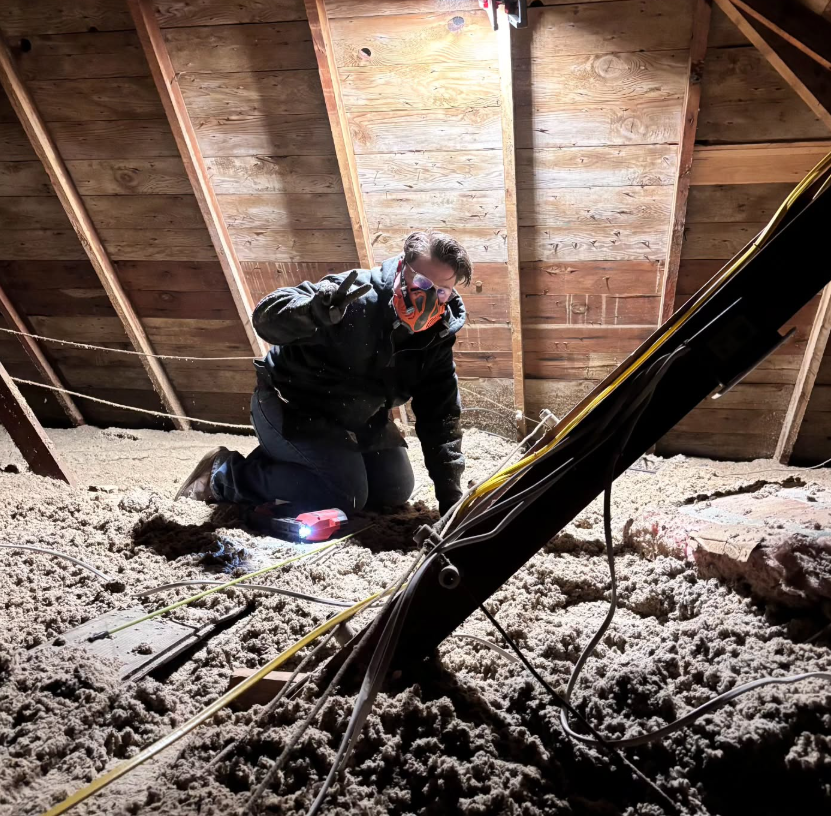
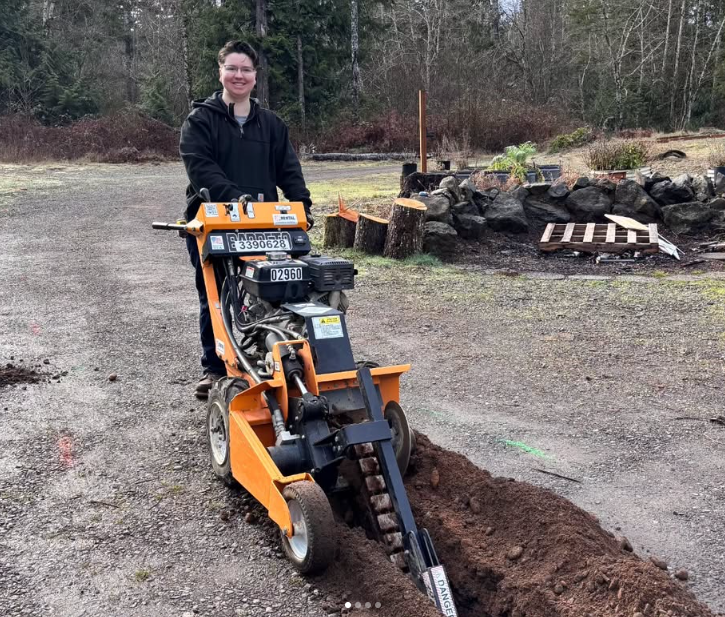
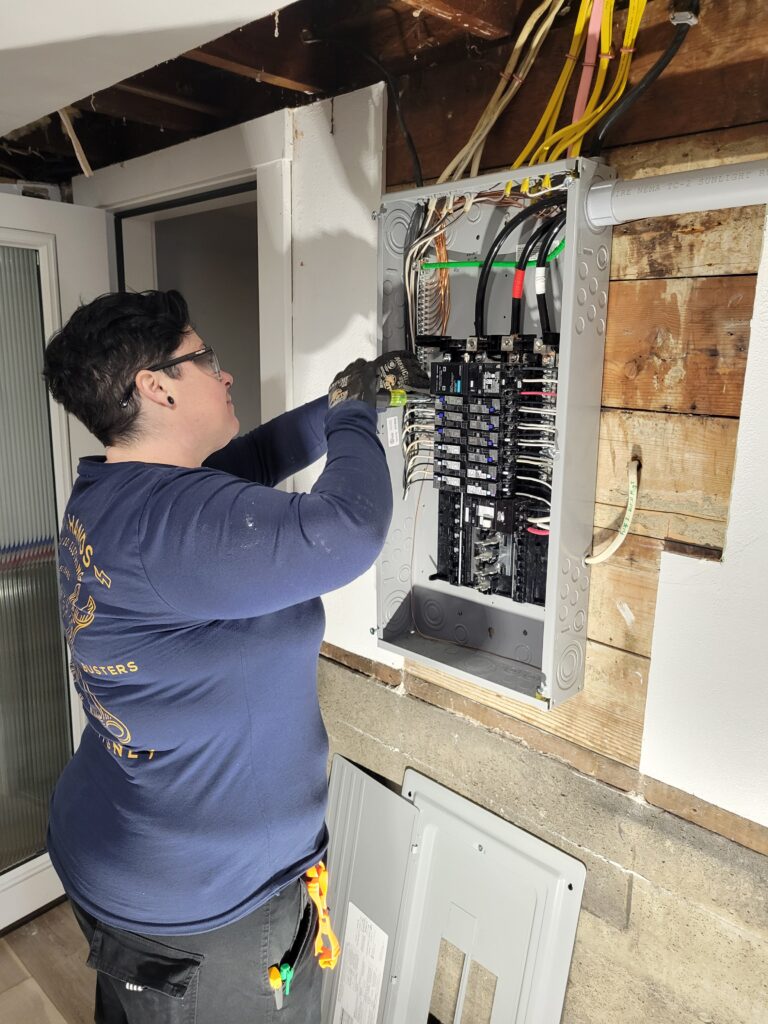
“Lately we’ve been doing a lot of rewires, especially in historic homes,” Wyeth said. “There’s a lot of knob-and-tube wiring… We can take a 120-year-old house and bring it into 2026—without tearing their walls apart.”
The work requires precision.
“Those plaster and lath walls are hard,” Escarcega said. “It’s very tedious… But it’s a challenge, and it’s also kind of fun.”
They’re also seeing demand driven by modern electrical needs.
“Rewires and EV chargers have been the hot topics,” Escarcega said. “People realize that’s a fire hazard… The wire gets old, it cracks, and it’s no longer viable.”
“EV chargers—we’ve been doing a lot of those lately,” Wyeth added.

A defining project
One early project helped define the company: a 1930s home that required a full rewire and panel upgrade.
“That was our first big project,” Wyeth said. “It really pushed our limits on how to keep the historical integrity of the house intact.”
The job turned into a complex remediation effort.
“When we came in, it was a mess,” Escarcega said. “There was Romex just strung all over the basement. We cleaned that up and fixed a lot of safety issues.”
“It wasn’t just straightforward,” Wyeth added. “It was uncovering what they had done… and then doing a complete rewire.”
Each step revealed new problems.
“Anytime we finished something, something else would be uncovered,” Escarcega said. “But we got to the point where we finally finished and thought, ‘Damn, that was cool.’”
The payoff came at the end.
“Turning on all those circuits and walking through with the inspector… it was like, we did it,” Wyeth said. “She was really grateful that her house was safe.”
“She left us a stellar review,” Escarcega added.
Growing with intention
As a new business owner, Wyeth has had to adapt quickly.
“I used to work 60-plus-hour weeks… I thought, ‘I’m going to go into business for myself,’ and then I just ended up working more,” she said. “Now I’m working 24/7.”
The biggest shift has been responsibility. Hiring Escarcega was a major step.
“Getting to a point where I realized I needed a second person was scary,” Wyeth said. “But it was necessary.”
For Escarcega, the move to Washington was immediate once the opportunity came.
“When she said, ‘I need your help,’ I bought a ticket,” she said. “I was supposed to come for a visit and ended up just staying.”
Opening doors
Even as Siren Electric grows, Wyeth is focused on creating opportunities for others in the trade.
“Women make up about three percent of the electrical trade,” she said. “I want to start taking in apprentices… and teach them in a comfortable atmosphere where they can learn how to do it right.”
Her goals are clear.
“Within the next year, I want to take on an apprentice,” she said. “Then keep building from there.”
Escarcega encourages others to consider the trade.
“My advice is: do it,” she said. “It’s going to be hard but do it. Be trainable. Go in willing to learn.”
She emphasizes a mindset of continual growth.
“I always told my apprentices… I’m a forever apprentice,” she said. “I always want to learn.”
Building more than a business
For Wyeth and Escarcega, the move to Washington has been as much about lifestyle as work.
“I love it here,” Wyeth said. “Seeing trees everywhere, water—it’s gorgeous.”
“I’m obsessed,” Escarcega added. “Now I’m here and everybody’s so nice… It’s wild.”
Together, they are building a business rooted in craftsmanship, communication and care—while quietly reshaping expectations of what it means to invite an electrician into your home.
As Siren Electric continues to grow, their goal remains simple: to make people feel safe, comfortable and confident in their homes—while opening the door for the next generation of electricians to do the same.
Keep in touch with our news & offers
Subscribe to Our Newsletter
Thank you for subscribing to the newsletter.
Oops. Something went wrong. Please try again later.