The Enduring Success of Art Anderson
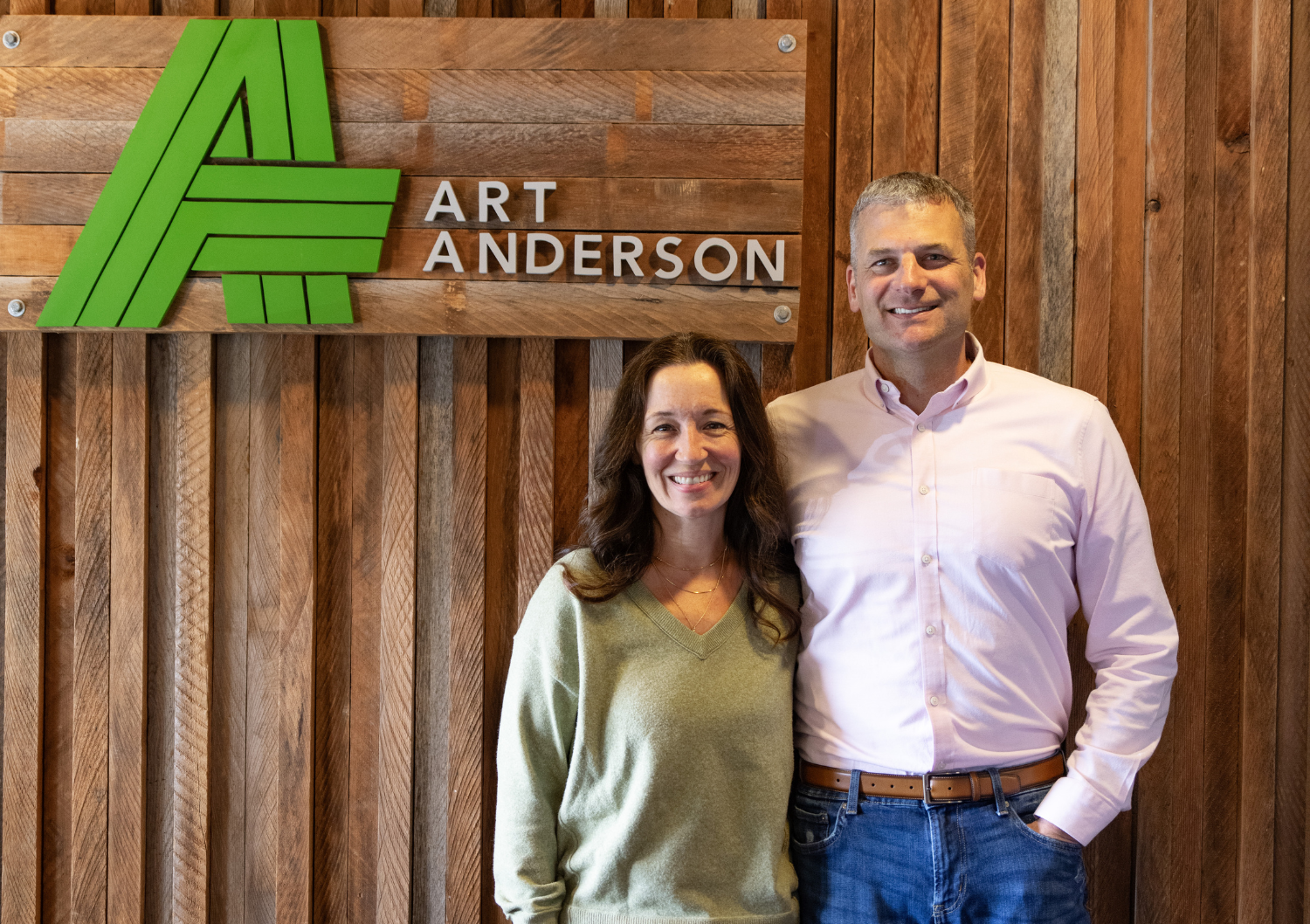
For nearly seven decades, Art Anderson has been a quiet but influential force on Bremerton’s working waterfront—designing ships, ferries, waterfront infrastructure, schools, and even floating fish collectors that help salmon find their way home.
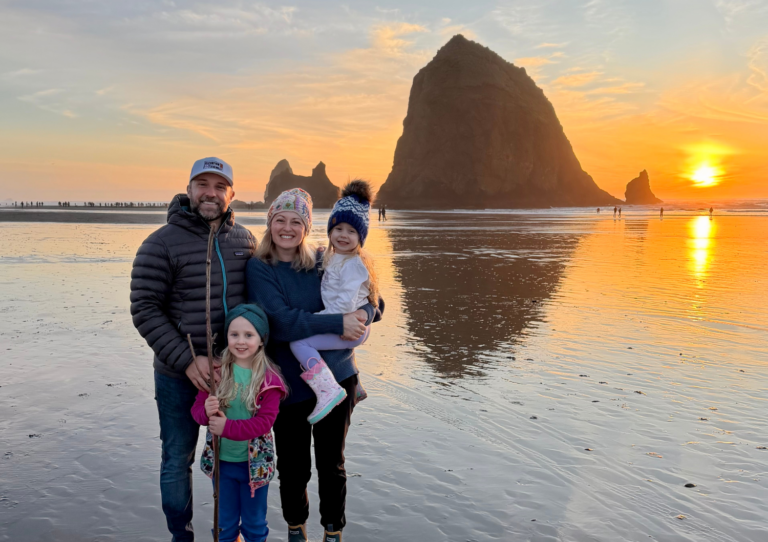
Founded in 1957 by naval architect Art Anderson and his wife Bea, the firm began as a small consultancy serving a single client: the U.S. Navy. Today, it is a multidisciplinary architecture and engineering firm with 37 employees, a national portfolio, and a husband-and-wife leadership team—Ben Anderson, President & CEO, and Melissa Anderson, COO.
“We want to be here for another 70 years,” Ben said. “So we’re always thinking about how to stay strong in our current markets and what’s next if one of those markets fades away.”
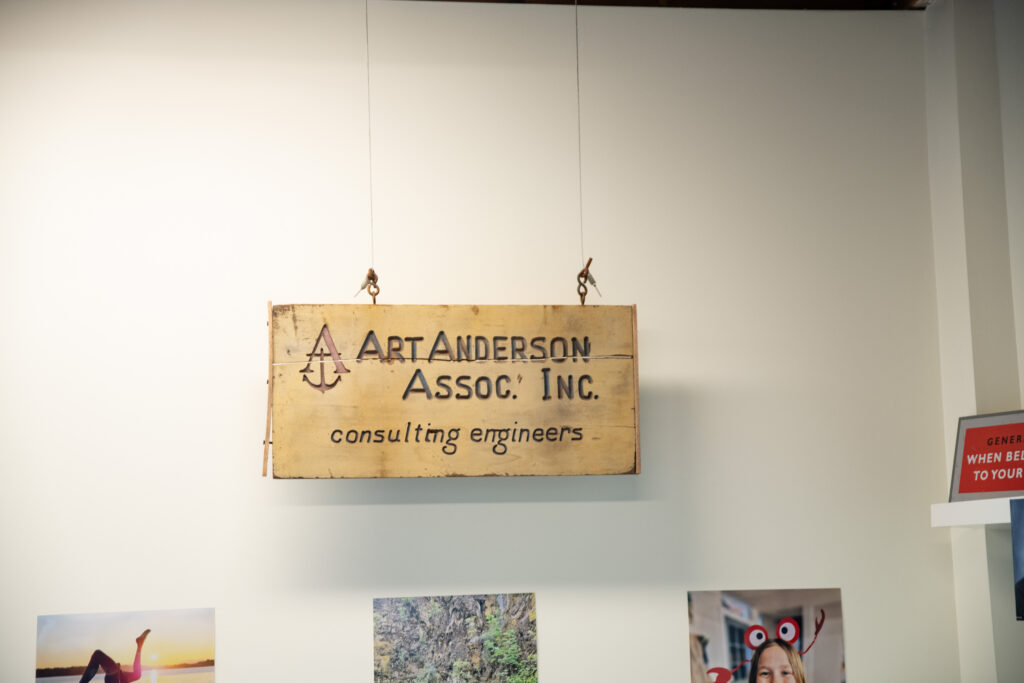
From Shipyard Gate to National Reach
The original Art Anderson office sat just outside the gates of the Puget Sound Naval Shipyard in downtown Bremerton. Art, a naval architect employed at the shipyard, saw an opportunity to support the Navy from the outside as a consultant. He and Bea launched the firm with the Navy as its sole client.
“For the first couple of decades, the company solely provided services to the shipyard—marine engineering and naval architecture for the Navy—and at its peak employed around 200 people,” Ben said. Many were retired shipyard workers who “would retire at 55, come work for Anderson for 10 more years, and then retire again,” he added.
In the 1980s, Ben’s father Eric Anderson took over and began diversifying. He added civil, mechanical, and electrical engineering to the firm’s naval architecture core, and started pursuing more commercial and public clients—including Washington State Ferries, Alaska Marine Highway System, and local municipalities.
That diversification is now the firm’s defining strength.
“Today we define ourselves as a multidisciplinary engineering firm,” Ben said. “For a small business of 37 employees, we’re pretty unique in that we really touch all disciplines of engineering. We can take on a project that has all the disciplines and do it under one roof.”
Based in Bremerton, the firm provides planning and design from early concept through construction. Its work spans naval architecture and marine engineering, waterfront and port design, industrial facilities, shoreline development, and landside infrastructure.
With in-house naval architects alongside civil, mechanical, and electrical engineers, Art Anderson offers a level of integration many larger firms achieve only through multiple partners.

A Husband-and-Wife Team at the Helm
Ben and Melissa both grew up in Bremerton, but their paths to the family business were far from direct.
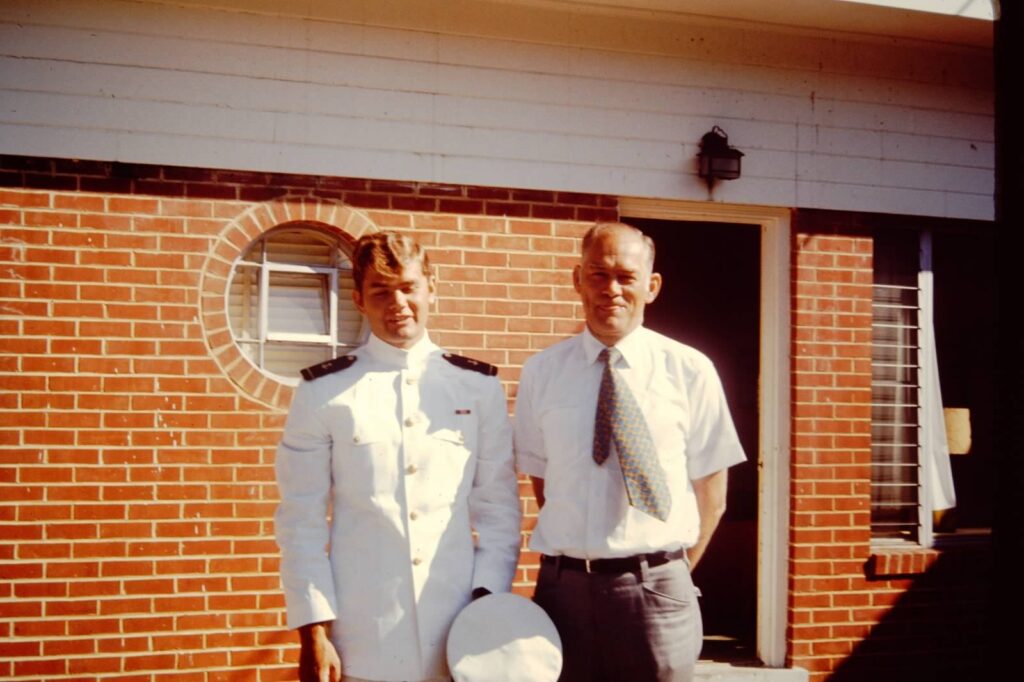
Ben, an avid boater who “grew up on the water,” initially had no plans to join the firm. He attended the U.S. Coast Guard Academy, then served on active duty and later completed graduate studies at the University of Michigan. He envisioned a 20-year Coast Guard career.
“I still had this passion for the sea and being on boats,” he said. “But after our second child came, it was even more gut-wrenching to get underway for four or five months.”
As his parents continued running Art Anderson, Ben began to see an opportunity—both to come home and to build a future for his young family that didn’t involve long deployments. He left active duty, joined the reserves, and came into the company as a naval architect. Within a few years, he became president and CEO, and in 2018–2019, he and Melissa purchased the business from his parents.
Melissa’s path wound through economics, an MBA, and the tumultuous world of banking during the subprime mortgage boom.
“I started working in banking right out of college—that was when the subprime boom was happening,” she said. Later, when she moved to California to be with Ben, her bank, IndyMac, became one of the first big institutions to collapse in the financial crisis. “They basically said, ‘We’ll give you this money if you leave.’ And I thought, this is a red flag, so I took it.”
After time away from the workforce raising their young children and multiple military moves, the couple returned to Bremerton. Ben was stepping into leadership at Art Anderson and asked Melissa to join.
“Honestly, I didn’t think so,” she said. “Working with your spouse—I already knew that would probably be challenging. And I didn’t think my personality would fit in at an engineering firm. It’s quiet, serious… I’m like, what if I turn on my music and I’m dancing around?”
Over time, she discovered the culture wasn’t as rigid as she feared—and that her skills were a perfect complement to Ben’s.
“He brings the engineering excitement and gets really into the projects,” Melissa said. “I bring more of the business-savvy mindset. Together, we make sure we’re hitting all the important spots to focus on the company.”
Ben agreed. “Our personalities and areas of interest balance out well. We both have a real passion to make sure our team is well taken care of and to create that culture of family and feeling welcome within the company.”
It wasn’t seamless at first.
“He kind of had to learn to trust that I knew what I was talking about,” she said. “And he was transitioning from the military into a civilian job, which is a huge shift. Working through all those nuances together was hard, but it was also an incredible learning experience—and it paved a better road for the future.”
All of this unfolded as the firm was still recovering from the 2008–2009 recession, which forced layoffs and financial belt-tightening. “In hindsight, I’m thankful for that,” Ben said. “It made it clear where we don’t want to be again, and we made some fundamental changes to help prevent that.”
What They Do—and What Makes Them Different
At its core, Art Anderson is an engineering consulting firm. Its mission:
“To deliver expert solutions to our customers’ challenges and desires through innovative engineering and design,” Ben said.
The company operates through two primary divisions: a Facilities Division providing civil, mechanical, and electrical engineering, and a Naval Architecture & Marine Engineering Division focused on vessel design and onboard systems.
“Where those two meet is at the waterfront,” Melissa said. “Marinas, wharves, piers—anything that’s built on the water or supports something that floats on the water. You need both the traditional disciplines plus naval architecture to do those projects. That’s an interesting thing to be able to offer, because most people don’t have naval architects. It’s a very small world to be in.”
Some of Ben’s favorite work lives at that intersection. He points to a series of floating fish collectors designed for dam operators in the Pacific Northwest. These massive barges sit in reservoirs behind dams, capturing fish and safely transporting them downstream to continue their migration.
“They’re floating structures, so it’s like a ship, but they have to be moored with civil engineering components,” he said. “On those projects, just about every single person in our office has touched the work. It’s cool to have projects that everyone knows about and can contribute to—and that we can do all under one roof.”
Today, the firm’s work spans the country, including ferry projects in Alaska, an all-electric ferry in Delaware, hybrid ferry support for Washington State Ferries, FEMA disaster relief efforts, Air Force base work in Florida, and dam-related projects in California. Locally, the firm has contributed to Shipyard Infrastructure Optimization Program preparations and designed a new Montessori school building for Star of the Sea in Bremerton.
“Everything from autonomous vessel design to sewer design to a new school—we have those capabilities in-house,” Ben said. “For a 37-person firm, that’s pretty unique. Our team really appreciates the diversity of projects. We’re not just doing the same thing over and over again.”
Culture, People, and Place
For Melissa, the heart of the company isn’t its contracts or software—it’s its people.
“I try to make Art Anderson a place where people want to be,” she said. “We offer great benefits—health care and all the standard things—but also ask, what does it mean to work here?”
That answer includes small touches—donut days, coffee walks—and larger commitments. Each employee gets a week at the company cabin, and new parents receive additional time off beyond standard leave.
“As a family company, we’re always asking how we make it better for families,” she said.
The Andersons are also intentional about staying small enough to feel personal.
“We don’t have aspirations to be a 200-person firm,” Ben said. “We like being a small business with a family culture. We know the names of all the kids of our employees. We know spouses’ names. There’s always a desire to be better, but not necessarily bigger.”
Being rooted in Bremerton is a big part of that identity.
“We both volunteer a lot—for the school district, the YMCA, alumni associations,” he said. “We really love our community.”
Melissa is candidly grateful for the support that has allowed the firm to thrive for so long.
“For a small business that’s been alive for 70 years in the heart of downtown Bremerton—and successful the majority of those years—that’s pretty unique,” she said. “I’m grateful for that opportunity. The people who live here just want really good things. It feels good to be a part of that.”
Over the years, more than 2,000 people have worked at Art Anderson, and the firm has consistently given back—through donations, volunteering, and significant support for local engineering education, including Olympic College’s partnership with Washington State University, local high schools, and internship opportunities for aspiring engineers.
“Whether it’s giving back to employees or giving back to the community, it’s one of the best perks of being a business owner,” Ben said. “We try to do it in ways that are really impactful.”
As Art Anderson approaches its 70th anniversary, the firm stands as a rare combination: a locally rooted, family-led business with national impact, blending naval heritage, multidisciplinary innovation, and a deep commitment to its people and place—right in the heart of Bremerton.
Keep in touch with our news & offers
Subscribe to Our Newsletter
Thank you for subscribing to the newsletter.
Oops. Something went wrong. Please try again later.