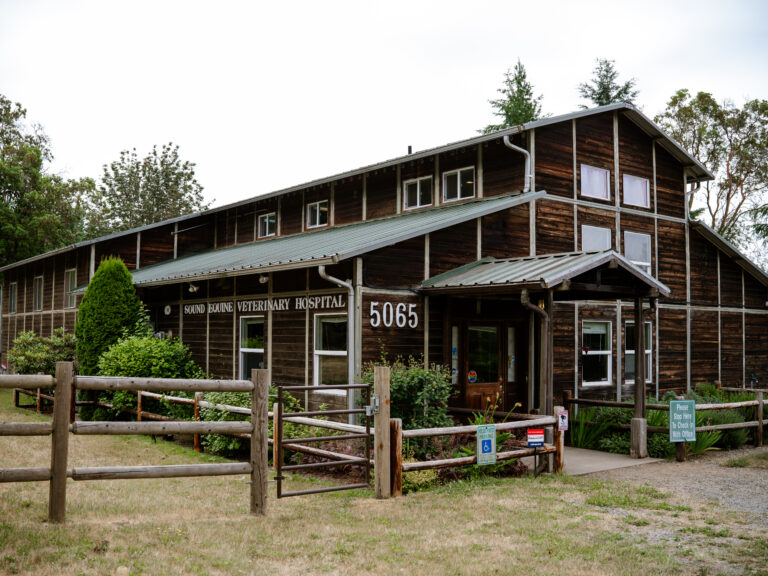
Inside Kitsap’s 24/7 Equine Hospital
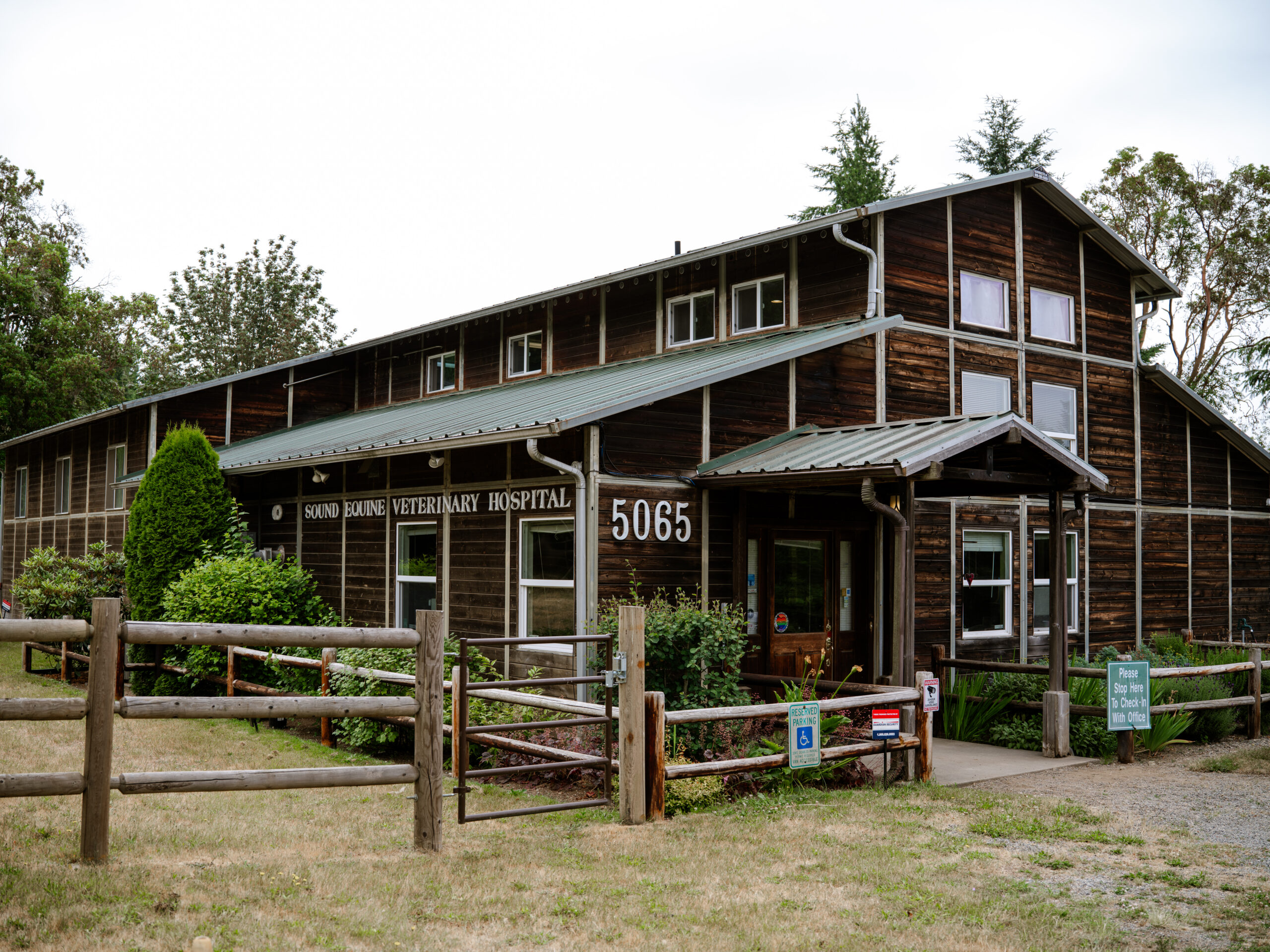
On Caitlin Dorsey’s first day as practice manager at Sound Equine Veterinary Hospital, there was no time for introductions.
“I walked in the door at 9 o’clock and everybody was just madly flipping our OR, getting [a horse] ready to go, getting him into surgery,” she said. The patient was suffering from severe colic, a life-threatening emergency for horses. “Once everybody was done, they were like, ‘Okay, we did it… we saved a life.'”
The experience offered an immediate glimpse into the pace and purpose of Sound Equine, the only full-service equine hospital in Western Puget Sound. Open 24 hours a day, seven days a week, the Poulsbo hospital provides emergency, surgical and routine care for horses and farm animals across a massive swath of Western Washington.
“We are Western Puget Sound’s only full-service equine hospital,” Dorsey said. “We’re also a 24/7 clinic. I have a doctor on call 24 hours, seven days a week, including holidays. So we are here and available, no matter what.”
That around-the-clock availability is essential.
“Horses don’t have timelines. They don’t understand business hours,” she said.
The hospital’s seven veterinarians provide wellness care, dentistry, hospitalization, emergency and elective surgery, reproduction services, pre-purchase exams and care for farm animals including goats and cattle. At least one doctor remains in the hospital while others travel throughout the region making farm calls.
“We have a very large radius,” Dorsey said. “We go all the way down to Lakebay. We service Forks every three months. We go across the Hood Canal Bridge two to three days a week, serving the Port Angeles, Sequim area. We have a very large territory.”
For many horse owners, especially those without trailers, bringing veterinary care directly to the farm is critical.
Growing Into a Regional Resource
Sound Equine began as a small, two-doctor mixed-animal practice.
As demand for equine medicine increased, the practice expanded. A partnership with PetVet gave the hospital the financial backing to grow its staff and invest in new technology.
“By being able to partner with PetVet, it allowed us to have the backing to bring on more staff, as well as the backing to help buy better equipment, such as new surgical equipment,” Dorsey said. “We just recently came into a LigaSure, so we can expand our surgery options now.”
The advanced vessel-sealing device has opened the door to procedures the hospital previously couldn’t perform.
“It now allows us to expand the amount of surgeries we’re doing exponentially,” she said. “Melanoma removals, mastectomies—all sorts of new surgeries that we haven’t been able to offer, we can now offer.”
Today, Sound Equine employs two boarded surgeons, an internal medicine specialist, a veterinarian dedicated to reproduction and another focused primarily on farm animals.
“We have tried to hit all of our bases here to make sure that we can provide excellent coverage in any aspect that anybody could be looking for,” Dorsey said.
Saving Lives Close to Home
Among the hospital’s most significant services is emergency colic surgery.
“Being able to offer colic surgery is life-changing for horses,” Dorsey said. “We can do an exploratory laparotomy, put the horse under general anesthesia, assess everything in the cavity, determine what’s causing the pain, resolve the cause of colic, and then have your horse recover and go home. It literally saves lives.”
Offering the procedure locally also spares owners from transporting critically ill horses several hours away.
“Being able to offer colic surgery here and not tell people that they have to haul out to Pilchuck(a veterinary hospital in Snohomish) … is financially life-changing for clients,” she said. “The cost of getting up there with gas prices, the cost of trailering, you have to take the ferry—and your horse is ill and you’re transporting them as well. You’re now stressing your horse out even more, trying to get them hours away for medical care.”
In addition to colic surgery, the hospital performs arthroscopy, tenoscopy, sports medicine procedures, standing eye removals and specialized surgeries for farm animals.
“We’re able to prolong a good life for them without them being in pain,” Dorsey said.
Taking the Hospital on the Road
Advances in portable technology have transformed field care.
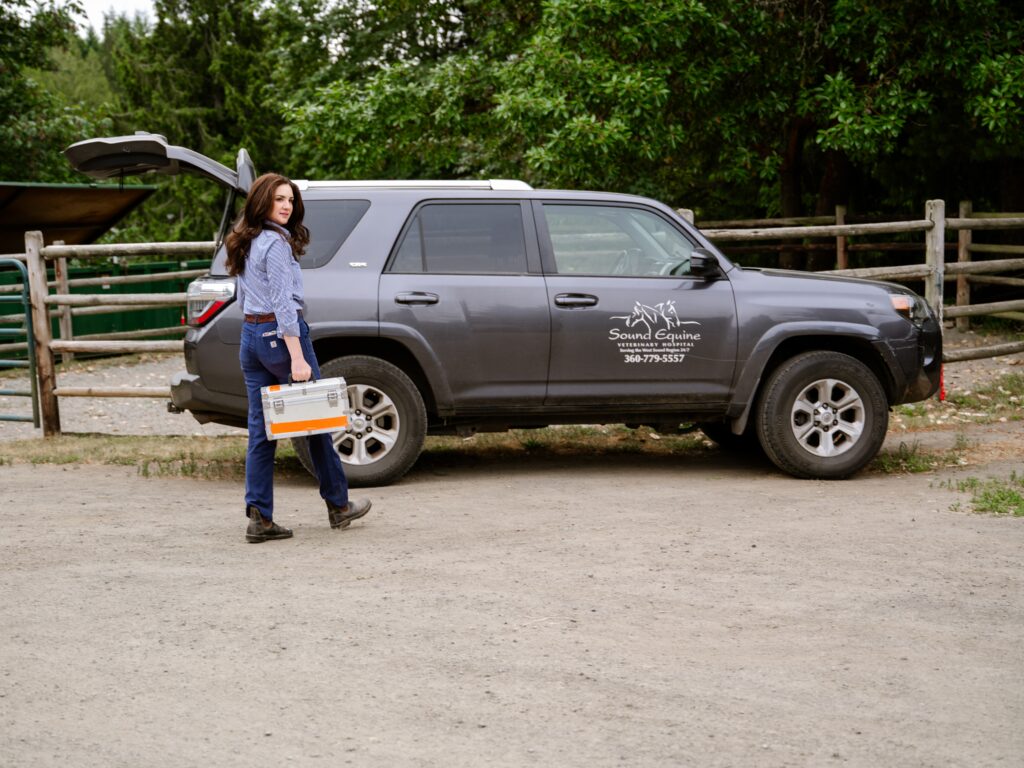
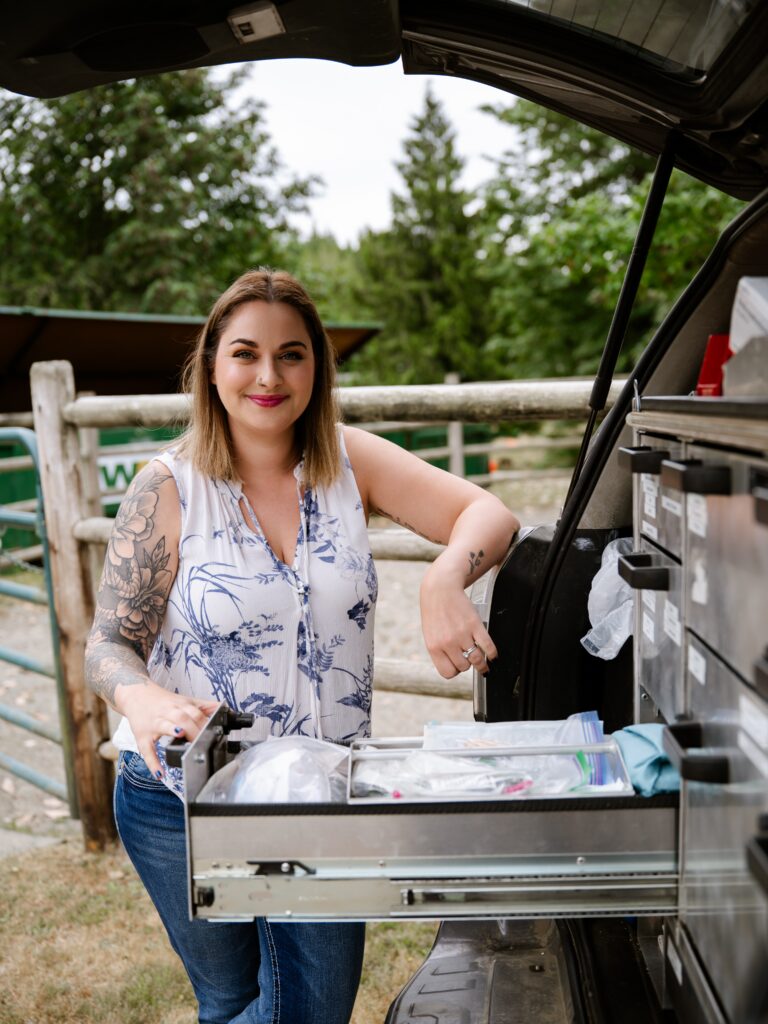
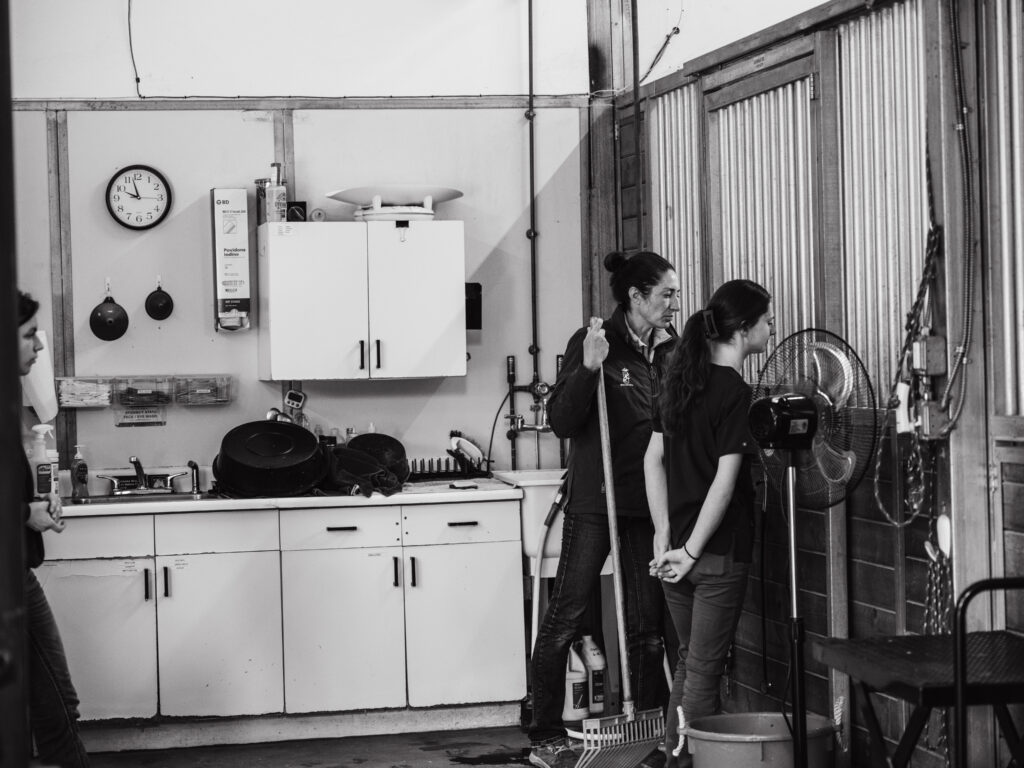
“We have more resources available to us when we look at technology now, and the ability for us to have everything be portable is great,” Dorsey said. “I have portable X-rays. I have a portable centrifuge, so I can literally take my whole clinic out into the field.”
Portable diagnostics allow veterinarians to perform much of the same work at a client’s farm that once required a hospital visit.
“We can do pretty much everything out in the field, which has increased our ability to service clients that can’t haul in,” she said.
Serving a Diverse Equine Community
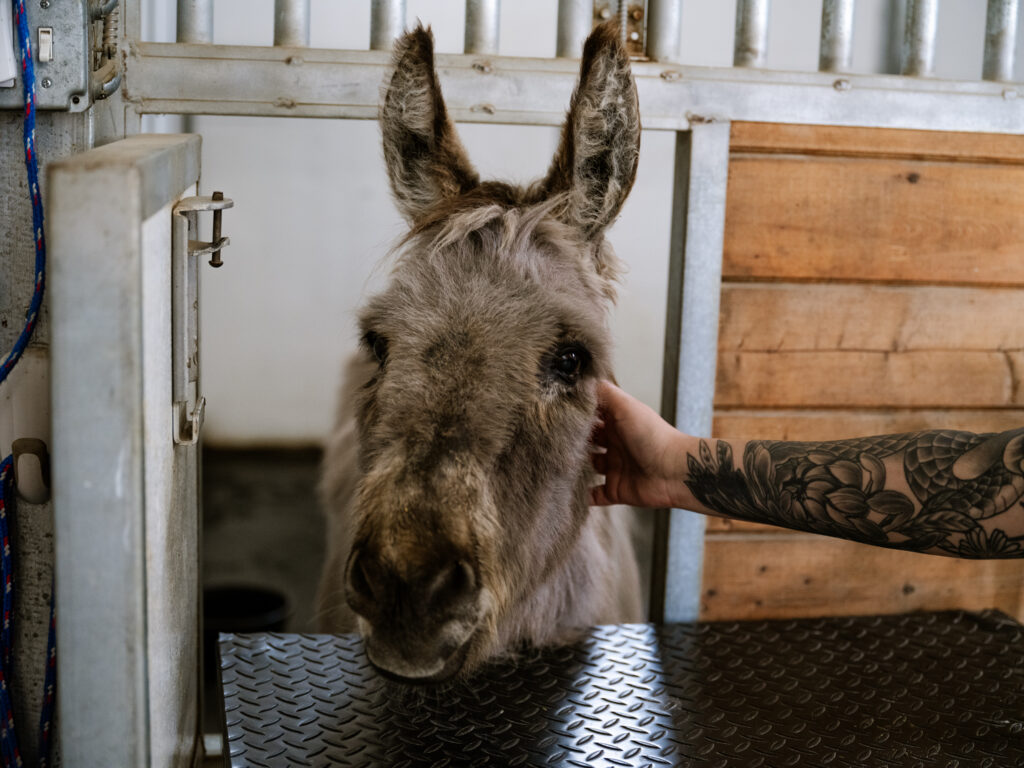
Despite Kitsap County’s suburban reputation, the region supports a large horse population.
“Surprisingly, this is a big horse area. You wouldn’t think so, but especially as you get to some of the more rural areas—Seabeck, Belfair, across the bridge in the Chimacum and Sequim area—absolutely,” Dorsey said.
The hospital serves everyone from backyard horse owners and hobby farms to competitive show barns, including Woodside Stables in Kingston and Bulrush on Bainbridge Island, where veterinarians hold regular on-site appointment days. Sound Equine also partners with rescue organizations including Horse Harbor and Pony Up Rescue.
“For some of these barns, we go out once a week and make sure that all their animals are well taken care of,” Dorsey said. “We take care of their health certificates to get them in and out of shows to Canada and across the United States. We also recently added a lameness block so we can take care of lameness and sports medicine-related issues to make sure they’re in the best shape they can be for their shows.”
The hospital also fills a gap in emergency care for large animals.
“With small animals, there are still more options—you can go to emergency clinics, you can go to VCA,” she said. “We’re filling a big gap by being able to provide 24/7 care for larger animals that still need care.”
The People Behind the Practice
Providing that level of care requires more than advanced equipment.
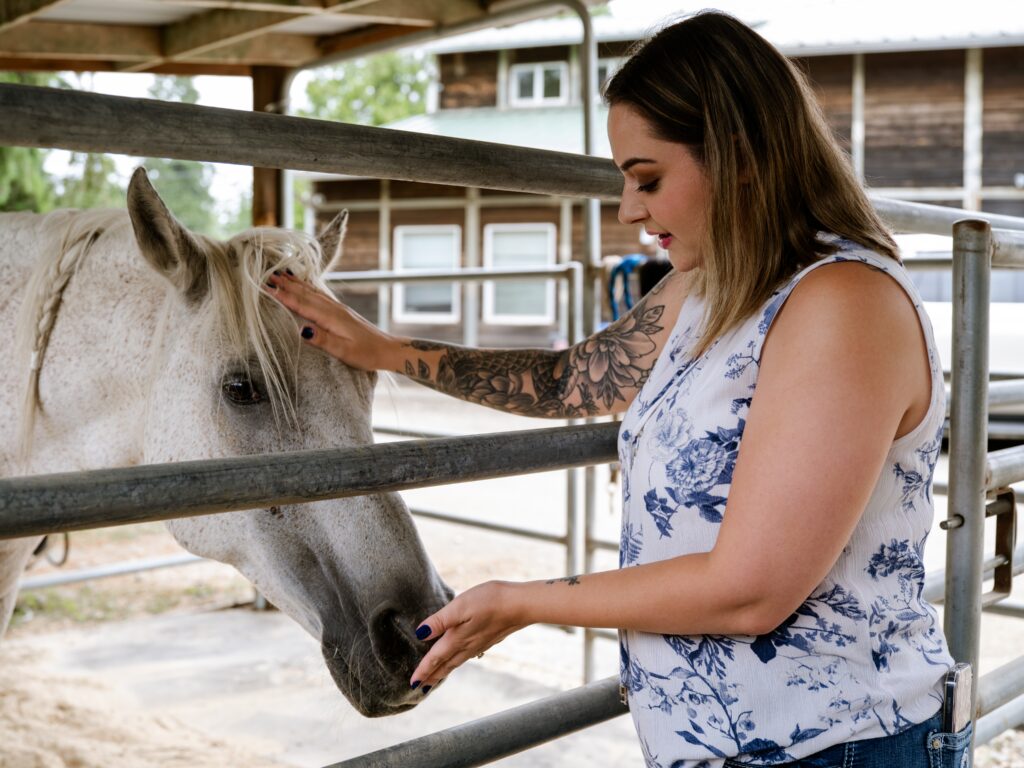
“Vet medicine is one of the hardest areas to work in,” Dorsey said. “It is emotionally draining. It is physically demanding—especially when you’re working with big animals. The demand is constant for staff.”
Burnout remains one of the profession’s biggest challenges.
“We’re constantly looking for staff to bring on,” she said. “The burnout risk is really high.”
Before joining Sound Equine, Dorsey spent seven years managing human physical therapy clinics. She said leading an equine hospital still comes down to remaining calm under pressure.
“It really is just patience and being able to handle stressful situations calmly,” she said. “You have owners who are under immense pressure to make decisions about their horse’s medical care with very large price tags. It can become a very high-stress situation, and having to stay calm through all of that is very important.”
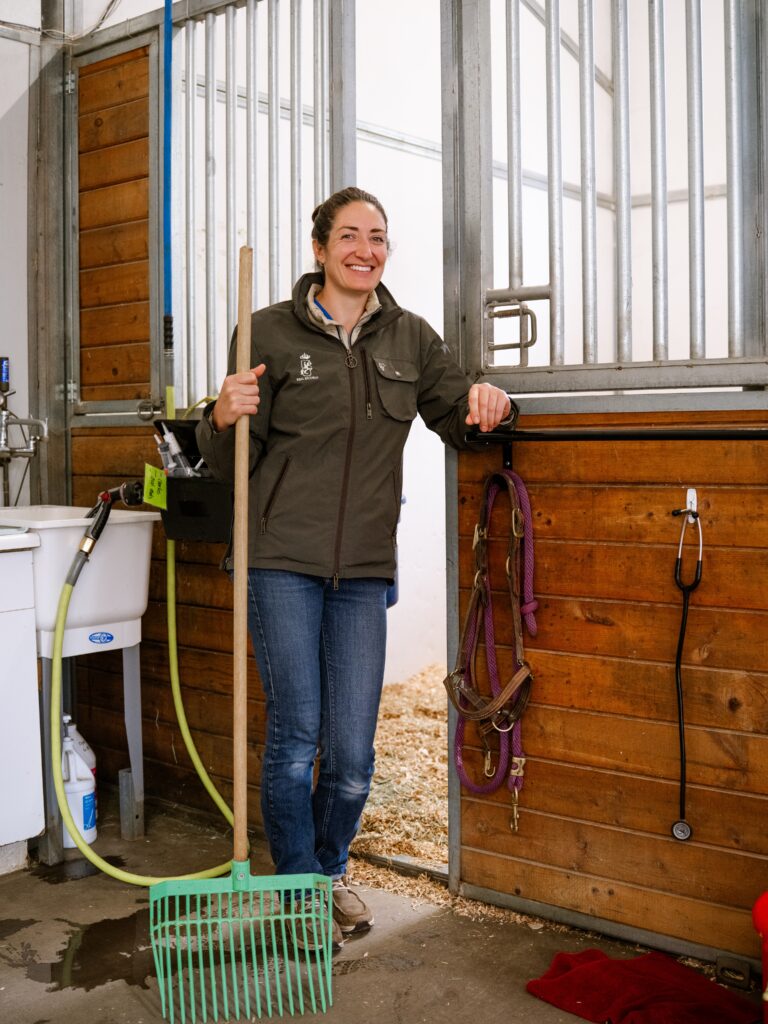
She also believes leadership means pitching in wherever needed.
“I don’t want to just sit in my office,” she said. “I fill in at the front desk. I know how to schedule, how to bill. I’ve gone into the back and said, ‘What do you need right now? Do you want me to clean a stall?’ I will flip stalls, I will help hold a horse, I will walk a horse, and I will fill prescriptions.”
“It has allowed me to see where the real pain points are that need to be fixed in a way that you don’t get just from sitting in your office and hiding behind a computer screen,” she said.
Looking Ahead
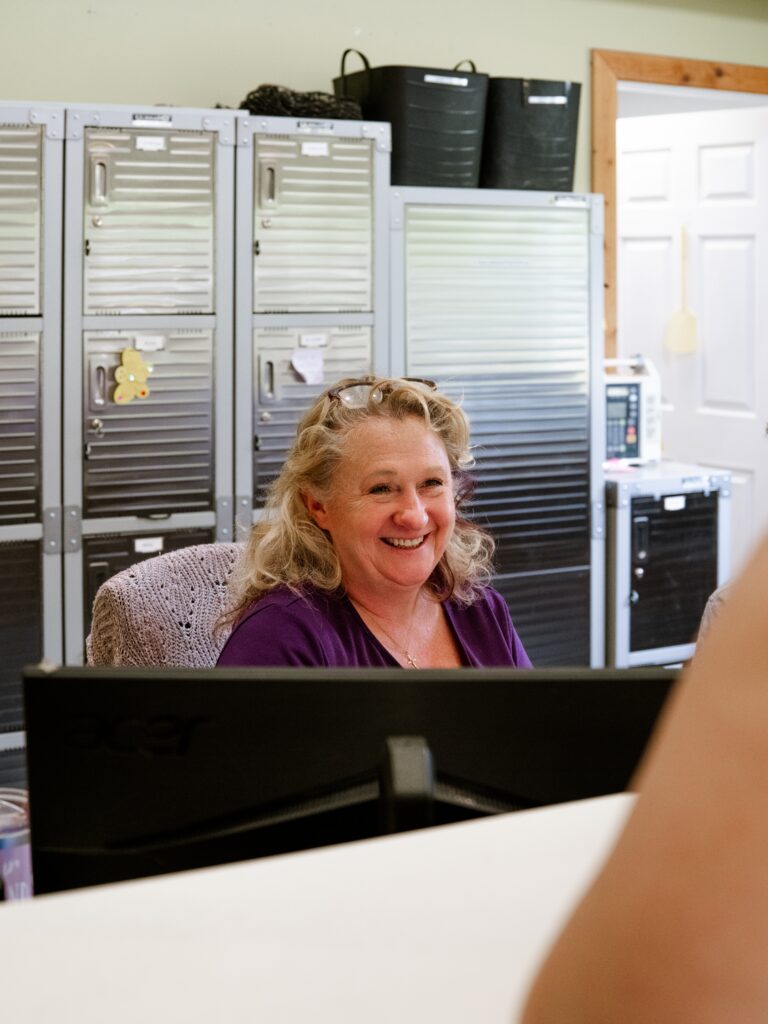
Sound Equine plans to continue expanding its facilities and capabilities with additional stalls, isolation spaces and potentially a dedicated surgical building.
“Every time we buy a piece of equipment, we have to discuss what the financial payoff is,” Dorsey said. “How is this going to pay off in the long run? It almost always does. By expanding our surgery abilities, we can increase our surgical load, and allow our boarded surgeons to focus more on sports medicine and surgery. That’s where their hearts lie.”
The hospital also continues investing in community outreach through educational seminars, social media and partnerships with local events.
“I’m looking to get us more involved with the rodeo,” Dorsey said. “I don’t want to put our financial backing behind any one particular person—we don’t have favorites. We want to be able to help everybody, and I want to help us continue to grow.”
For Dorsey, the work combines a lifelong love of animals with a team she enjoys coming to every day.
“I’ve always loved animals. I’ve never met an animal I don’t love,” she said. “The animal aspect of things is super helpful. It’s hard to have a bad day when you get to work with animals every day.”
“We have a really great team right now,” she added. “Everybody is so willing to jump in and help when there’s any need, and they do it with a good attitude. It makes coming to work enjoyable.”
Those moments of teamwork matter most when a horse leaves the hospital healthy.
“We feel it deeply when anybody loses an animal here,” Dorsey said. “And when they don’t—when we get to see that horse make an incredible recovery—that’s life-changing for them, and for us too.”
Keep in touch with our news & offers
Subscribe to Our Newsletter
Thank you for subscribing to the newsletter.
Oops. Something went wrong. Please try again later.