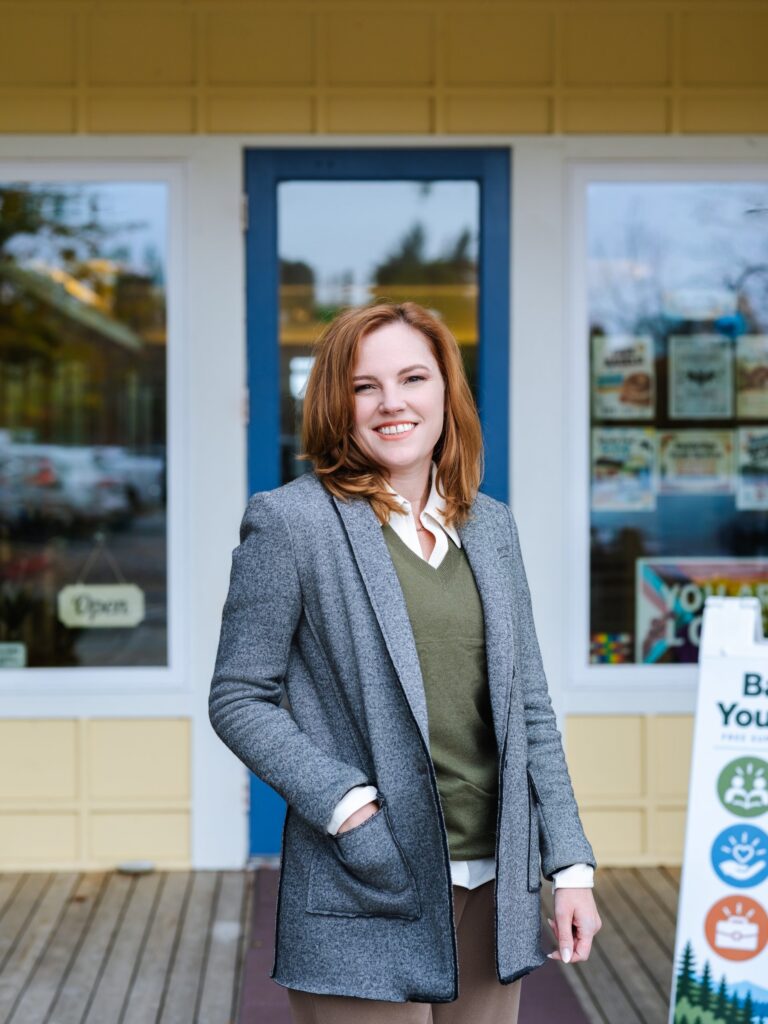
Habitat for Humanity of Kitsap County is tackling the region’s housing affordability crisis with a planned 19-townhome development designed to keep homes affordable for generations.

For many Kitsap County families, buying a home is becoming increasingly difficult. Habitat for Humanity of Kitsap County is working to address that challenge with a 19-townhome development designed to keep homes affordable for generations, even after the original owners move on.
For CEO Annette Houchin, the project represents an opportunity to address one of the region’s most persistent challenges: helping local families achieve stable homeownership as housing and living costs continue to rise.
Traditionally, when a Habitat homeowner moves, the home can return to the open market, where its price may put it beyond the reach of another income-qualified family. To help prevent that, Habitat’s planned Bremerton-area development will use a ground-lease model intended to preserve affordability for as long as 99 years.
Under the arrangement, buyers will own their homes but lease the land from Habitat. When homeowners decide to move, they can receive some equity, but the homes must be sold to other income-qualified buyers.
“We really weren’t helping the affordable housing” if homes eventually went back onto the open market, Houchin said. With the ground-lease model, “we figured that at least we’ll be able to keep those units permanently affordable.”
The development marks a significant undertaking for the Kitsap affiliate, which is preparing a $1 million capital campaign to help advance the project while continuing its existing homebuilding and homeownership programs.
Habitat has built more than 100 homes, Houchin said, and operates the local ReStore, which sells donated goods to support the organization’s mission. The affiliate has also spent the past decade working on Harris Court, a 32-unit subdivision in Port Orchard, alongside smaller projects.
But the need for affordable housing continues to grow, and qualifying for homeownership has become increasingly difficult. Rising housing costs, along with higher prices for food and fuel, are squeezing household budgets. Houchin said Habitat is seeing fewer prospective buyers who can qualify for its homes.
The organization typically serves households earning between about 40% and 80% of area median income. Even families near the upper end of that range can struggle to afford a mortgage. Under the financing arrangement Houchin described, buyers earning up to 65% of area median income can access a 4.5% interest rate, while those earning more must pay market rates.
“That market is so slim,” Houchin said. “We’re trying to figure out how do we market the new area median income that we need to get the right buyers into those homes.”
The gap between housing assistance eligibility and market prices creates another challenge. Some households earn too much to qualify for certain affordable housing programs but still cannot afford homes at prevailing prices.
Houchin said she sees people “fall through the cracks,” including those earning slightly more than 80% of area median income who remain unable to purchase a home.
For many families, the obstacle begins well before they apply for a mortgage. Rent and everyday expenses can leave little money to save for a down payment, while rising land and construction costs make it more expensive for Habitat to build.
“I think the biggest barriers are paying rent and putting food on the table,” Houchin said.
Houchin has watched those pressures intensify throughout nearly three decades of work with Habitat for Humanity. She began working for the organization in Ventura County, California, in 1997, later joined an affiliate in Terre Haute, Indiana, and eventually moved to Washington to lead Habitat for Humanity of Kitsap County.
The region’s housing challenges remind her of California in the late 1990s and early 2000s.
“The cost of land is rising, and the affordable units are just becoming harder and harder to find,” she said. “We really need to be doing a lot more than what we’re doing. But guess what? It costs money.”
Building a path to ownership
Habitat’s homeownership process begins online, where prospective applicants can watch informational videos and complete a brief form about their income, rental history and first-time homebuyer status. If their initial information suggests they may qualify, Habitat directs them to obtain a mortgage preapproval.
Applicants can work with a bank or HomeSight, a nonprofit that can connect buyers with down-payment assistance. After a prospective buyer receives preapproval, Habitat’s board reviews the application and selects a family. A third-party lender handles lending approval and the final review of the buyer’s finances.
Habitat stopped carrying its own mortgages in 2017. Houchin said managing the lending process internally had become time-consuming, and the affiliate was not an underwriting institution. Working with an outside lender gives the organization greater confidence that buyers can manage their mortgage payments.
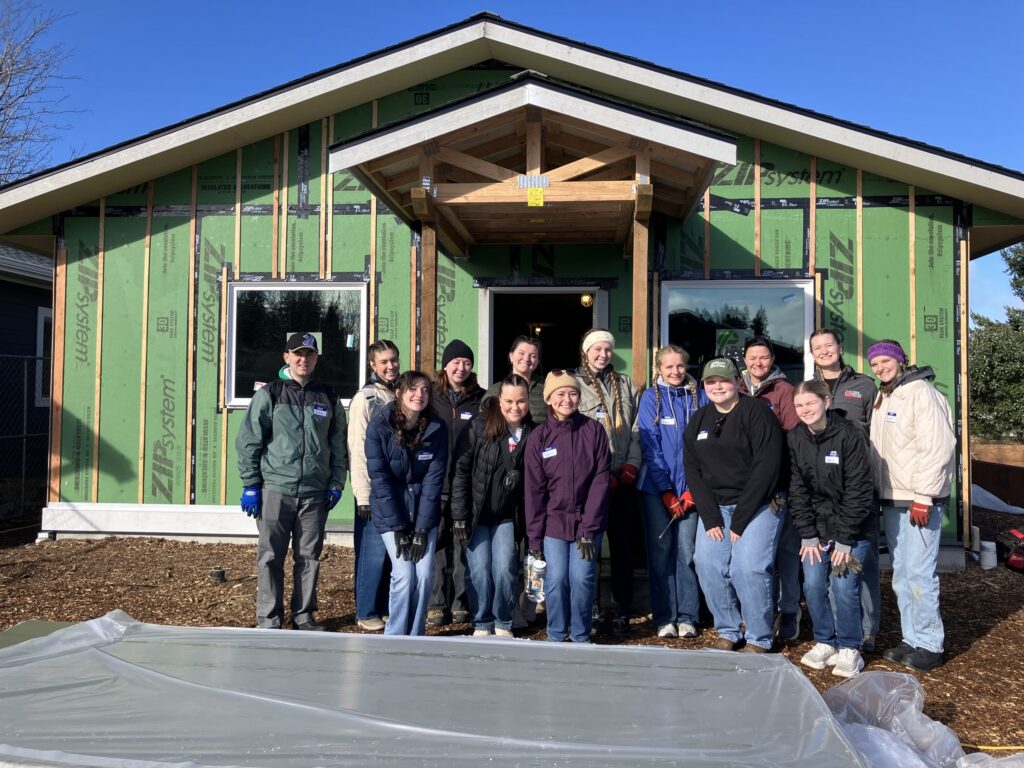
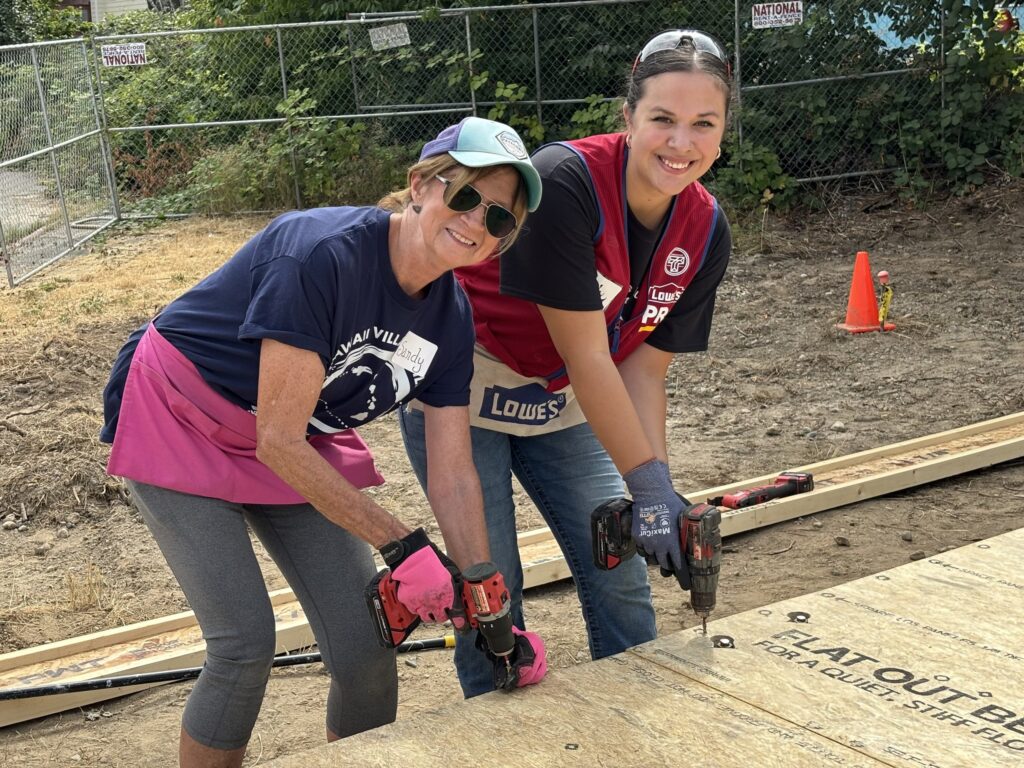
Selected families also contribute “sweat equity,” or volunteer hours connected to building their homes and supporting Habitat’s work. The requirement has decreased over time, from 500 hours to 250 and now to 100.
“We’re finding that both parents are working, or it’s a single person, and life is just too much,” Houchin said. “They just cannot meet those 250 sweat equity hours.”
Families can complete most of their hours working on their own homes or helping with a neighbor’s home. Friends and relatives may contribute a small portion of the required hours. Houchin said the reduced requirement has made participation more manageable while preserving an opportunity for buyers to contribute to the process.
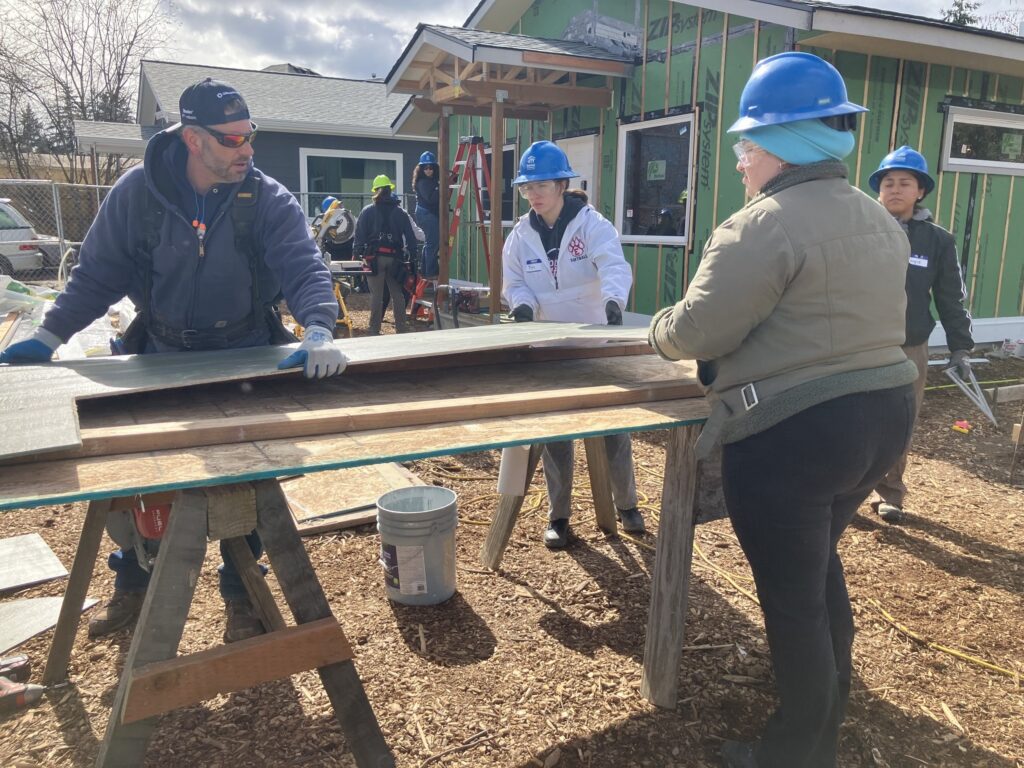
The construction program has also evolved. Habitat once relied more heavily on volunteers to build homes, but many did not return after the pandemic shutdown. The affiliate now employs construction staff, including a site supervisor, a carpenter and a crew, who work alongside volunteers.
Paid staff handle more specialized work, while experienced volunteers help newcomers learn construction skills. That mentorship creates opportunities for volunteers to develop their abilities and take on more responsibility.
“If they stick with it, our unskilled volunteers become our skilled volunteers,” Houchin said.
The ReStore provides another way for community members to support Habitat’s work. The store sells donated goods, including building materials from contractors and other community members, generating revenue for the organization while keeping usable items out of landfills.
“We encourage contractors with leftover materials to donate them to the store,” Houchin said. “The money that we get from the store helps the mission, which ultimately helps housing affordability.”
Local banks, businesses and community partners also contribute through financing, donations and event support. Habitat’s recent breakfast drew nearly 300 people, Houchin said. Community contributions have helped the organization hire staff at higher wages and bring skilled construction workers onto its team.
Homes designed for long-term stability
Habitat’s approach extends beyond making a home affordable to purchase. The affiliate is building net-zero homes equipped with solar panels, energy-efficient appliances and systems designed to reduce utility costs. The homes are tightly sealed and use a system that brings fresh air inside.
Houchin said these features can help families manage household expenses while supporting healthier living conditions. Reducing moisture and mold problems can mean fewer illnesses and less time away from work to care for sick children.
Stable housing can also benefit children’s education. Houchin said Habitat has seen children living in its homes continue their education beyond high school.
The effects extend to employers and the broader community. When families can afford to remain in Kitsap County, local businesses have a better chance of retaining workers. And when children live in healthier homes, parents may face fewer disruptions to their work schedules.
“Habitat is actually part of the solution and not the problem,” Houchin said.
She added that long-term affordability can protect families from rent increases that might otherwise force them to move.
Rebuilding the organization
Habitat’s current plans reflect years of work to strengthen the organization itself. When Houchin arrived, she said, the affiliate had one staff member and was in financial disarray. At one point, it had only one board member. It had gone several years without an audit and was struggling with limited resources.
Houchin worked to rebuild the organization and establish a stronger operational foundation.
“I don’t want to say that I turned it around,” she said. “With help, we turned it around.”
Today, the affiliate has a full staff, a leadership team, an engaged board and clean annual audits. Houchin credits community support with helping Habitat reach that point and is particularly proud of its recent hires, including a person who first joined the organization as a volunteer and later became director of construction.
“I just sit back and it’s like, ‘Wow, I did that. I hired that person,’” she said.
Maintaining that organizational strength will be important as Habitat pursues its next phase of growth. The affiliate’s priorities include completing the 19-townhome development, establishing the ground-lease agreements and sustaining an effective staff and board. Houchin hopes the project will serve as a starting point for additional developments rather than a one-time effort.

To expand its reach, Habitat is exploring partnerships that would allow it to take on more projects without managing every aspect of development itself.
Houchin said the organization is considering a possible partnership with a housing authority to help renters move toward homeownership, as well as collaborations with contractors and developers. Under one potential arrangement, a developer could build homes while Habitat identifies eligible buyers. Another possibility is a mixed-income development that combines affordable homes with market-rate units.
“There are a lot of things that I think that we can do that we don’t have to do ourselves,” Houchin said. “We can have help.”
For now, the 19 townhomes represent a concrete step toward preserving affordable homeownership in Kitsap County. The project will require substantial fundraising, careful planning and continued community support, and Houchin recognizes that even a successful development will address only a small portion of the region’s housing needs.
“The bad part of it is that’s only 19 units,” she said. “When the 19 units” are underway, “we should be building another 19 or 20.”
That goal reflects the scale of the challenge facing Habitat and the families it serves. As housing costs continue to rise, Houchin said the organization remains committed to finding ways to help more people put down roots in Kitsap County.
“We are not going to give up,” she said.
Keep in touch with our news & offers
Subscribe to Our Newsletter
Thank you for subscribing to the newsletter.
Oops. Something went wrong. Please try again later.