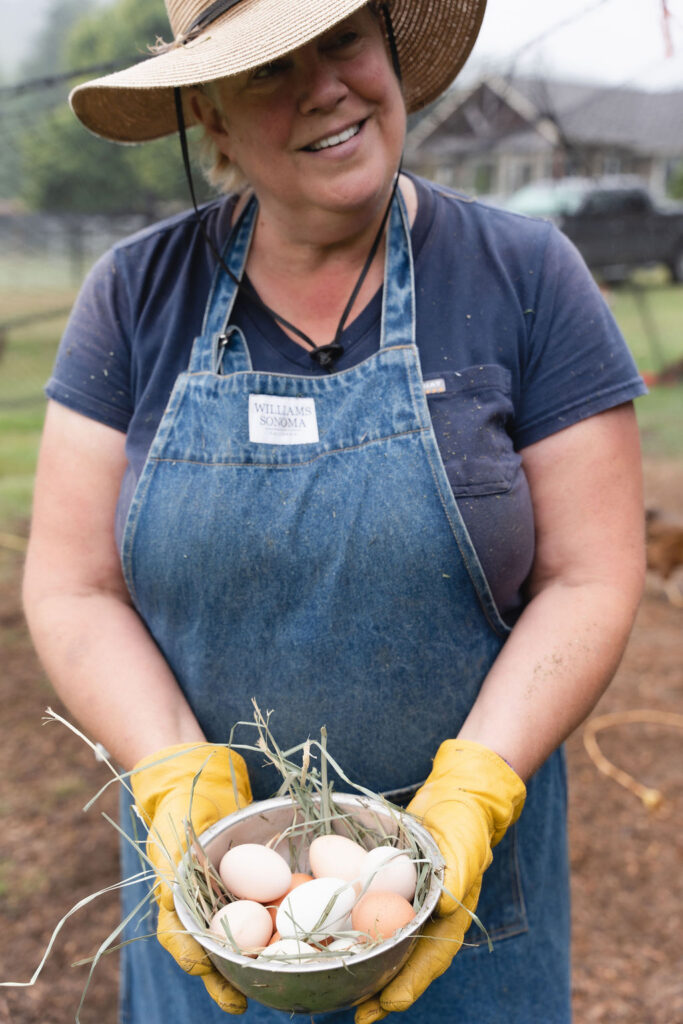
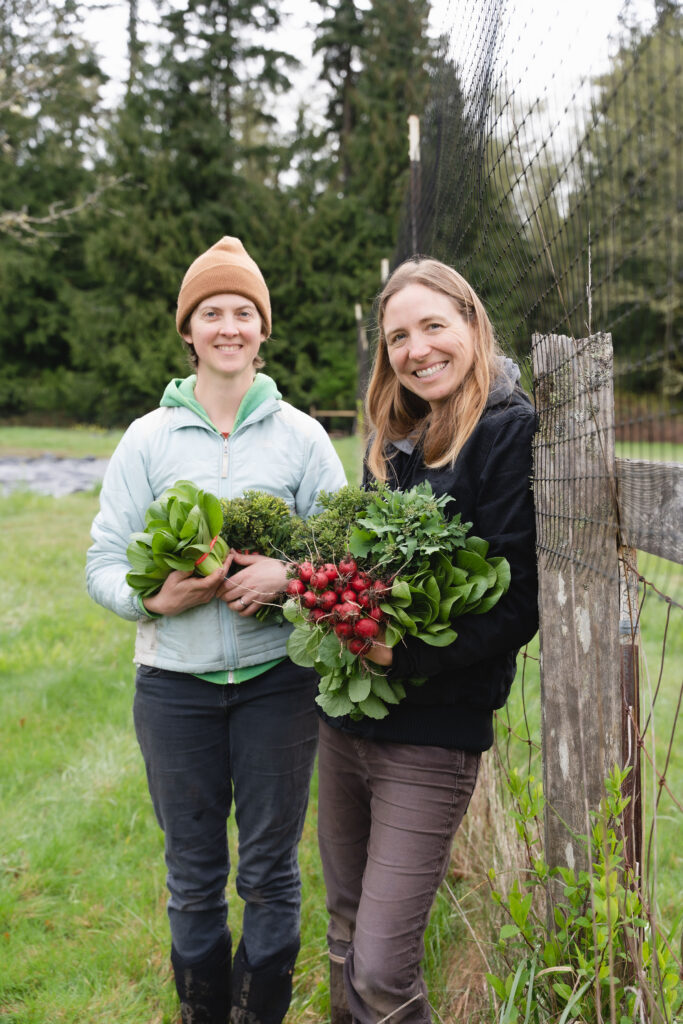
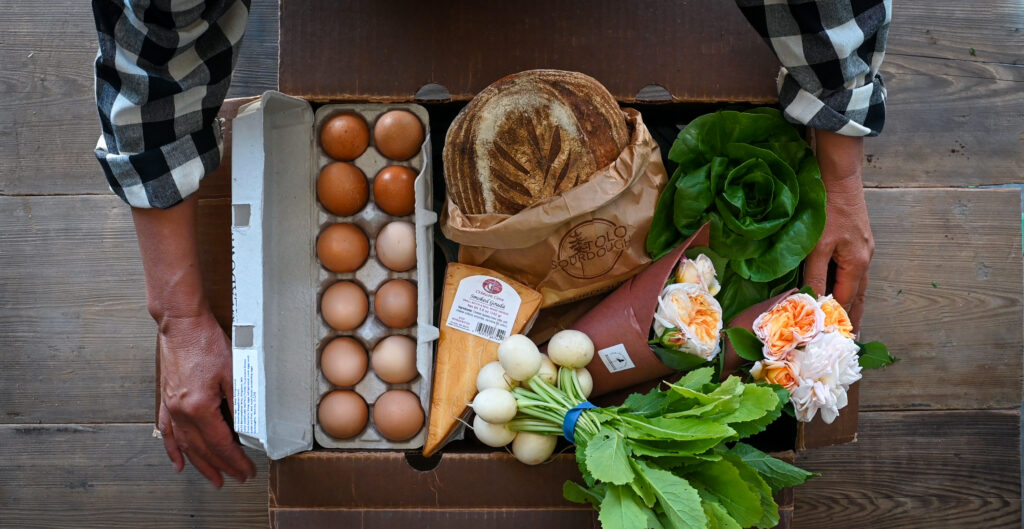
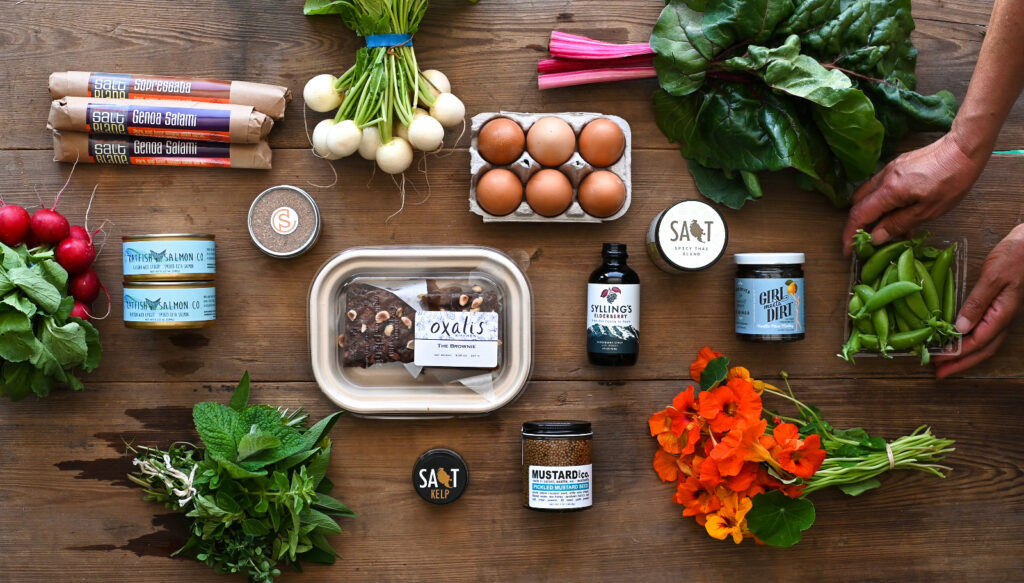
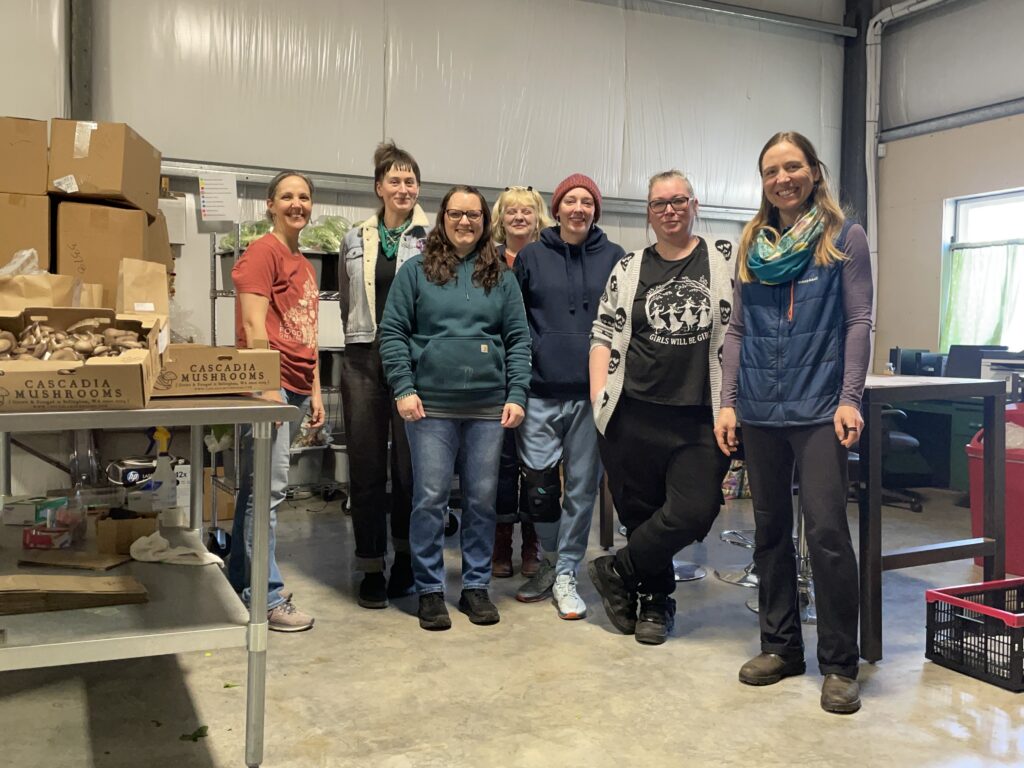
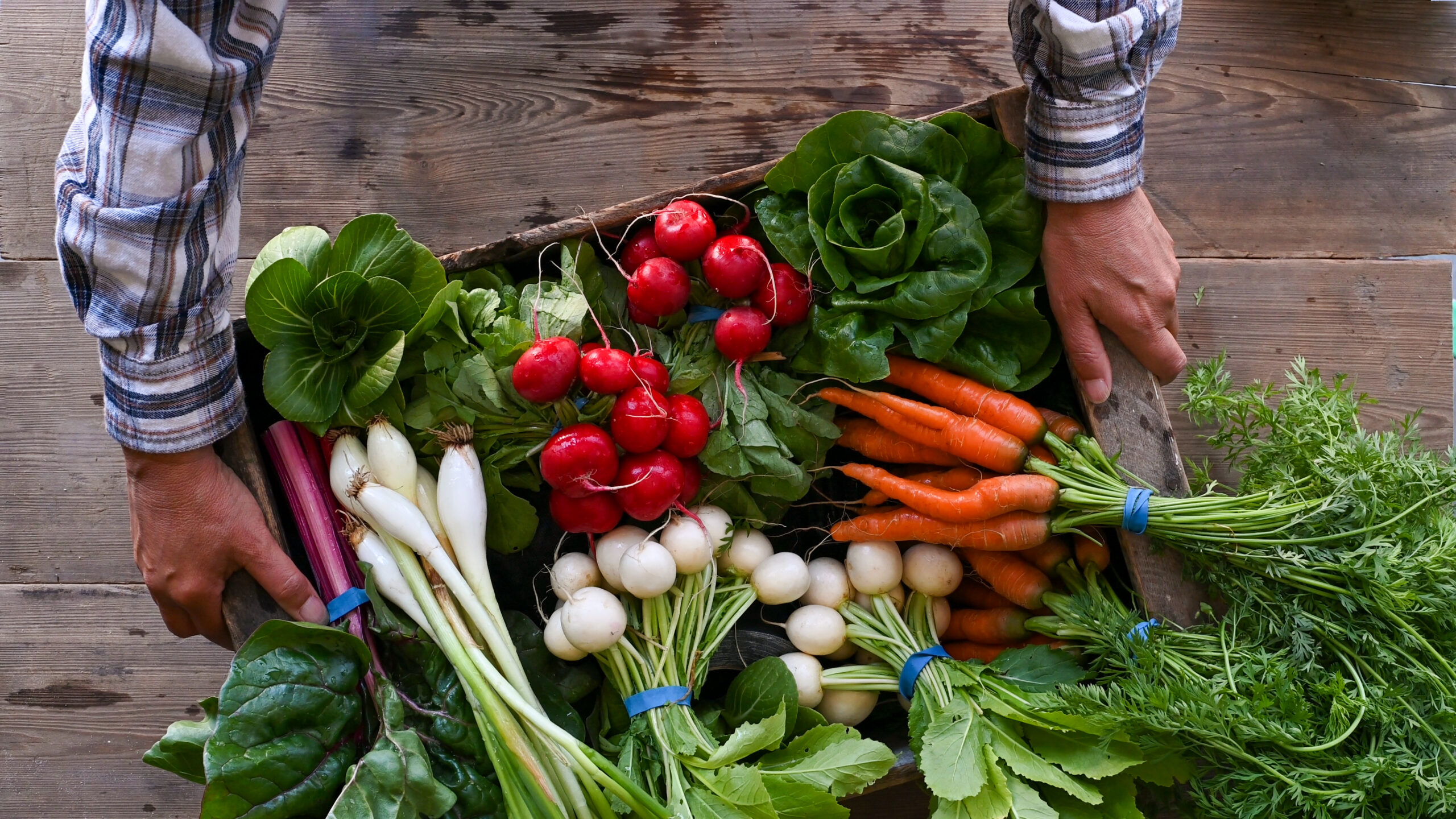
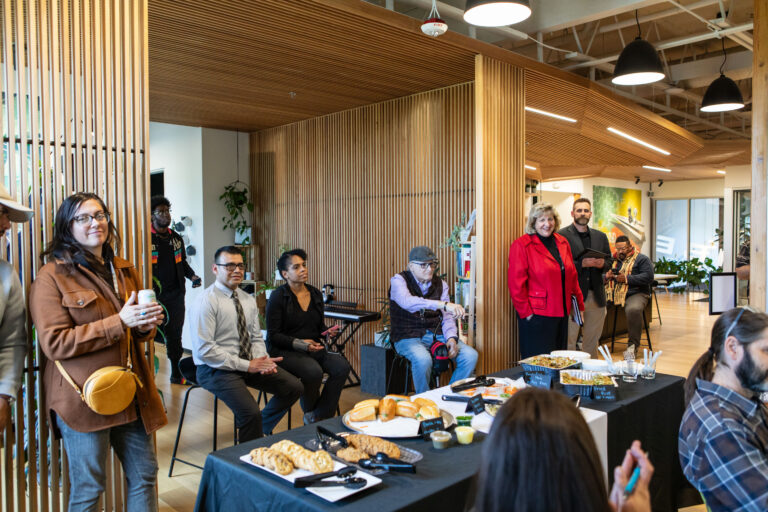
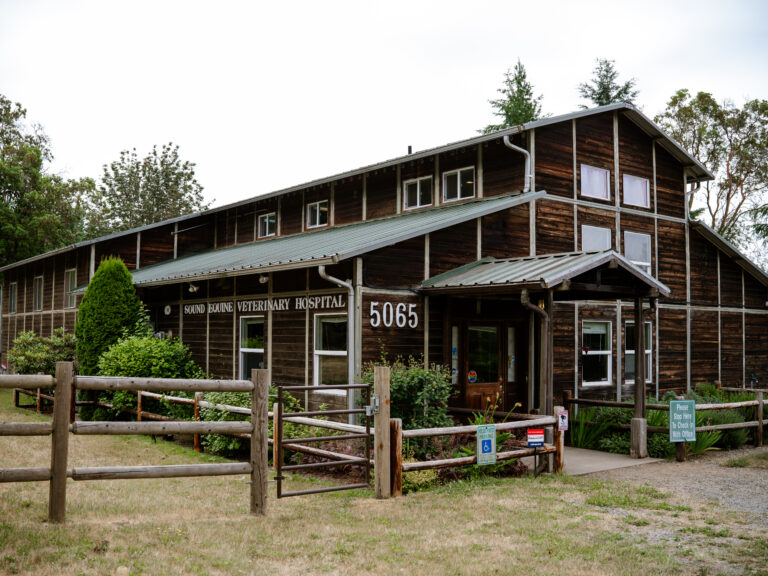
On a weekday afternoon in Kitsap County, while most people are still thinking about what to make for dinner, the warehouse at Kitsap Fresh is already humming. Coolers are stocked with local eggs, greens, meat, bread, soups and citrus. Farmers have dropped off carefully labeled boxes. Staff and volunteers sort, weigh and pack orders that will fan out across the county within hours.
It’s not the familiar scene of a farmers market—no pop-up tents or bustling crowds—but that’s by design. Kitsap Fresh, an online farmers market and food hub, is quietly reshaping how local food moves from field to plate, offering a year-round alternative that prioritizes access, efficiency and sustainability.
“Kitsap Fresh is an online farmers market food hub,” said Mary McKeirnan, who manages the warehouse and logistics. “It was started in 2015. It’s trying to get local food out to people—any fresh local food—and market source-identified, locally grown food.”
Today, Kitsap Fresh connects dozens of small farms and producers to customers across Kitsap County, creating a system that works not just on weekends, but every week of the year.
How the System Works
The Kitsap Fresh cycle begins each weekend.
“There’s an online platform and producers post their products during the week,” explained Renee Ziemann, co-president of the Kitsap Fresh board and a Kitsap farmer herself. “The marketplace opens Saturday at nine, so everything ideally is posted before that, but you can add any time during the weekend.”
Producers list what they expect to have available the following week, and customers place orders between Saturday morning and Sunday at midnight.
“The nice thing is, farmers and producers can list more as things sell out,” Ziemann said. “If something sells out and then we harvest and think, ‘Oh, we probably could push it more,’ we’ll add more.”Once ordering closes, the logistics begin.
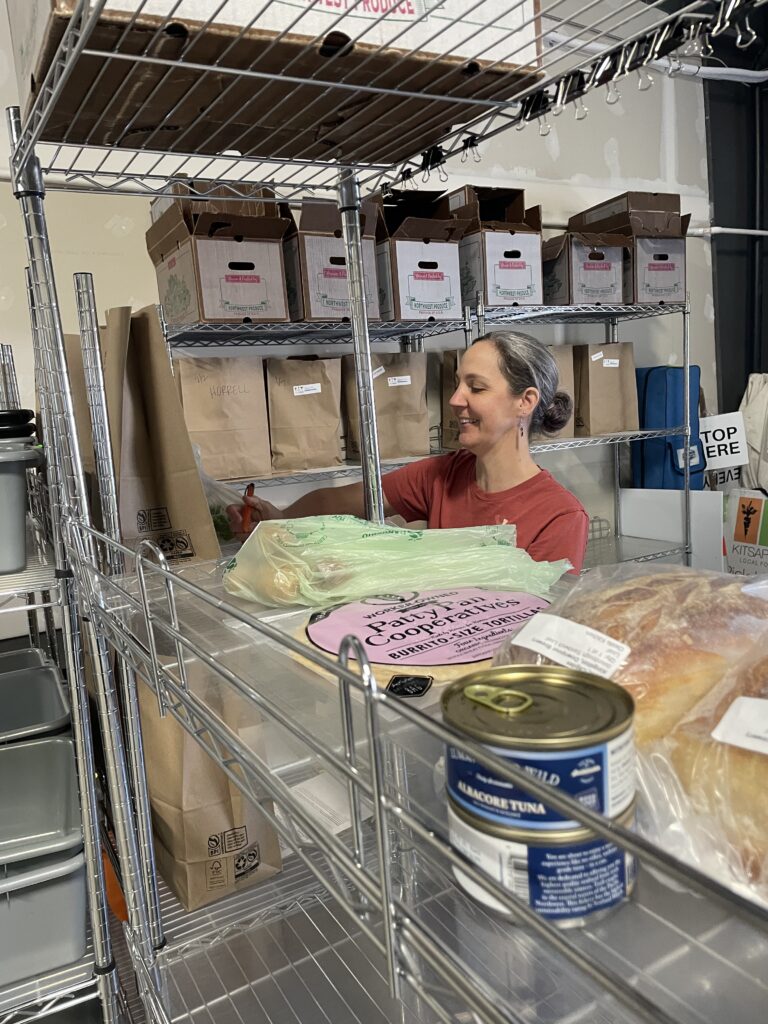
“On Tuesdays, we pack all of the super perishable items that will go into our coolers—frozen and refrigerated items,” McKeirnan said. “Those get all received on Tuesdays, and we sort and pack all of those and get them ready to put into coolers Wednesday right before they go out.”
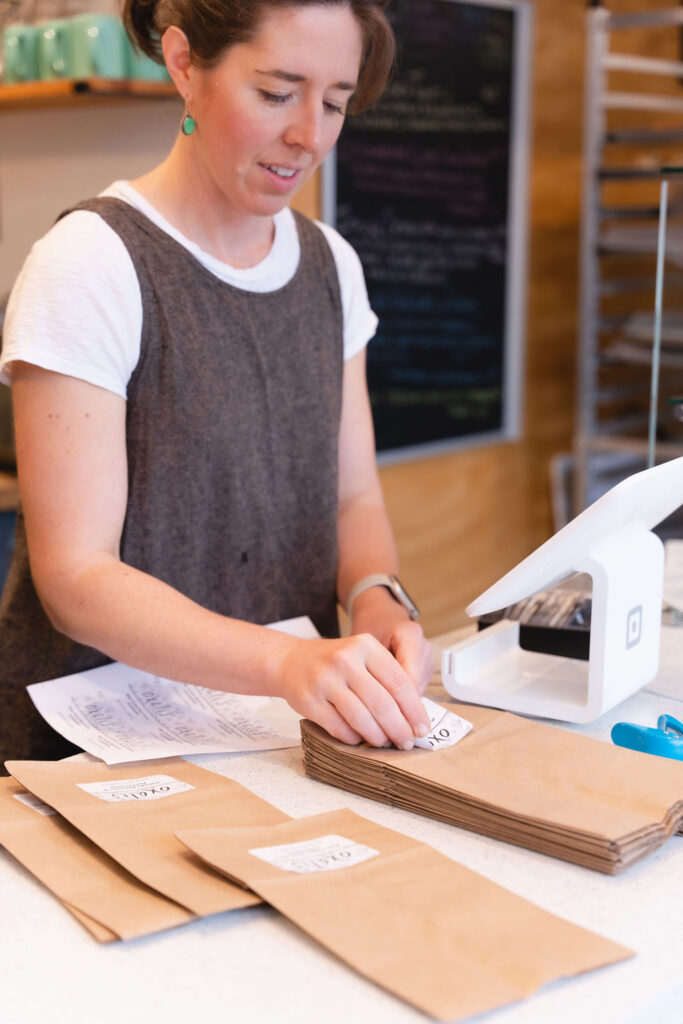
Wednesdays are devoted to produce. Some items arrive already packed from farms; others are weighed and portioned at the warehouse before being assembled into individual orders for each pickup location.
Customers retrieve their orders at designated drop sites around the county on Wednesday afternoons. Thursdays are reserved for home delivery.
“On Thursday, we have home delivery,” McKeirnan said. “The vans go out at 10 a.m. and deliver all day.”
For many customers—busy families, people with mobility challenges, or residents far from traditional markets—those midweek pickups and deliveries make local food accessible in ways that farmers markets alone cannot.
Why Kitsap Fresh Was Needed
Kitsap Fresh emerged in response to gaps in the local food system.
Ziemann, who was launching her own farm around the same time, understands the need clearly.
“There wasn’t a lot of midweek sales opportunities for farmers,” she said. “That’s still pretty true. You can have a CSA midweek, you can sell to cafés midweek. There’s not a super strong farmers market midweek.”
Kitsap Fresh filled that space by creating a centralized system that works regardless of weather, schedules or geography.
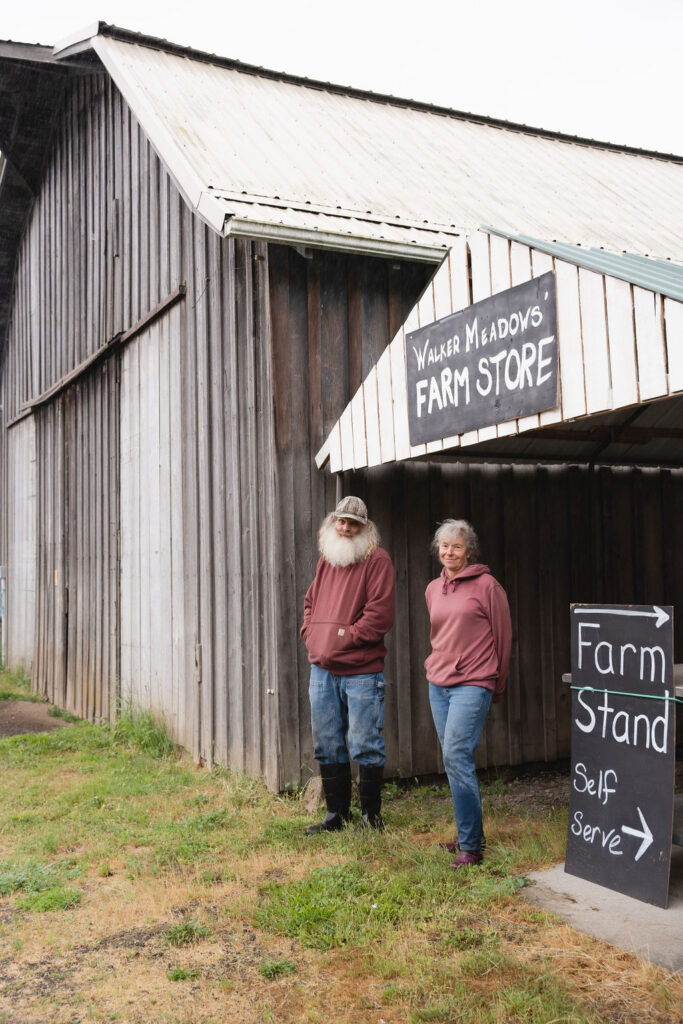
“We do the farmers market—we sell at Poulsbo Farmers Market, and we love farmers markets,” Ziemann said. “But I think the cool thing about Kitsap Fresh is it connects us to customers who aren’t able to come to markets.”
Those barriers can include transportation, mobility, work schedules or childcare.
“There’s any number of reasons people couldn’t make it to a market but might still be interested in local food,” she said.
A Three-Part Mission
Kitsap Fresh’s mission is intentionally layered.
“We have a mission to our member producers—to be a marketplace that supports all sorts of producers in Kitsap County, with an eye towards the new and non-traditional farmers,” Ziemann said. “Our other piece of the mission is connecting customers to local food. The third piece is building a relocalized food system.”
Rather than competing with other local food organizations, Kitsap Fresh sees itself as one piece of a broader ecosystem.
“I think farmers markets are a piece of that. The Co-op is a piece of that,” Ziemann said. “But the more sales platforms available for local food, the better.”
That interconnected thinking extends beyond county lines, particularly during the winter months.
“I think it matters to get food from Washington, even if it’s not from Kitsap in January, versus buying it from California,” Ziemann said.
Supporting Non-Traditional Farmers
A core part of Kitsap Fresh’s work is supporting “non-traditional” farmers—those who may be newer to agriculture, farming part-time, or operating outside conventional models.
“We’re really interested in supporting women-owned businesses, or young farmers,” Ziemann said. “Most farmers are sort of aging out of farming.”
Land access is a growing challenge in Kitsap County, where agricultural zoning is limited and property values are high. Kitsap Fresh helps level the playing field by presenting products equally online.
“Something I appreciated when I was a smaller farm was that my product shows up in Kitsap Fresh and it looks just like everybody else’s product,” Ziemann said. “It’s a picture with a price and a description.”
That parity matters, especially for farmers juggling multiple jobs or just beginning.
“Kitsap Fresh is really flexible in terms of timing,” she said.
McKeirnan also sees innovation reflected in how food is grown.
“You have farms like Kitsap Farms—they do aquaponic farming,” she said. “Spring Rain, they grow citrus. There are just some really exciting things happening around the county that we get to help out and tell people about.”
Reducing Waste, Strengthening Resilience
Sustainability at Kitsap Fresh is as much about systems as it is about soil.
“As a farmer, one option is to go all in as a CSA farm, or all in trying to sell to restaurants, or all in on a farmers market,” Ziemann said. “I found that it’s best to have a lot of different options.”
That diversification proved critical during the COVID-19 pandemic, when many farms had to pivot quickly as markets and restaurants closed.
“Part of being a sustainable farm is having multiple sales outlets,” she said. “Kitsap Fresh is a piece of that for a lot of farms.”
For McKeirnan, reducing food waste is central.
“That’s one of the big reasons that Kitsap Fresh is really important,” she said. “It keeps local food from having to be shipped and trucked distances, and it prevents fresh food that’s really hard to grow and really expensive from being wasted.”
Aggregation also reduces carbon emissions.
“You can imagine customers are driving to a drop spot,” Ziemann said. “But imagine those same customers all driving to the farm to buy eggs—and then to a different farm to get the other thing they need, and then to a bakery to get bread—versus going to one drop site where we’ve aggregated and distributed all of that. The carbon impact of driving is huge. That’s a role that we’re playing.”
The Cooperative Model
Kitsap Fresh operates as a cooperative owned by its producers and customers—an intentional departure from profit-driven food distribution models.
“We don’t live within an economic system where cooperatives dominate,” Ziemann said.
The board is working to reaffirm and strengthen that cooperative identity.
“We want to make sure they know that we’re doing it specifically for them and them only,” Ziemann said. “We don’t have a profit motive. We want to be sustainable and financially secure, but the profit piece of it is removed.”
Challenges—and Perspective
Local food systems face real challenges.
“Local food costs a bit more,” Ziemann said. “We’re paying more for labor. We’re doing more by hand. We just don’t have the economy of scale that other large companies do.”
Weather and crop uncertainty add another layer of complexity.
“All the farmers have to predict what they will have available,” McKeirnan said. “But we don’t have a lot of turnaround time if something changes.”
Despite the stress, both leaders emphasize perspective.
“We’re one of the longest-running food hubs in the state,” Ziemann said. “The challenges that we are facing are not unique to us. They’re systemic challenges, not organizational challenges.”
That success is notable in a county not known for agriculture.
“This is not the place you expect a unique cooperative producer agricultural food hub,” she said. “It’s really unique and special that we have it here.”
Defining Success
For McKeirnan, success is longevity.
“For me, success would be seeing Kitsap Fresh continue to thrive and serve its community,” she said.
Expansion—particularly into South Kitsap—is a long-term goal.
“People want easy access to local food, not just on the weekends,” she said.
Ziemann measures success culturally.
“I think success looks like a broadening of the idea of local food,” she said. “And a cultural shift towards more local food—even when it’s winter.”
For McKeirnan, that impact is felt at home.
“When I’m making a meal, I feel the love of the people that I know and that support me in the food that I’m preparing,” she said. “It just gives you a really good feeling you don’t get at the grocery store.”
In a county better known for ferries and forests than farmland, Kitsap Fresh has built something unique: a cooperative, producer-led food hub designed for resilience.
“If you don’t have a local network that you’ve continued to support,” Ziemann said, “then disruptions can cause great harm to a community.”
Kitsap Fresh is one answer to that vulnerability—keeping food, relationships and stewardship rooted close to home.