As a fourth-generation Bremertonian, Wes Larson has deep roots in the community he now helps shape through development. His family’s connection to Bremerton stretches back more than a century — his great-grandfather served as mayor in 1914 — and that sense of place continues to influence his work today.
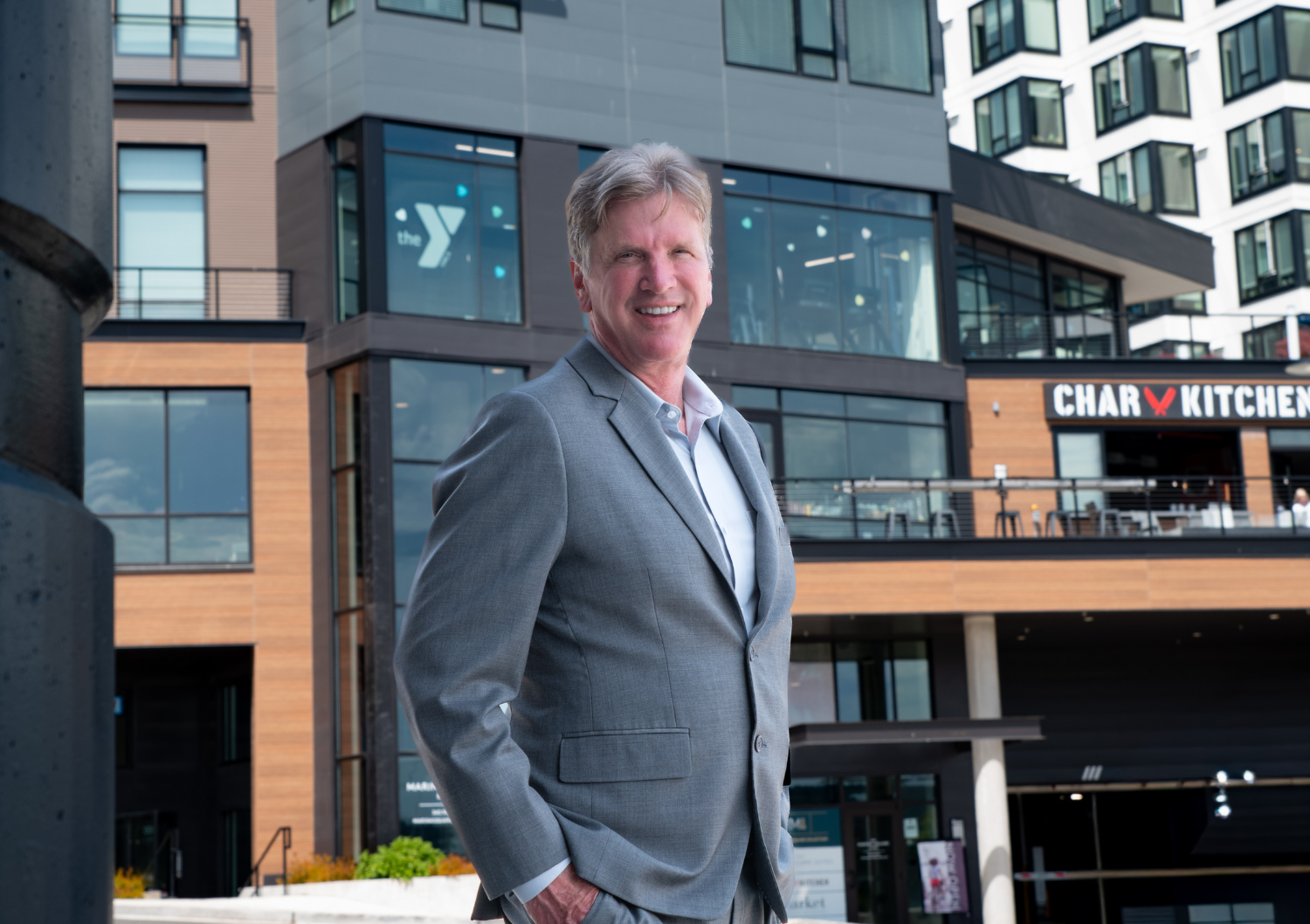
As CEO and Principal of Sound West Group, Larson has played a key role in some of Kitsap’s most recognizable projects, from the restoration of the historic Roxy Theatre to major mixed-use and waterfront developments that blend housing, public space and community gathering places. In this Executive Q&A, Larson reflects on Kitsap’s growth, the challenges facing housing and development, and why he believes thoughtful urban infill and community-centered design are critical to the region’s future.
You’ve spent years shaping projects across the region—what initially drew you to real estate and development, and how has your vision evolved over time?
My grandfather was a prominent contractor in Seattle back in the 1930s and 40s, and I would often hear stories about him and his projects growing up and Dad would take me on tours of the buildings he constructed. After practicing law for several years, I decided that was not for me- I like to say that ‘I am an attorney, but I’ve been reformed’ – and I suppose I reverted back to my roots. I have always enjoyed the creative vision in the development and building process– seeing a piece of raw land and envisioning it to reality- “place making”- and having others get engaged in that vision and process is exciting and rewarding. I feel like what I am doing now – developing projects in my hometown and community – is making a difference- it’s a calling and not a job.
How would you describe Sound West Group’s role in Kitsap’s growth today?
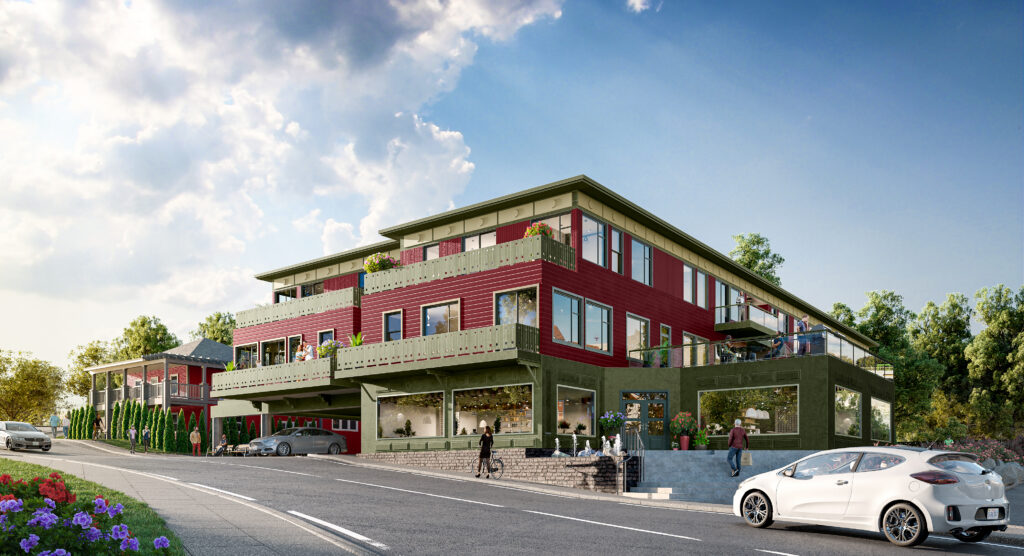
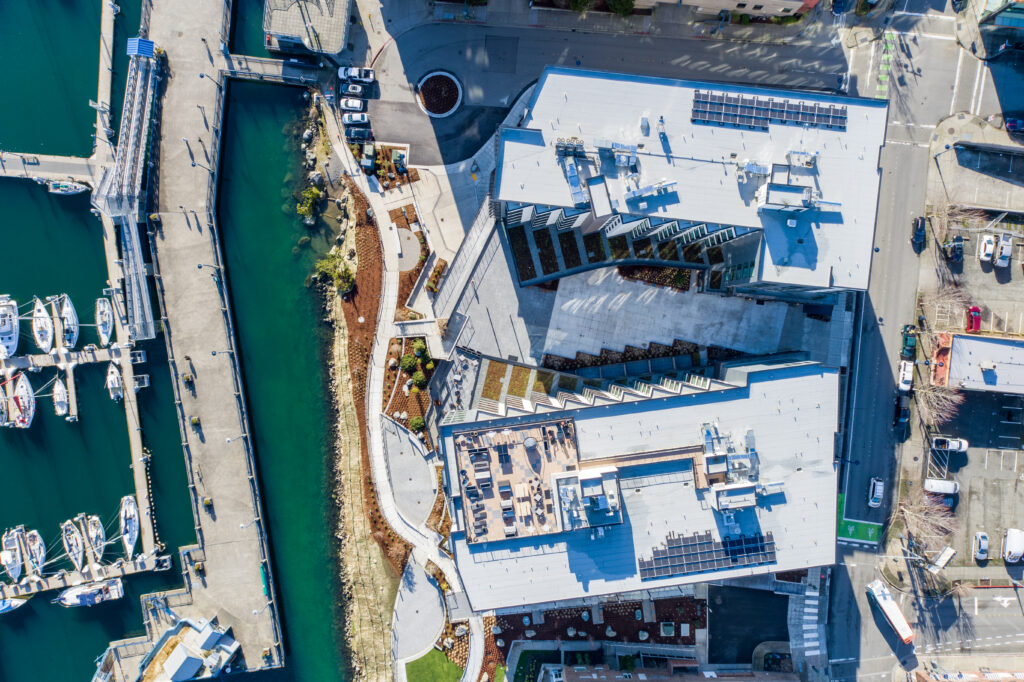
Sound West is a developer focused on building quality projects in urban centers, but more than that we are focused on developing community- and that means not just constructing a building, but connecting each project we do with our community’s history, culture and values, which are reflected not only in the design but in other amenities like public, communal and open space. One of the projects I am most proud of is the renovation of the historic Roxy Theater on Quincy Jones Square. We purchased the Roxy out of foreclosure in 2014 after it had been vacant and derelict for nearly 30 years. It’s where I saw Star Wars in 1977. In order to pay for the Roxy renovation we “piggy backed” it on our remodel and repurpose project of the old Sears Department Store and Ford Dealership buildings, which are now the B Flats apartments and Axe & Arrow Restaurant. The Roxy could not have obtained financing for the remodel on its own, and we recognized it would otherwise take many years to raise the money. We hired a specialist in art deco theater restoration who literally worked off black and white photos to restore the theater to its original grandeur. The subcontractors worked for free- we all worked for free! I suppose it was kind of like being Tom Sawyer painting a fence and it was fun to see the enthusiasm and support generated by the project in the comnmunity. One day a guy called us to say he had the Roxy chandelier in his pasture (where it had been for years!) and brought it into us, and we restored it and put back in place! We also developed an apartment community in Bainbridge Island across from the ferry terminal- largest project ever built in Bainbridge- together with Pope Resources (OPG and Jon Rose) called ‘BLIS’ and contributed the adjacent one-acre parcel to the city for a public park. We have built affordable housing (providing inventory for Kitsap Housing Authority’s ‘self-helpl” program). Our largest project, Marina Square, on the Bremerton waterfront was a $140 million construction, all privately funded, which we built through COVID. A key value for that project was to allow the public to utilize the open space between the buildings (now named Cary Bozeman Square), which has served Bremerton’s night market, as well as outdoor YMCA classes. The YMCA express, which I am particularly proud of – was recently opened at Marina Square and represents the return of the Y to downtown Bremerton. I have been a lifelong member of the Y – for 57 years- and serve on the board for the Pierce Kitsap YMCA. We are also working with the YMCA to develop an Early Learning Center on Quincy Square (a $6.2 million grant was approved for this project in 2025- the largest grant in the state of Washington)
What are you seeing in the market right now, and how is that shaping the projects you choose to pursue?
Development is tremendously risky and challenging, and never more so than now. From the time a property is identified, through entitlement, permitting, then construction and finally, lease up it can take as long as five years, and sometimes more. It is impossible to know all the outcomes with any certainty- construction risk, market risk, financing risk and regulatory risk, not to mention global political and economic uncertainty. Delays in the permitting process and sometimes overly burdensome regulations add cost.
All that said, we always look to build in the very best locations- near the water, in urban centers proximate to public transit, and walkable to shopping, dining, arts and entertainment. We believe in the urban ideal, and we only choose projects that are urban infill. We’re not interested in projects that advance suburban sprawl.
As Kitsap continues to grow, where do you see the biggest opportunities—and the biggest challenges?
The biggest opportunity is connected to the Shipyard Infrastructure Optimization Plan (SIOP), which will kick off in 2029. With a cost estimated to range from $10 to $13 billion spread over the next 10 to 20 years, this will drive jobs and demand for warehouse, office, and of course housing. Even without SIOP housing supply in Kitsap is not sufficient to meet demand which has been stable and growing. The biggest challenge lies in being able to construct affordable housing. Again, the time it takes to get a project permitted and increased regulatory burden and costs presents perhaps the biggest challenge to any project. It often takes longer to permit a project than to build it, with the result being that the ability to deliver housing in a timely and cost-effective way is practically impossible. I have served on the Design Review Board for the City of Seattle, taught Environmental Law at Seattle University and have also served on the board for Great Peninsula Conservancy. It is possible to be a developer with a strong environmental ethic. But core to the environmental ideal in development is that residential density should be built in towns and cities, where there is existing infrastructure, public transit, and where housing is walkable to services and amenities and not allow development to sprawl into our rural and suburban spaces. I am surprised at how self-pronounced “environmentalists” often protest against developing more density in cities like Bremerton as that is, after all, mandated by the Growth Management Act.
When you’re evaluating a project today, what factors matter most?
The old adage “location, location, location” is certainly true. But what also matters to us is that a project has an identity and connection to its community. A “trophy” characteristic for property is important. A good view. Walkability. Near water or open space or on a public square. But building something with character matters a lot to us. We are proud to have received the NAIOP awards- which is the equivalent of the development industry Oscars- for Best Mixed-Use Project and Developer of the Year in 2023. Not bad for a little company from Bremerton.
Workforce housing remains a major issue—what does a realistic solution look like from a developer’s standpoint?
We are even now working on a project through US Senator Patty Murray’s office that would combine over 120 units of workforce housing with an Early Learning Center. This appears to be a prime candidate for grant funding and we are hopeful that Senator Murray will be able to advance this project in the upcoming session. Putting workforce housing in the same project together with early learning and child care and within walking distance of the Puget Sound Naval Shipyard presents a great opportunity to advance what is a critical core need- childcare- and make it accessible and convenient; for families who can live onsite!
“Community character” is often part of the conversation—how do you define that in a way that actually guides decisions?
It’s important that the design of a project takes community context and character into consideration. That doesn’t mean you can’t build an apartment building in a neighborhood of single-family homes, but things like pedestrian orientation, building setbacks, modulation, color schemes, open space and tying into the culture and history of the area are important.

What’s one policy or regulatory change that would meaningfully improve development in the region?
Permitting time and uncertainty. If you hired a contractor who could not tell you how much a project would cost or how long it would take, you would likely choose someone else. As developers in Kitsap County, however, we do not have that option, as we are subject to the County for review and approval. We currently have three projects in the county, and each has taken more than two years to secure entitlements, including site plan and zoning approvals, followed by additional time to obtain building permits and begin construction. From 2019 to the present, that full process has taken about three years. During that time, carrying costs for land, debt and equity interest, architecture and engineering, and jurisdictional review fees can rise to hundreds of thousands of dollars. The longer the process takes, the more expensive housing becomes, and those added costs are ultimately passed on to renters and homebuyers, worsening the affordability crisis.
We would gladly pay higher review fees in exchange for a guaranteed review timeline and a clear schedule of review costs. Ideally, that timeline would be measured in months, not years.
Another way to support truly affordable housing, serving households at 65% to 85% of Average Median Income, would be to waive Washington State’s sales tax on affordable housing projects. Currently, a tax of roughly 10% is applied to total construction costs, including labor, materials, insurance, and general contractor profit. In effect, every dollar that passes through a general contractor’s books is subject to sales tax. Waiving this tax would help subsidize affordable housing. The state might not lose significant tax revenue, since very little affordable housing is being built under the current tax revenue structure
Looking ahead, what types of projects or innovations are you most excited about?
We are actively developing Early Learning Centers in coordination with the YMCA (as the operator) and Puget Sound Naval Shipyard, where the workforce is tremendously underserved. A $6.2 million grant was recently approved for an Early Learning Center on Quincy Square and – as already mentioned- a second grant application is in the works with Senator Murray- and has been positively received- for a project on Evergreen Park which would accommodate 123 workforce housing units over an Early Learning Center. This would effectively allow families to live within walking distance of their employer and with childcare immediately accessible in the building. More Childcare centers are desperately needed, and that is a great opportunity for us going forward and one we are very excited about filling. Developing more childcare centers in locations that combine workforce housing and transit connections will be a focus for us going forward. We are also working on a potential partnership with Kitsap Regional Library to build a combined YMCA – Regional Library campus with a City of Bremerton Aquatics Center on property currently owned by the library. The proposed location is on the library’s 6.5 acre property on Sylvan Way and adjacent to the Boys and Girls Club, and the 40-acre City of Bremerton School District owned property along Wheaton Way, which includes playfields and open space, and will soon be home to the new Armin Jahr elementary school. There may also be a possibility of locating health care and childcare on the property as well. We’re in the conceptual design process but the idea is catching on fire!
What’s been your most rewarding project so far—and what made it stand out?
The most rewarding project was Spyglass Hill in Bremerton, our 80-unit apartment community overlooking the Manette Bridge. At the time we were planning to build Spyglass in 2015, there were no lenders willing to lend us to build in Bremerton. A local bank at first told us we were their priority project loan then pulled their financing just prior to the start of construction. My partner and I had pieced together 11 single family and duplex properties which were in a state of disrepair all with different ownership. Many evenings and days were spent negotiating with this disparate ownership group, including signing a deal with one owner on an afternoon in the local Burger King! We then held the property through the great recession (2008-11) before teeing the project up for construction. Local folks were reluctant to invest in Bremerton so we were fortunate to source a family from Thailand who thought Bremerton was a goldmine of an opportunity! A partner of mine from Sweden sat on the board of a bank in Oregon which agreed to finance the construction, and voila – we built Spyglass Hill. We were able to lease all 80 units in approximately 2 months and beat all projections for rents by a wide margin. It was satisfying to know that we had overcome great odds and were right in our assessment and timing to the market.
Keep in touch with our news & offers
Subscribe to Our Newsletter
Thank you for subscribing to the newsletter.
Oops. Something went wrong. Please try again later.