At West Sound Wildlife Shelter on Bainbridge Island, rehabilitation means more than treating injured animals. It requires skilled care, a network of volunteers and donors, and patience with both wildlife and the people trying to help it.
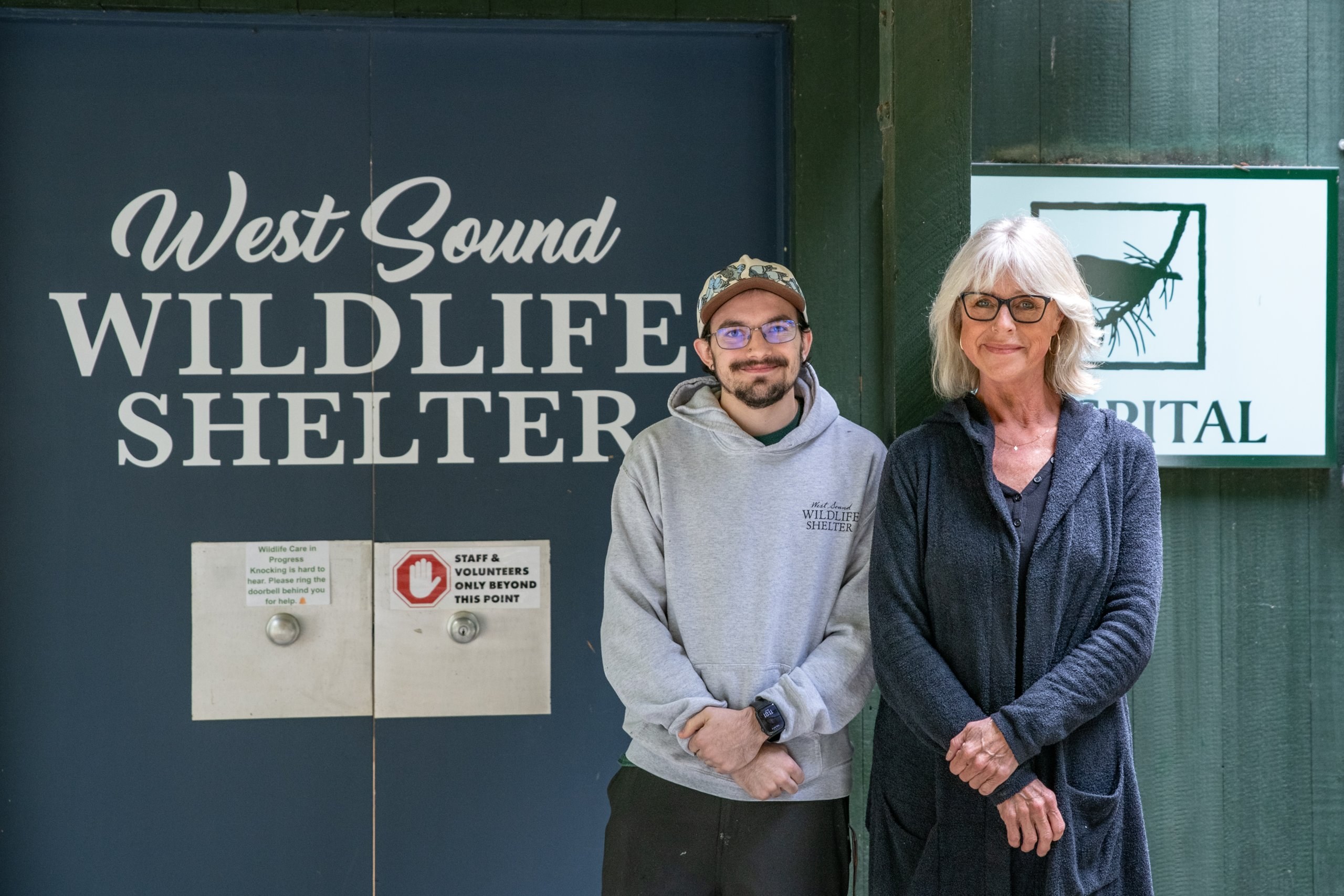
The nursery at West Sound Wildlife Shelter is quiet by late summer. During the busiest weeks, nearly every surface can hold enclosures for baby birds, squirrels and opossums, Executive Director Lisa Horn said. On this visit, the room holds only a few patients — the last of the season’s young arrivals.
The building itself reflects the challenges of the work. One section was built in 1921 as an office for the Bloedel estate; another dates to 1960. Neither was designed to function as a wildlife hospital. The floors need work, the kitchen is small, and 15 freezers plugged in around the property store food for the animals.
“We’ve just made it work since we started,” Horn said.
Making it work requires veterinary care, practical improvisation and a commitment to public service. West Sound Wildlife Shelter treats injured and orphaned wildlife from Bainbridge Island and across the Kitsap Peninsula, while working with other rehabilitation organizations to help animals from farther afield. Some patients need treatment and a brief recovery. Others require weeks of care and conditioning before they can return to the wild. A small number cannot be released.
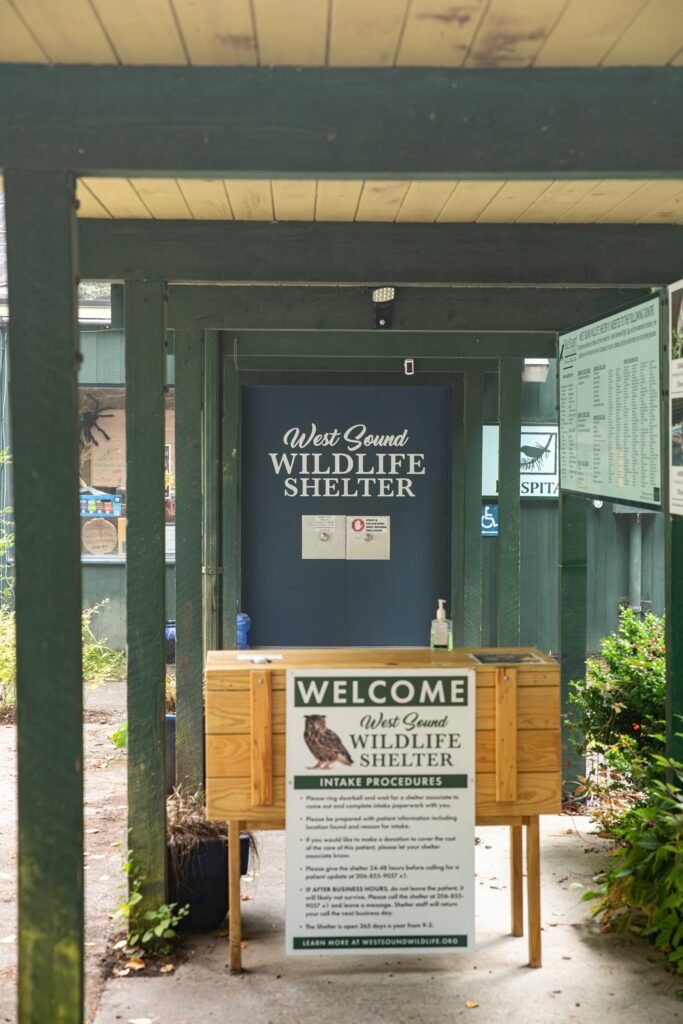
The work often begins before an animal arrives. The shelter fields about 7,000 calls a year, Horn said, with questions surging during the summer. People call about birds on the ground, rabbit nests in their yards or animals that appear injured. Sometimes, the best first step is not a trip to the shelter but a conversation with someone who can help determine whether an animal needs intervention.
“Call first,” wildlife care technician Sawyer Kibler said.
Baby birds and rabbits can appear abandoned when they are not. Staff can explain how to determine whether a parent is returning or how to respond without unnecessarily disturbing the animal.
That advice can spare wildlife additional stress while helping a small staff manage a steady stream of patients.
“A lot of the time, if we just leave them, the mom will come back,” Kibler said, “we have lots of different techniques” for checking whether young animals need help.
Care that prepares an animal to leave
Once an animal is admitted, treatment is only one part of rehabilitation. The goal is to help patients recover the strength and skills they need to survive independently.
Inside the shelter, birds receive examinations and treatment much as they would in a veterinary clinic, with care tailored to each species. For some procedures, staff use hoods that provide darkness and gentle pressure to help birds settle during examinations. Patients may also receive medication to reduce stress.
The shelter has digital X-ray equipment, and a veterinarian who has worked with the organization for 15 years consults remotely on images, diagnoses and treatment plans.
As patients recover, they move from the indoor hospital to outdoor enclosures, where they can rebuild strength and practice natural behaviors. A flight-training area built in 2009 can be divided into five sections, allowing staff to adjust the space for different birds and stages of recovery.
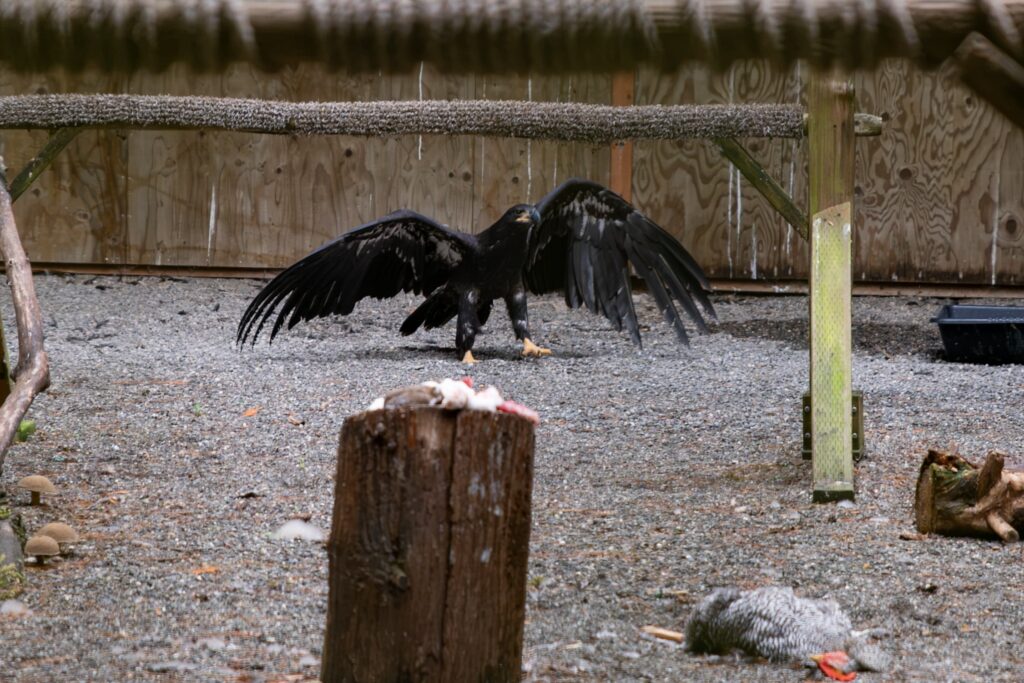
One young bald eagle arrived after being found grounded at a state park, emaciated and struggling. Staff provided regular feedings and fluids before moving the eagle through a series of smaller enclosures. Eventually, it was introduced to another young eagle. The birds spent time together, which Kibler said can help young eagles learn from one another.
Now, the eagle is building confidence. Sisal rope wrapped around perches creates a kind of staircase, making it easier to climb to a higher perch and practice short flights.
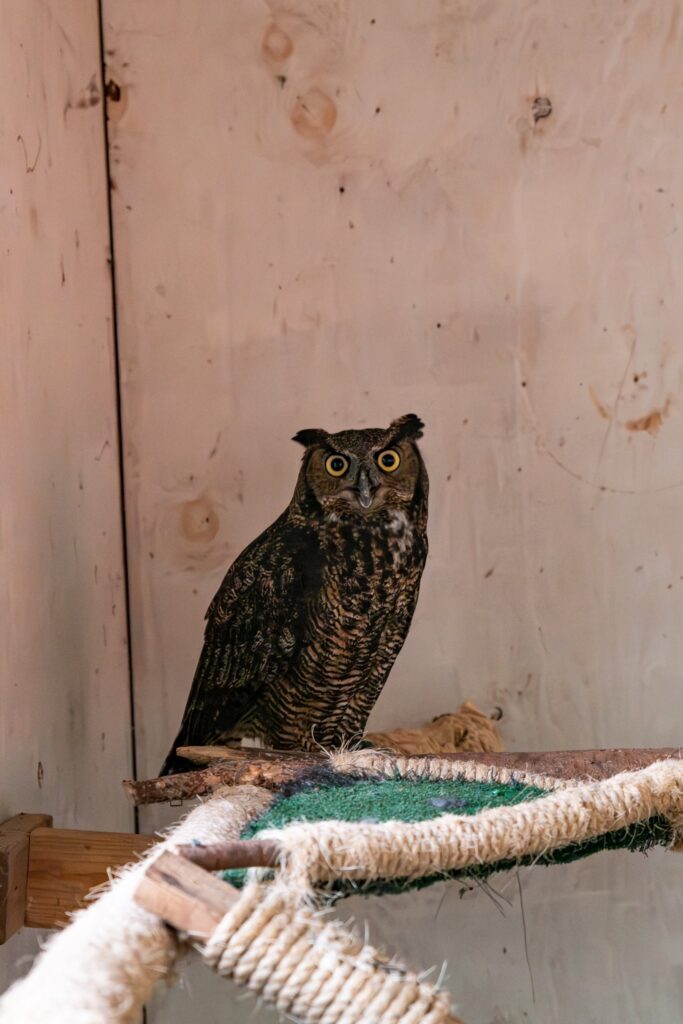
Another raptor, an owl, arrived with a serious fracture to a wing bone after a suspected vehicle strike. Staff stabilized the injury and are monitoring the healing process before deciding when the bird is ready for more flight practice. For raptors, rehabilitation involves more than getting airborne; birds may also need to practice turns and other maneuvers required for hunting and navigating their surroundings.
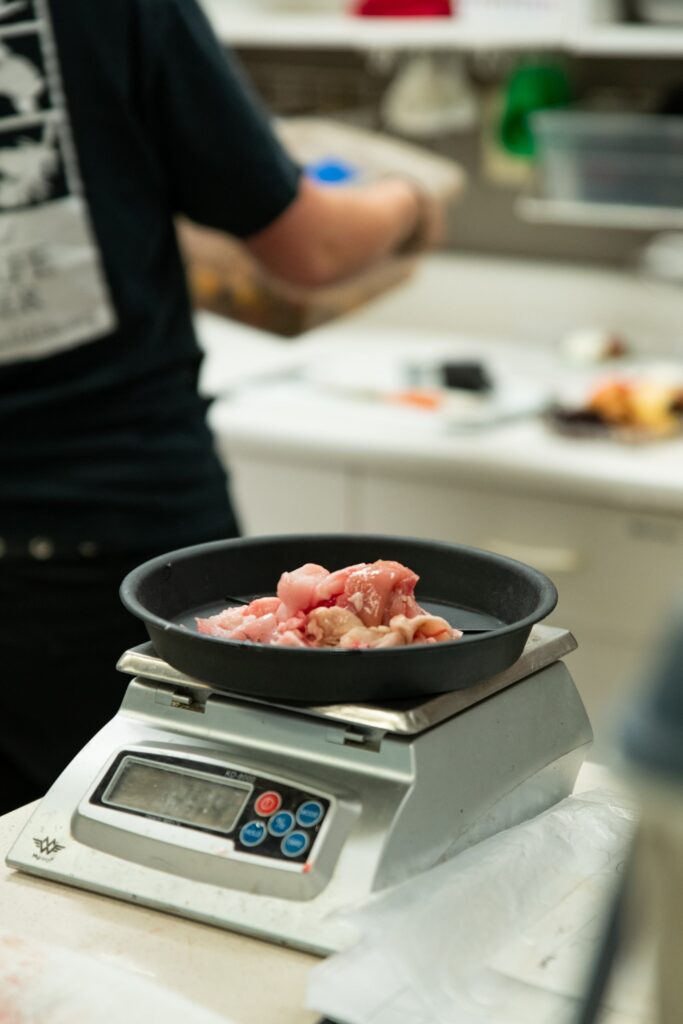
Food is another part of that preparation. Patients receive varied diets, and staff try to give them opportunities to recognize and handle foods they may encounter in the wild.
Donated salmon from the Quilcene National Fish Hatchery is a major resource. Horn estimates that the shelter received about 7,000 pounds this year, valued at roughly $100,000. The shelter also distributes salmon to other wildlife organizations that need it.
The donation is essential to feeding the injured birds in the shelter’s care.
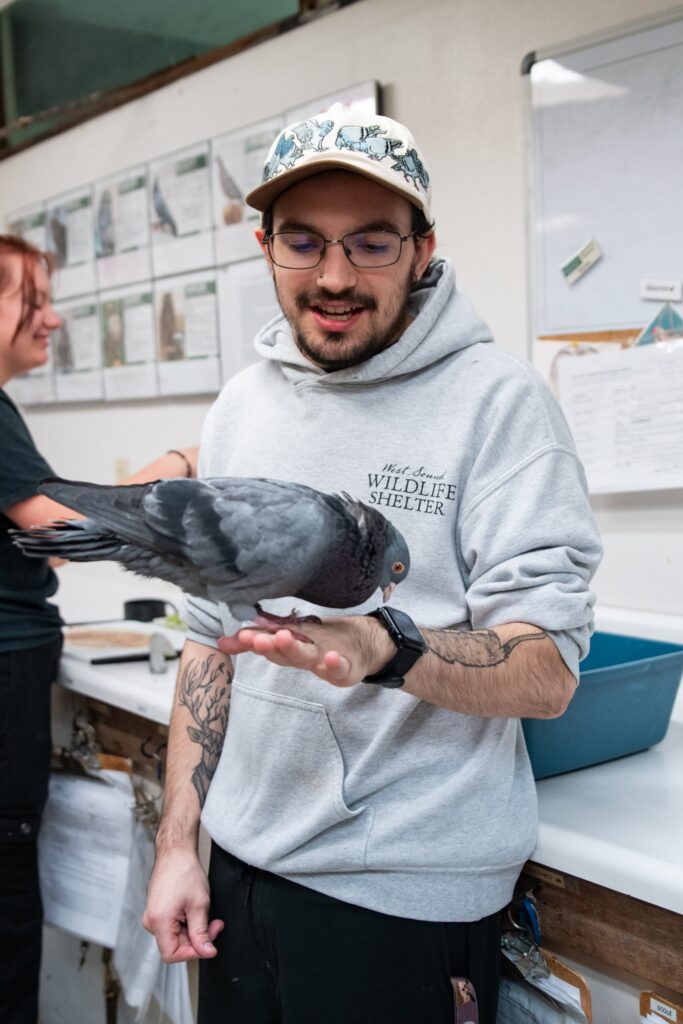
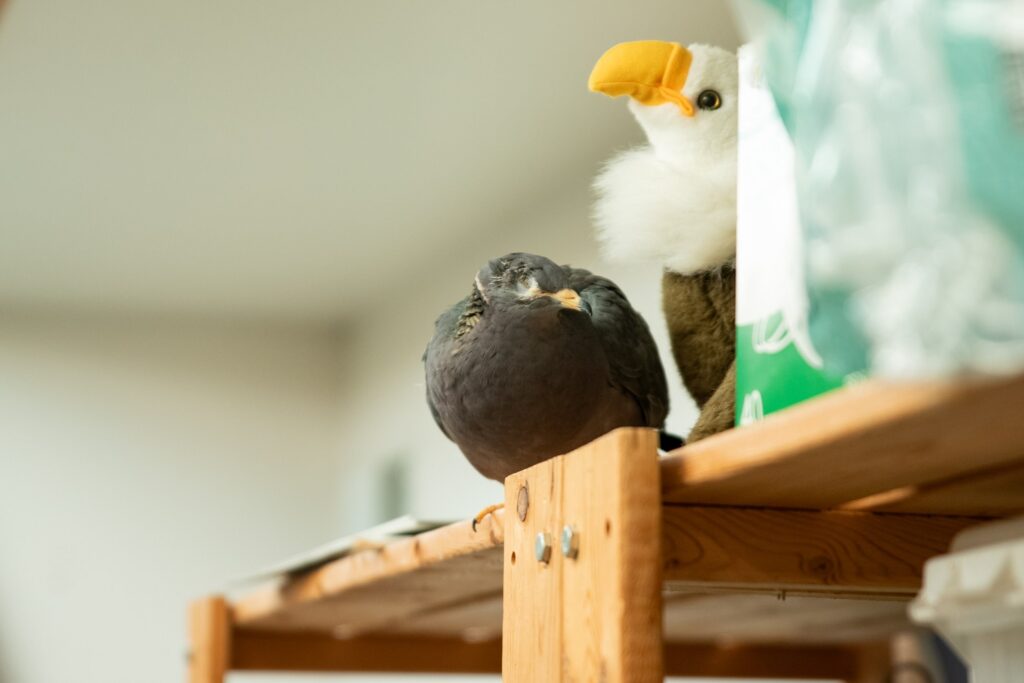
The outdoor enclosures accommodate temporary patients as well as permanent residents. Two pigeons, Rocky and Cyclops, live indoors and participate in the shelter’s education program.
Rocky, a rock pigeon, cannot be released because suspected neurological damage affects her flight. Cyclops, a band-tailed pigeon, is fully flighted but requires regular care for a missing eye.
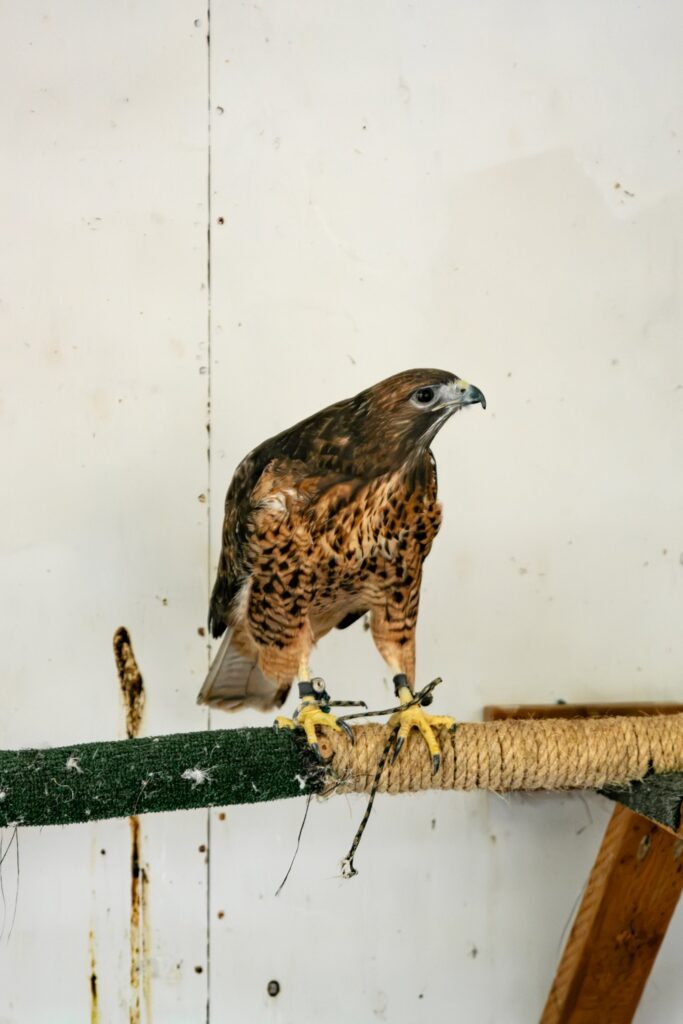
Mariah, a red-tailed hawk, is another permanent resident. She came to the shelter after the facility where she had been an education bird closed.
These animals help staff teach the public about local wildlife and the realities of rehabilitation. In a busy year, the shelter reaches about 15,000 children, often by bringing education animals to schools and community groups.
Kibler said a common misconception is that every injured animal that cannot be released can be placed in a permanent home. In reality, such placements are rare. An animal must be physically able to live in captivity, behaviorally suited to it and matched with a facility that can commit to its needs for years.
For patients, there are three possible outcomes: release into the wild, placement in permanent care when appropriate, or humane euthanasia.
Horn said people can understandably struggle with the last option, particularly after investing time and emotion in rescuing an animal. But when treatment cannot give an animal a viable life, euthanasia can prevent it from dying slowly from injury, starvation or exposure.
“It’s almost always a success,” Horn said, when euthanasia means an animal did not have to suffer alone in the wild.
An operation built on volunteers and donations
Behind every patient is a long list of daily responsibilities: preparing species-specific diets, administering medication, cleaning enclosures, tracking recovery and finding ways to keep animals engaged without allowing them to become too accustomed to people.
For young animals, limiting unnecessary human contact is especially important. A wild animal that learns to depend on people may have a harder time surviving after release.
Care also extends beyond the enclosures. Volunteers repair structures, prepare food and transport animals to release sites. One volunteer might drive several hours round trip to return a bird to suitable habitat.
About 60 volunteers support the shelter, and Kibler estimated that they carry out roughly 95% of its operations. Four staff members work in the hospital, with eight staff members at the organization overall.
“We could not do this without volunteers,” Kibler said.
Community support sustains the shelter financially, too. Horn said the organization relies almost entirely on private donations, supplemented by grants and foundation support. Its annual auction is a major fundraiser, accounting for about one-third of the operating budget, she said.
When the pandemic disrupted in-person events, the organization looked for a more sustainable source of revenue. That effort led to Wild Bird Mercantile, a resale shop operating in space provided by Rolling Bay Presbyterian Church.
The shelter rents the space at a modest cost, and the shop has raised nearly $100,000 for wildlife care. Community members also donate food, produce, towels, linens and other supplies.
The shelter’s needs can be specific, but Kibler said people who are unsure what to contribute can consult the organization’s online wish list or ask staff for guidance.
The need for that support is closely tied to the pressures wildlife face. Horn and Kibler pointed to development and human encroachment as ongoing challenges. Outdoor cats are another frequent source of injury, Kibler said, with many young birds and mammals arriving after being caught by cats.
The issue is complicated, he said, because hunting is a natural behavior for cats, even as it can have devastating consequences for wildlife.
The shelter also fills a role that members of the public might expect government agencies to provide. Fish and wildlife officers cover large areas, Horn said, and there are not enough of them to respond to every animal in need.
West Sound is a small organization, not a field-response force. Staff members go out when they can, but much of the operation depends on members of the public bringing animals to the shelter.
That limitation makes partnerships especially important. In addition to its relationship with the fish hatchery, the shelter works with other rehabilitation groups and veterinarians. It takes in animals that larger centers may not be equipped to handle, including waterfowl and some common local species.
For baby otters and beavers, the shelter can provide initial care before transferring them to a facility with the space and resources to raise them.
A new setting for the next chapter
The shelter’s most significant opportunity is a planned move to Port Gamble. Horn said the new location would give the organization space to build a hospital roughly twice the size of its current facility, along with a much larger kitchen and a walk-in freezer. It would also be the first property the organization owns.
Just as important, the new setting would give recovering animals more room and a quieter environment, Horn said. At the current site, the flight area sits beside a parking lot and other public activity. The planned move would offer a more natural setting for patients to regain strength before release.
For now, staff members continue adapting the old buildings and making the most of the space available. The work is demanding and can be difficult, but Horn described the shelter as a place that cares for people as well as animals.
Some callers arrive frightened or worried about an animal they have found. Some volunteers come looking for a sense of purpose or a refuge of their own.
The same community that brings injured wildlife to the shelter helps sustain it through time, supplies, transportation and donations.
“This hospital — it belongs to this community,” Horn said.
That support allows a small nonprofit to keep answering the phone, caring for patients and preparing them, whenever possible, to return to the wild.