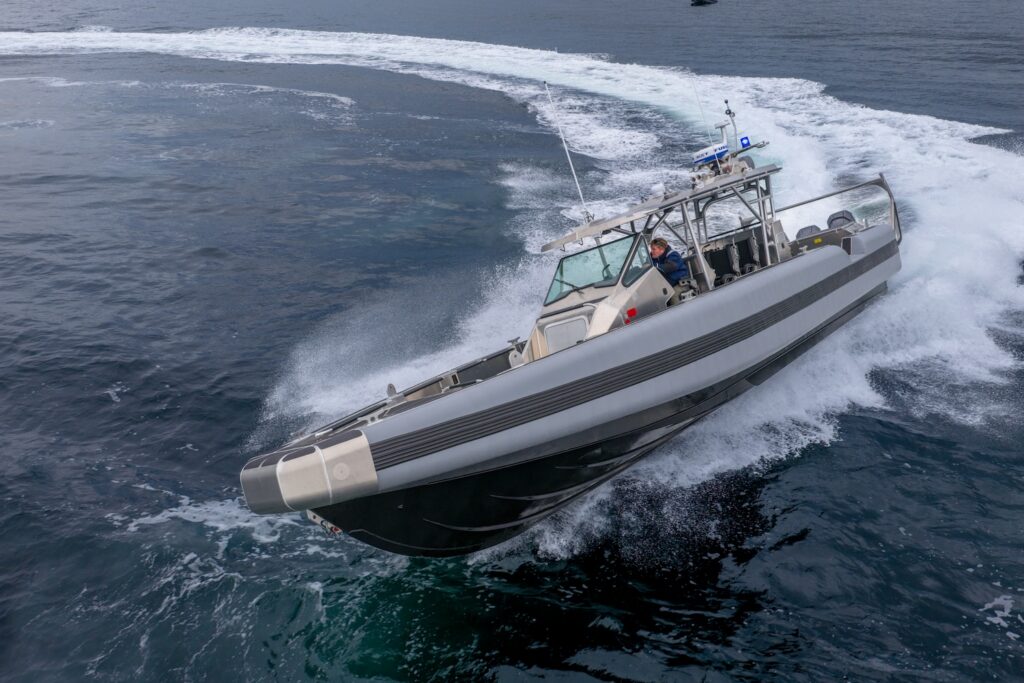
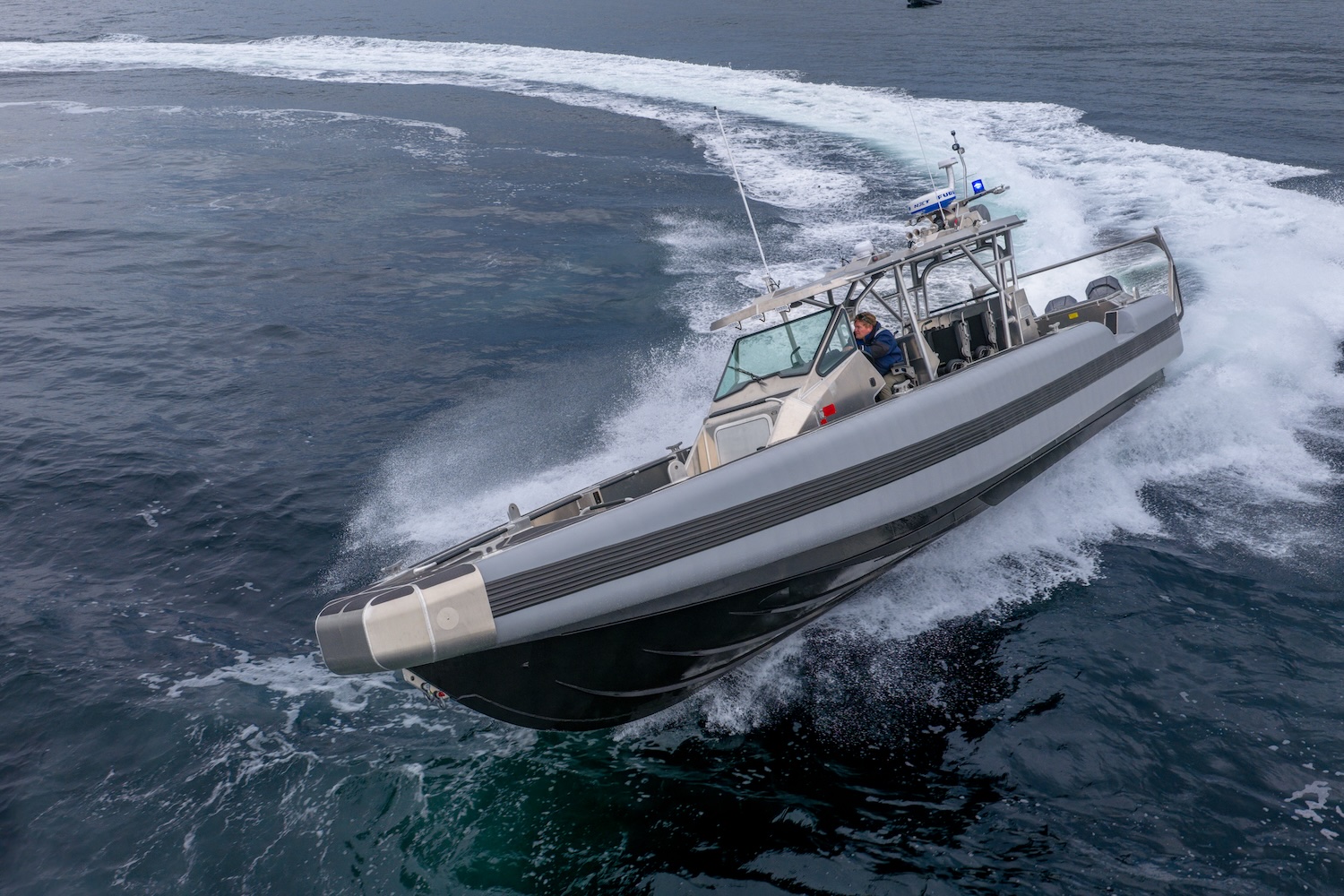
Born on the rough waters and rocky shorelines of Puget Sound, SAFE Boats International set out 30 years ago to answer a deceptively simple question: how do you design a boat that truly protects the people on it? That human-centered philosophy, focused on comfort, safety and performance in the harshest conditions, has since propelled the Bremerton-based company from a small company into a globally respected builder of high-performance patrol and response vessels.
“We’re celebrating our 30-year anniversary this year,” said Cindy McFarland, chief people officer at SAFE Boats International. “Thirty years building amazing aluminum boats for first responders and the military, helping them support their missions.”
Now employee-owned and under a new leadership structure, SAFE Boats is marking the milestone by staying true to the innovation-first mindset that made it a trusted name on the water.
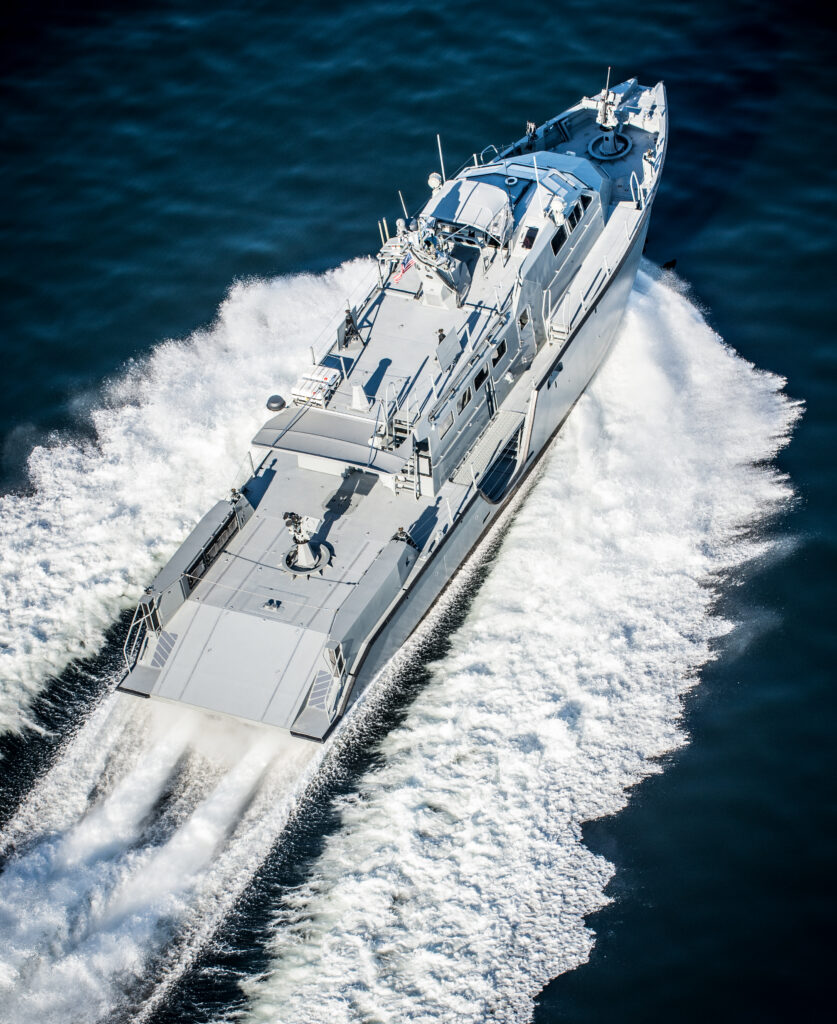
Today, the company has delivered nearly 3,000 vessels to customers in more than 70 countries, serving first responders, law enforcement agencies and military operators around the world.
A milestone year, a new leadership model
As SAFE Boats enters its 30th year, the company is also navigating a significant leadership transition. Founder-led for much of its history, the company recently announced that longtime CEO Richard Schwarz will step away from day-to-day operations and move into a consulting and advisory role, remaining involved in strategic initiatives and long-term planning.
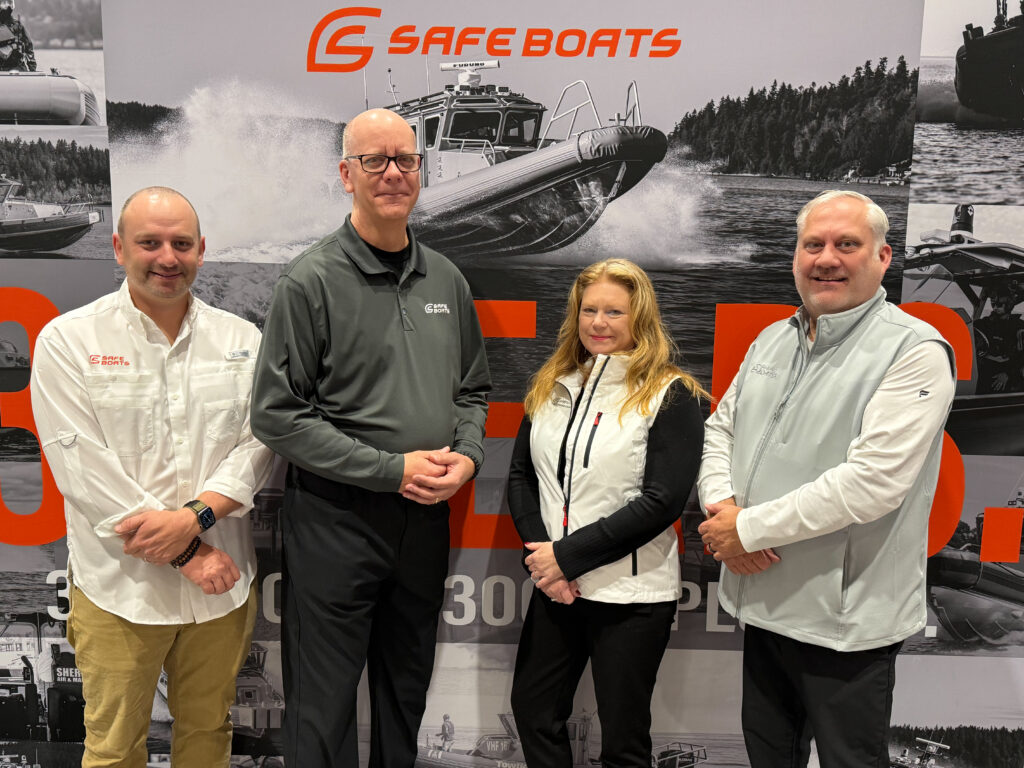
In place of a single chief executive, SAFE Boats has adopted a cooperative leadership model aligned with its employee-owned structure. Day-to-day operations are now led by a four-person executive team: Rob Goley, chief revenue and customer officer; Christer Bradley, chief operations officer; Tom Gumpert, chief financial officer; and McFarland, who oversees people, workforce development and the employee-owner experience.
The model reflects a company culture that has long emphasized shared responsibility, cross-functional collaboration and ownership at every level—values that were formalized when SAFE Boats became 100% employee-owned in April 2023.
Ownership as a differentiator
What truly sets SAFE Boats apart, McFarland said, is ownership.
“One of the coolest, most unique things about SAFE Boats is that we are a 100% employee-owned company, which is pretty darn rare out there,” she said. “All of our team members are actually shareholders, employee owners.”
That milestone, she said, was the natural evolution of an existing mindset.
“Even before we owned the place, we always acted like we owned the place,” she joked. “Part of the culture is ownership and commitment to customers and to each other, but now we officially own the place.”
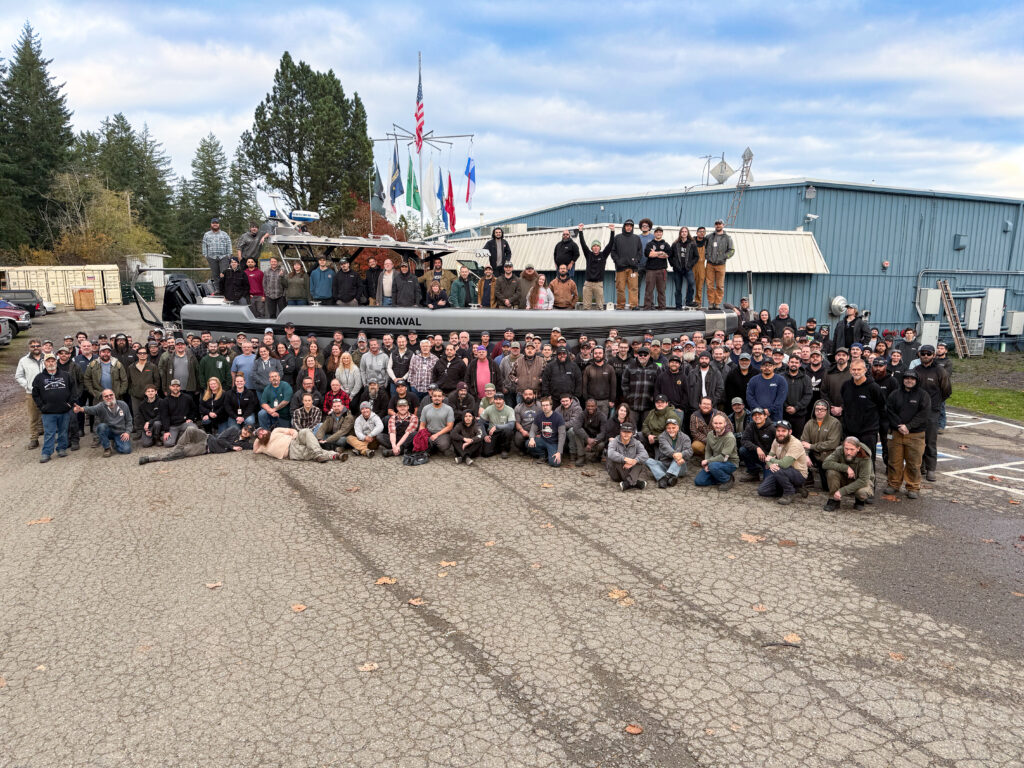
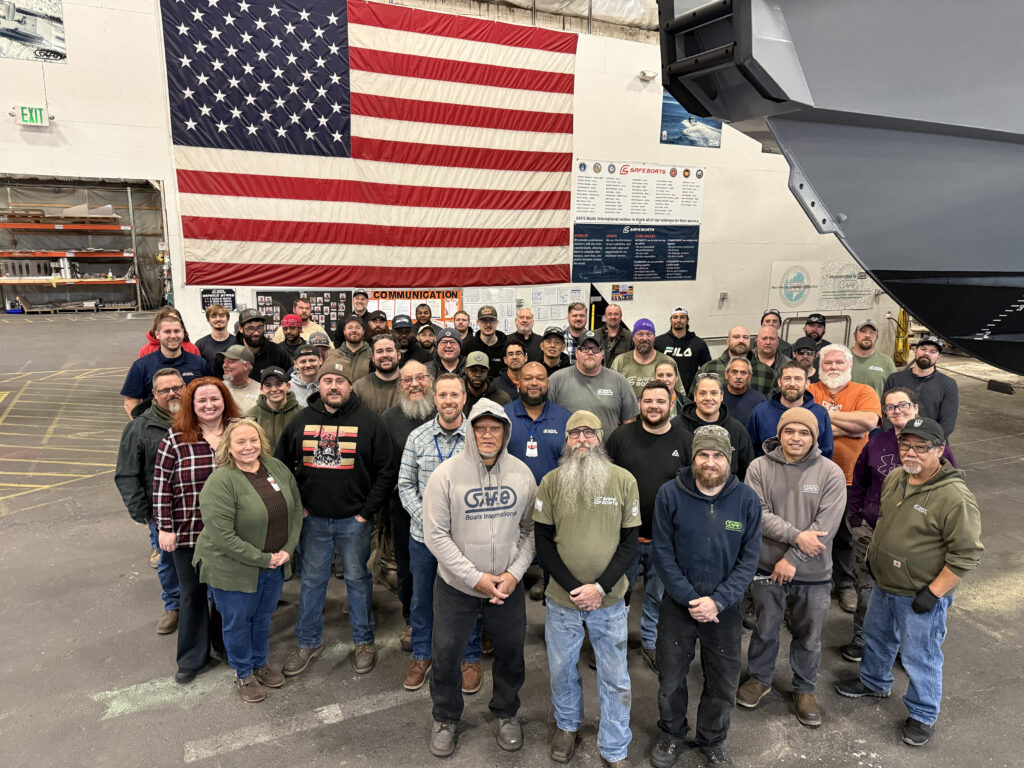
That sense of accountability shows up daily on the shop floor. SAFE Boats employs roughly 327 people, most of whom live in Kitsap County, with a small number commuting from neighboring Mason County. Many have been with the company for years, developing highly specialized skills that are central to SAFE Boats’ reputation.
Quality above all
Ask anyone at SAFE Boats what has fueled its growth, and the answer comes back to quality.
“We’re known for our quality. Our boat builders are the best in the industry,” McFarland said.
Customers who have operated vessels from other builders often tell SAFE Boats that directly.
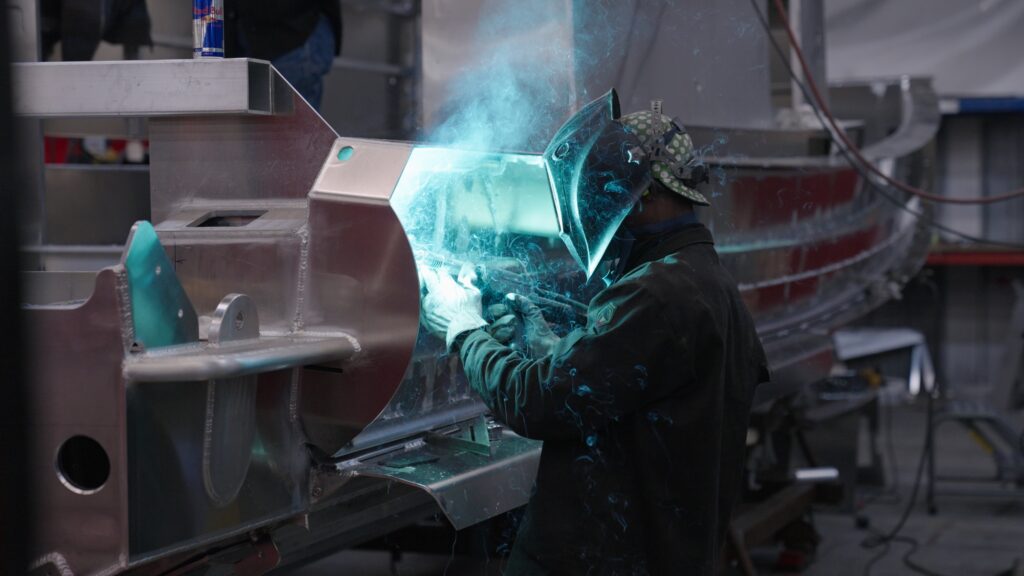
“I genuinely believe that we make the best product, and it’s because we have over 200 master craftsmen out here who are doing great work every day,” she said.
That commitment is reinforced by what the company calls “big Q, little D”—a reminder that quality always comes before delivery.
“If you focus on the quality over delivery, you’re going to make the customer happy,” McFarland said. While schedules matter, she added, “we would never compromise quality over meeting a deadline or a schedule.”
SAFE Boats backs that philosophy with systems that exceed industry norms. The company is ISO 9001 certified, a globally recognized quality management standard.
“We are the only boat builder in our competitive range that is an ISO 9001 certified boat builder, which means we’ve had to go kind of above and beyond that commitment to quality,” McFarland said.
Demand reflects that reputation. The company’s order book remains full.
“Our backlog is crazy,” McFarland said. “You’d probably have to wait about a year for a slot, and I think that’s a testament that we build a really great product.”
Built by people who’ve driven them
For Kelsey Nemeth, brand and marketing manager at SAFE Boats International, one of the company’s biggest advantages is who is doing the building.
“Many of our team members are former SAFE Boat operators from previous careers,” she said. “They’re retired law enforcement, retired military who have felt so strongly about the quality and craftsmanship of our vessels that they come to work at SAFE Boats after they retire from a career in the military or law enforcement.”
That firsthand experience creates a powerful feedback loop.
“That level of insight into operator needs and demands really sets SAFE Boats apart, because we have that one-to-one connection with operators,” Nemeth said. “We can build the best boat in the industry.”
SAFE Boats vessels operate around the world, supporting missions ranging from search and rescue to border security. Nemeth said the company is approaching 3,000 boats delivered and has vessels operating in more than 70 countries—a global footprint built from a Bremerton base.
Custom, not mass-produced
SAFE Boats occupies a niche where craftsmanship still matters.
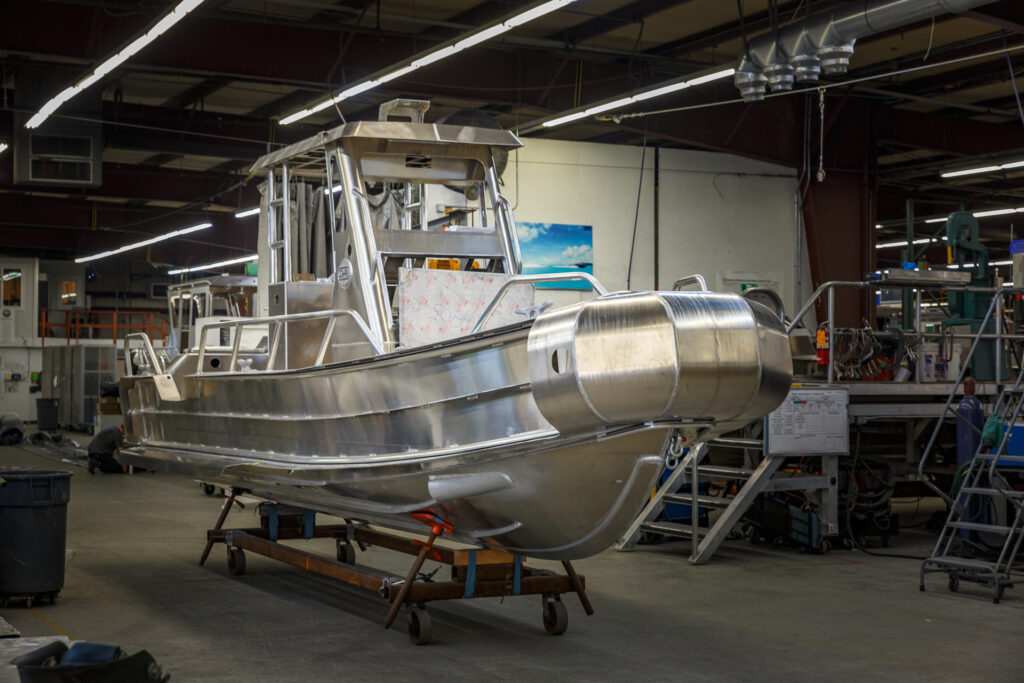
“If we were building Toyota Camrys, it’d be really easy to get some new equipment in and to automate more,” McFarland said. “But that’s not what we’re building. Every boat we do is unique and special, like a little snowflake.”
The company continues to invest in equipment such as CNC machines and router tables where they improve safety and efficiency. But full automation has limits.
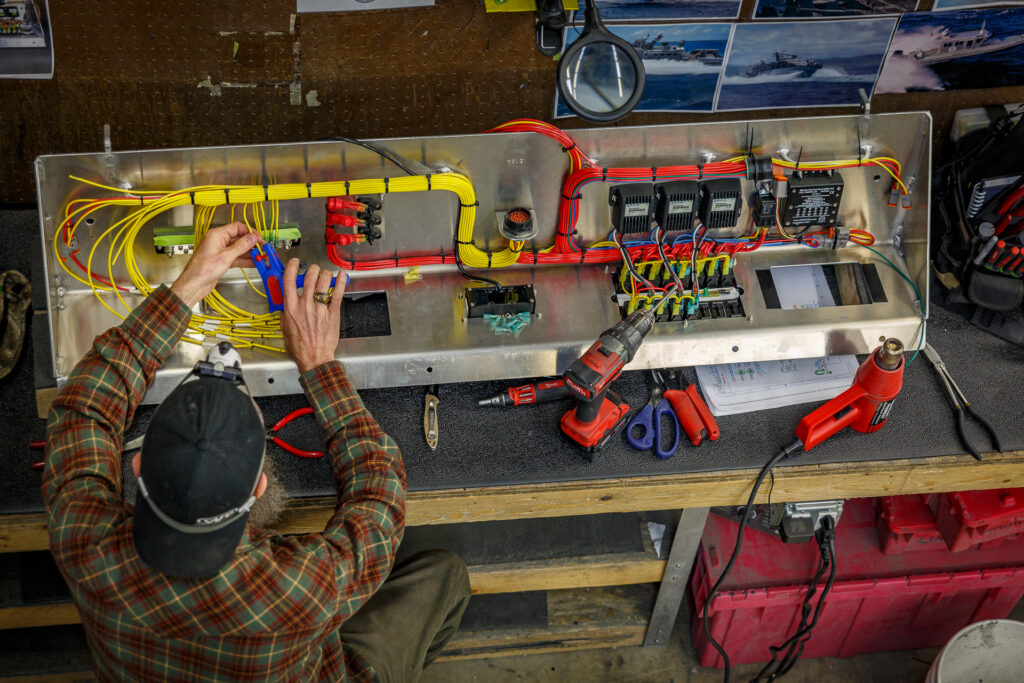
“Because of the fact that our boats are so custom, we really do have to rely on the master craftsmen that we have using the tools that they have,” McFarland said.
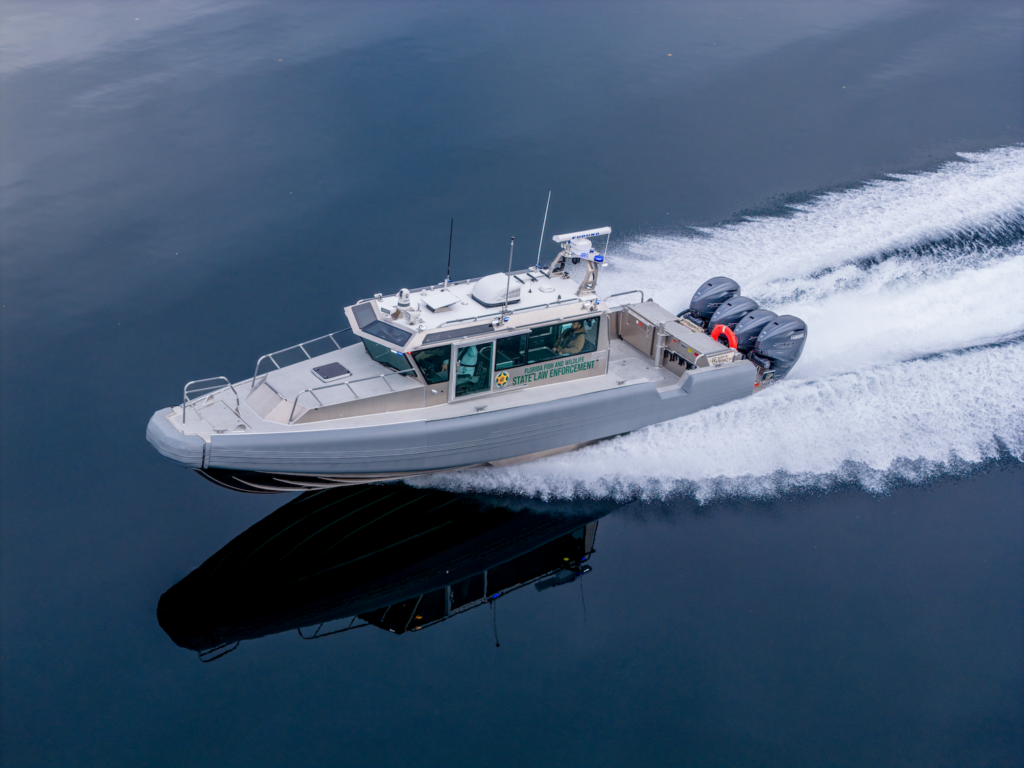
Rather than chasing trends, SAFE Boats focuses on disciplined processes and incremental innovation. Earlier this year, the company debuted a new offshore interceptor vessel at the International WorkBoat Show.
“We debuted a new offshore interceptor vessel on a proven hull platform, with an enclosed cabin, to meet the evolving needs of law enforcement,” Nemeth said. “We are innovating pretty regularly in that regard—listening to the demands of the customer and adapting some of our proven designs to address the needs of law enforcement.”
A defining customer
One of SAFE Boats’ most influential relationships has been with the U.S. Coast Guard. Nemeth said the post-9/11 demand for Homeland Security and border protection “really put SAFE Boats on the map.” The company ultimately built more than 600 boats under that program, according to McFarland.
“To this day, we’re still building boats for the Coast Guard,” Nemeth said.
Most recently, SAFE Boats was selected as one of four aluminum boat builders nationwide to construct a demonstrator vessel for the Coast Guard’s Response Boat–Small program.
“It’s a huge honor,” she said.
Closer to home, SAFE Boats is preparing to deliver vessels to the Bremerton Fire Department and Tacoma Police Department.
“Our boats are serving a much higher purpose,” Nemeth said. “There’s lots of aluminum boat building in the Pacific Northwest, but not every boat company gets the opportunity to build the types of vessels that we’re building at SAFE Boats.”
Deep roots in Kitsap
Despite its global reach, SAFE Boats remains firmly tied to Kitsap County.
“Our workforce is part of the community too,” McFarland said. The company supports local food banks, sponsors youth sports teams and looks for ways to give back close to home.
“It all lines up with who we are as an organization and as a group of team members and community members,” she said. “It all fits.”
Building the workforce pipeline
Like much of the marine manufacturing industry, SAFE Boats faces skilled labor shortages.
“Industry-wide, we’re facing skilled labor shortages,” Nemeth said, calling it “the number one issue” in the sector today.
For McFarland, workforce development is a priority.
“That’s my number one passion and priority,” she said. “It’s promoting careers in the trades.”
SAFE Boats partners with high schools, community colleges and trade schools across the region and sits on advisory boards for multiple institutions.
“We’re there helping shape their curriculum, giving them feedback, telling them what industry is really looking for,” McFarland said.
Internally, SAFE Boats has built its own structured training paths for new hires.
“We’ve just determined we need to do it ourselves,” McFarland said. “We actually take the time to create a training path for them.”
Looking ahead
As SAFE Boats looks to the future, McFarland said the company is guided by what it calls the “three P’s”: people, purpose and performance.
The first is people—“to attract, develop, and retain the best possible team members that we possibly can, and to create an environment for them where it’s the best job they’ve ever had,” she said.
The second is purpose: constantly reminding employees who the boats are for and why the work matters. Once a quarter, SAFE Boats invites end users to speak directly with the workforce on the shop floor.
“They’ll say, ‘You guys built an amazing boat, and it caught drug runners, or it helped save a life, put out a fire,’” McFarland said. “That really helps drive home the mission.”
The third P is performance. As an employee-owned company, financial results directly affect the people doing the work, through profit sharing and share value.
“We’re really transparent with the team on how we’re doing,” McFarland said. One of the company’s mantras is “one team working together,” she added: “We’re all here with one end goal, and that’s to provide our customers with the best possible product we can and hopefully make some money while we’re doing that, and then share those rewards with the employee owners that work here.”
For McFarland, the most rewarding part of the job is watching people grow—from first-time trade workers to seasoned professionals traveling the world to service SAFE Boats vessels.
“A young person who had never left the state when they started working for us, and now they’re flying to Tunisia to do some service work on one of our boats,” she said. “It’s really just watching people grow in their careers, and in their own confidence, in their own personal lives. That’s what’s most satisfying to me.”
Nemeth, who joined the company more recently, echoed that sentiment.
“It’s just such an amazing place to work,” she said. “I wish everybody locally knew that so they would come and apply and want to work at SAFE Boats, too.”